
Magnetic Drum Separator for Continuous Ferrous Removal
Choose the drum from the real process: dry or wet material, feed method, particle size, throughput conditions, target ferrous material, and discharge layout. OSENC reviews the application before defining the magnetic circuit, drum interface, drive, wear protection, and acceptance method.
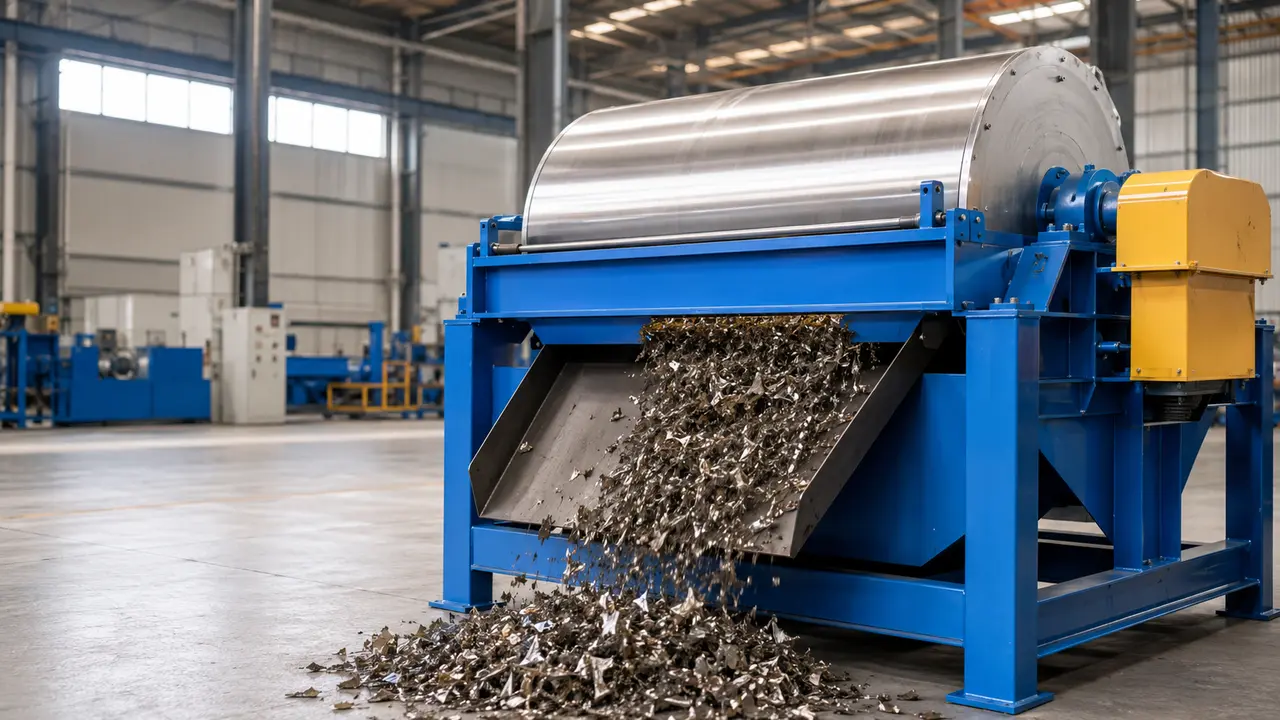
Quick Answer: Start With the Material Path
A magnetic drum uses a rotating shell and a magnetic field to carry ferrous material away from the main product stream. The correct equipment is decided by how material reaches the drum and how each fraction must discharge.
Dry free-fall material
Review a housed dry drum when powder, granules, cullet, scrap, sand, or similar bulk material enters from a chute or feeder.
컨베이어 배출부
Review a magnetic head drum or pulley when the belt itself must carry captured ferrous material beyond the normal discharge point.
Wet or slurry process
Use a wet-drum route only after reviewing slurry concentration, particle liberation, tank arrangement, flow direction, and water handling.
OEM machine component
Define the shaft, bearings, runout, load, speed, magnetic arc, test points, and machine interface from the buyer’s drawing.
Magnetic Drum Applications and Operating Conditions
Review magnetic drum configurations by material condition, feed method, installation position, and discharge requirements.
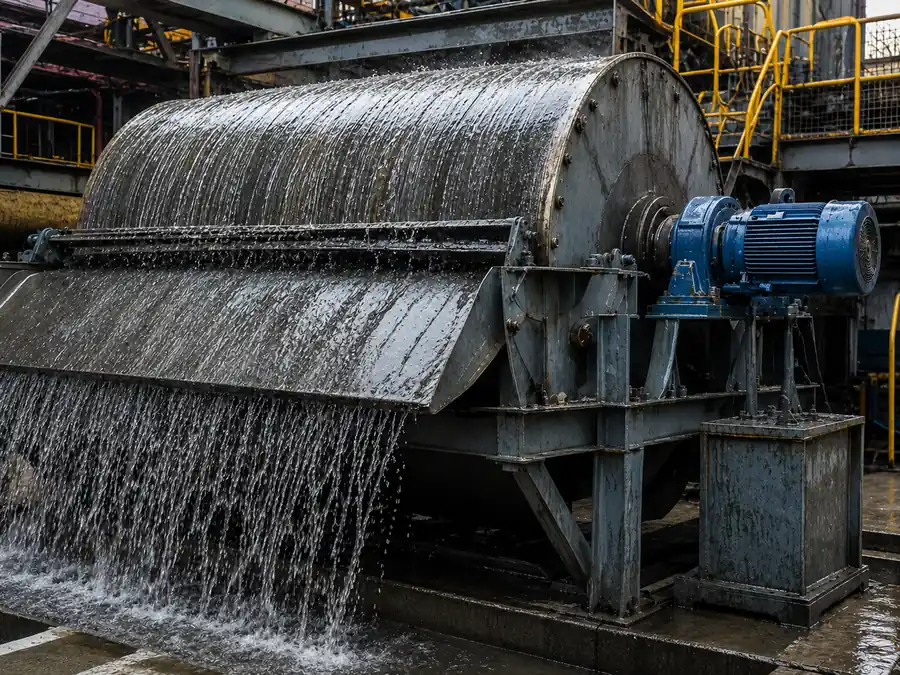
Choose the Magnetic Drum Family Before Discussing Strength
Magnetic strength is only one input. Feed stability, working distance, material behavior, discharge geometry, wear, and acceptance method often decide whether the equipment will work on the actual line.
| Process condition | First equipment route | Critical inputs | 주요 위험 요소 |
|---|---|---|---|
| Dry, free-flowing bulk material | Housed dry magnetic drum | Particle size, moisture, bulk density, feed width, throughput, iron size, splitter position | Uneven feed or excessive burden hides ferrous particles |
| Material leaving a conveyor | Magnetic head drum or pulley | Belt width, speed, pulley interface, material depth, discharge trajectory, available splitter space | Incorrect belt geometry causes product carryover or poor iron release |
| Slurry or wet mineral process | Wet magnetic drum system | Solids concentration, particle liberation, flow direction, tank geometry, wash water, corrosion and wear | A dry-drum layout cannot simply be submerged and expected to work |
| Buyer-built equipment | OEM magnetic drum component | Drawing, shaft, bearing, speed, load, magnetic arc, shell, runout and test method | A magnetically strong drum can still fail mechanically or integrate badly |
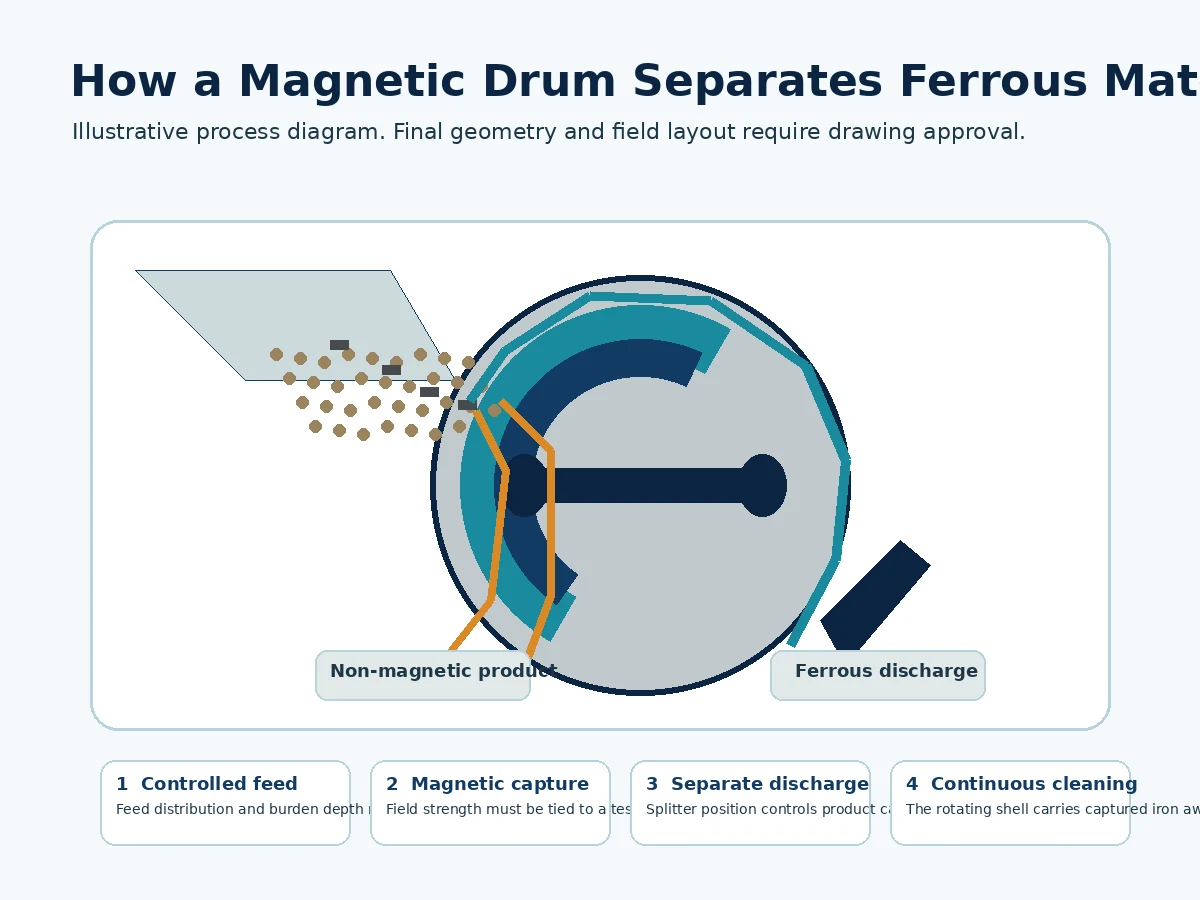
How a Magnetic Drum Works
- Controlled feed: material must enter across the useful drum width without uncontrolled surges.
- Magnetic capture: ferrous particles are held while the main non-magnetic fraction follows its normal trajectory.
- Rotating transport: the shell carries captured material beyond the active separation zone.
- Separate discharge: the splitter and release point determine product carryover and iron collection.
- Continuous operation: the process does not require manual wiping of the drum during normal separation.
What Actually Controls Separation?
A catalog gauss number cannot answer these questions. The field must interact with the real material at the real working distance and speed.
Magnetic circuit and field depth
Ferrite, rare-earth, permanent, or electromagnetic systems create different field shapes. The project must define where the field is measured.
원료 분포
A full-width, stable feed exposes particles consistently. Surges and dead zones create missed contamination.
Particle liberation
Iron locked inside non-magnetic material may not separate until crushing, grinding, or another liberation step occurs.
Burden or slurry condition
Deep dry burden, moisture, caking, viscosity, and solids concentration change particle movement and working distance.
Drum speed
Speed changes retention time, centrifugal force, material trajectory, discharge position, and mechanical load.
Splitter and discharge geometry
A poor splitter position can lose clean product or return captured iron to the main stream.
Configuration Items OSENC Reviews
Exact dimensions and performance values are not published without a defined project. This prevents the usual human ritual of comparing numbers stripped from their test conditions.
| 항목 | Configuration route | What must be confirmed |
|---|---|---|
| Equipment family | Dry housed drum, head drum, wet drum, or OEM component | Material path, process state, installation and discharge |
| Magnetic system | Selected after contaminant and working-distance review | Target material, size, concentration, temperature and measurement method |
| Drum and working width | 도면 기준 관리 | Feed width, throughput conditions, shaft, bearings, load and available space |
| Shell, housing and wear protection | Selected after abrasion and corrosion review | Material hardness, impact, moisture, chemistry, cleaning and expected wear |
| Drive and speed | Selected after mechanical and process review | Duty, torque, speed range, power supply, controls and guarding |
| Field measurement | Agreed project test | Probe, points, gap, temperature, tolerance and reporting format |
| Capacity or recovery | Calculated or tested for defined conditions | Feed, burden/slurry, sampling, contaminant, target and repeat method |
| Acceptance package | Agreed before order release | Drawing, dimensions, runout, field map, no-load test, trial and documents |
Suitable Starting Conditions
- Continuous removal or recovery of ferrous material
- Dry bulk material with controlled feeding
- Conveyor discharge where a magnetic head drum fits the layout
- Wet or slurry duty using a purpose-designed wet drum route
- OEM machinery requiring a drawing-controlled magnetic drum
- Lines that can provide separate product and ferrous discharge paths
추가 엔지니어링 검토 없이는 부적합
- Heavy caking or sticky material around a standard dry drum
- Very deep, uncontrolled material burden
- Non-ferrous metal separation as the only objective
- Guaranteed stainless-steel recovery without sample testing
- Fine ferrous particles locked inside unliberated material
- Published capacity or recovery targets without a defined test method
Dry and Wet Drums Are Different Systems
A wet drum is not a dry drum with water added. The tank, feed, magnetic zone, solids concentration, flow direction, discharge, sealing, corrosion, wear, and water balance must work as one process.
Do Not Choose From the Photo Alone
Two drums can look similar and perform differently. A useful review needs the material, process flow, target fraction, installation envelope, and acceptance method.
Testing and Acceptance Route
Define acceptance before production. Otherwise the supplier and buyer may test different things and both claim to be correct, a remarkably durable industrial tradition.
Lock the application
Confirm material, feed, throughput conditions, contaminant, target and layout.
Approve the drawing
Confirm interfaces, drum direction, working width, discharge and maintenance access.
Define equipment checks
Set dimensional, runout, rotation, guarding and no-load requirements.
Define magnetic checks
Set instrument, points, gap, temperature, tolerance and report format.
Run material validation
Use feed and an agreed sampling method when process results matter.
Release the order
Approve the configuration, documents, packing and project responsibilities.
Verify installation
Check feed distribution, splitter position, rotation and safe access on the line.
Review operating data
Adjust only against measured process results, not assumptions from a brochure.
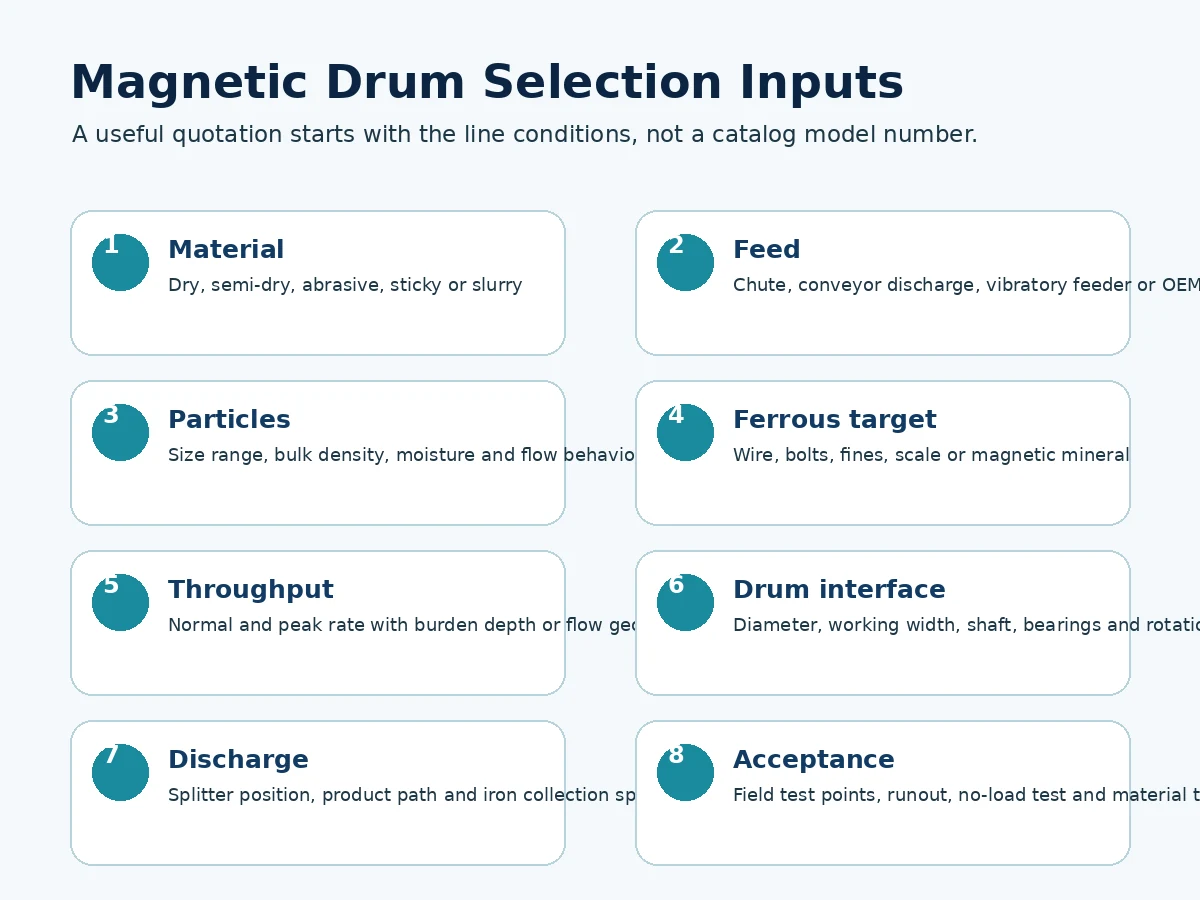
What to Send for a Useful Quotation
- 원료: name, process, dry/wet condition, particle size, moisture or slurry data, bulk density, abrasion and temperature.
- Ferrous target: type, size, shape, concentration, and whether the goal is equipment protection, purification, or recovery.
- Flow: normal and peak throughput, feed width, burden depth, belt speed, flow rate, or solids concentration.
- Layout: photos, drawing, inlet and outlet, drum position, discharge space, access and utilities.
- Acceptance: field test points, dimensional checks, trial method, residual or recovery target, and required documents.
자주 묻는 질문
What is the difference between a magnetic drum and a magnetic head pulley?
Can one magnetic drum handle both dry material and slurry?
Does a higher gauss number guarantee better separation?
What information is needed to size a magnetic drum?
Can a magnetic drum remove stainless steel?
How should magnetic drum performance be accepted?
When is a magnetic drum the wrong choice?
관련 OSENC 자료
Use the product page for procurement. Use the guides for working principle and early-stage selection.
How a Magnetic Drum Separator Works
Review the separation sequence before discussing equipment details.
Read the guide →Plate Magnets
Compare a simpler chute or conveyor-contact separator for suitable applications.
View the product →품질 관리
Review the evidence and inspection boundary used for OSENC projects.
Review quality information →Send the Material and Layout Before Choosing the Drum
Include the process state, particle size, throughput conditions, ferrous target, installation drawing, discharge space, and required test method.