
Conveyor Tramp Iron Removal
Protect crushers, grinders, and screens from iron in bulk material streams.
Check Fit +Choose the separator by material behavior, not by industry name.
Every material carries tramp iron in a different way. Particle size, moisture, feed route, and layer depth decide the machine. The industry label is only a shortcut.
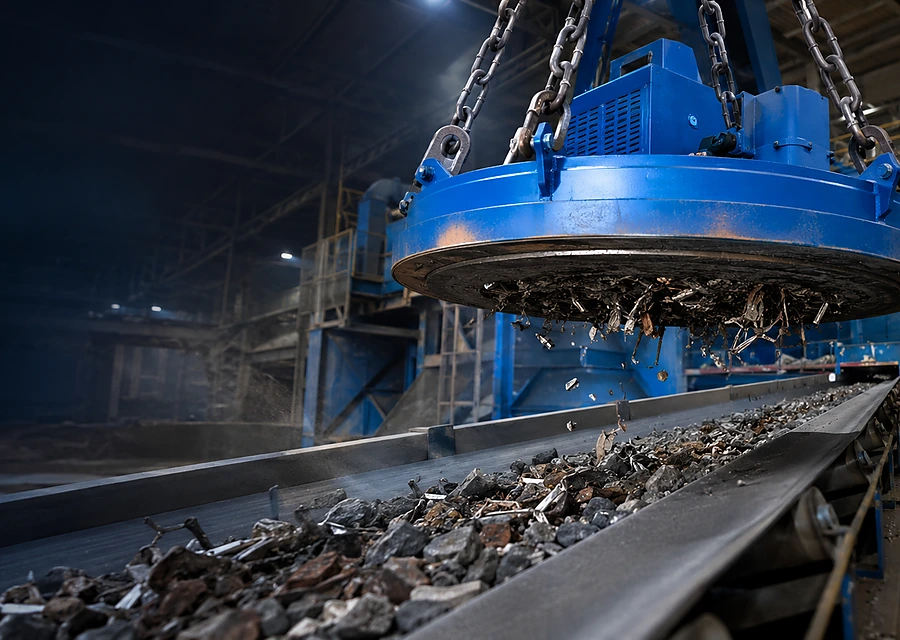
Same factory category. Different feed behavior. Different separator. That is where bad purchases usually start.
Protect crushers, grinders, and screens from iron in bulk material streams.
Check Fit +Recover ferrous metals from mixed scrap, ASR, shredded metal, and demolition waste.
Check Fit +Remove iron from incinerator bottom ash, steel slag, and fly ash before disposal.
Check Fit +Remove ferrous contamination to protect extruders and improve product quality.
Check Fit +Extract iron to improve glass purity and protect downstream equipment.
Check Fit +Remove tramp iron from ore, aggregates, and minerals to prevent equipment damage.
Check Fit +Clean foundry sand from embedded iron for reuse and better casting quality.
Check Fit +Remove iron from battery shred before wet feed or fine recycling steps.
Check Fit +| Material Behavior | What It Means | Better Direction |
|---|---|---|
| Dry powder | Fine, free-flowing, low moisture | Suspended magnet or high-intensity drum |
| Granules | Small, free-flowing particles | Suspended magnet or drum |
| Crushed scrap | Irregular, sharp, mixed sizes | Overband magnet or drum |
| Thick belt layer | High depth on belt, heavy load | Overband magnet or crossbelt |
| Wet sticky material | Moist, clumps, sticks to belt | Drum magnet with scraper or special design |
| Abrasive slag | High wear, high temperature | Heavy-duty overband or wear-lined drum |
Three common cases. The names look simple. The selection does not.
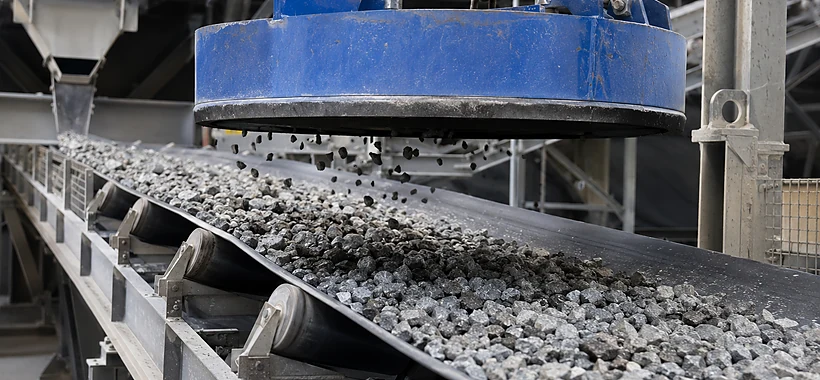
Bulk material on conveyor carries tramp iron.
Crusher or grinder damage, downtime, repair cost.
Overband electromagnet or permanent magnet.
Material photos, belt width, capacity, max piece size.
Very fine powders without proper design.
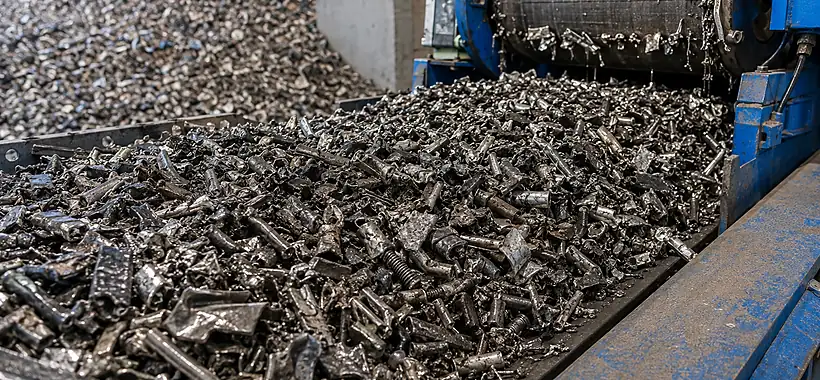
Ferrous metal needs to be recovered from mixed scrap.
Low recovery, contamination, and final product loss.
Drum magnet or crossbelt magnet.
Photo, target size, belt speed, moisture.
Non-ferrous metal separation.
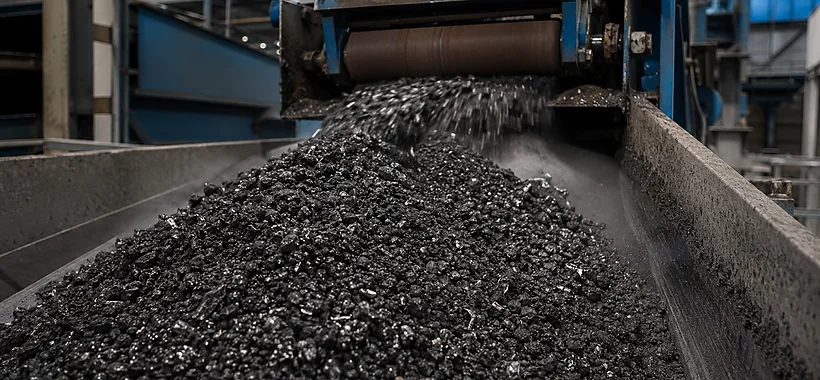
Iron needs to be removed from slag or ash.
Iron left in ash, poor quality, extra handling.
Overband or drum magnet with wear protection.
Material photo, temperature, moisture, depth.
Fine iron in wet sticky conditions.
| Application | Overband Magnet | Crossbelt Magnet | Drum Magnet | Suspended Magnet | Grate Magnet |
|---|---|---|---|---|---|
| Conveyor Tramp Iron Removal | |||||
| Recycled Metals Recovery | |||||
| Slag & Ash | |||||
| Plastic Flakes & Pellets | |||||
| Glass Cullet | |||||
| Mining & Minerals | |||||
| 鋳物砂 | |||||
| Battery Scrap Pre-Cleaning |
| Material / Goal | Why It Is Not Enough | What You May Need |
|---|---|---|
| Aluminum | Non-magnetic | Eddy current separator |
| Copper | Non-magnetic | Eddy current separator |
| Stainless Steel | May be weak or non-magnetic | Metal detector or special system |
| Wet Sticky Material | Iron may be trapped in clumps | Washing, drying, or special design |
| Thick Layer | Iron buried deep in material | Reduce layer depth, stronger magnet |
| Mixed Plastic Sorting | Magnet only removes ferrous metal | Air classifier, NIR, gap, or density separation |
Better information means fewer wrong machines, fewer returns, and fewer awkward emails.
Send Material DetailsFour steps. No mystery. No “buy first, regret later” nonsense.
We review your material photos and line details.
We recommend the right magnet type and model.
We check installation space, mounting, and integration.
We provide drawings, confirm details, and manufacture.
Real questions from real operators and engineers. If you do not see your question, ask us.
Start with feeding route, layer depth, particle size, moisture, and target iron size. The industry name comes later.
Send material photos, capacity, belt width, layer depth, moisture, target metal, and available installation space.
Some stainless steel can react weakly after deformation. Many grades are not reliable for normal magnetic separation.
A crossbelt magnet is a self-cleaning overband system. It suits continuous iron discharge on busy lines.
Use the right magnet material, heat design, wear lining, and enough clearance from hot material.
Reduce clumping first. Then use scraper, drum design, or a custom cleaning structure.
Check belt wear, scraper contact, bearing condition, mounting bolts, and collected iron discharge.
Yes. Send sample details first. We will tell you what test result is realistic before shipping anything.