
OSENC Magnetic Separation
Magnetic Separation Material Testing for a Defensible Equipment Recommendation
Controlled Separation Testing Before Equipment Selection
OSENC uses a controlled material-testing protocol to select magnetic separation equipment when magnetic response, liberation, moisture, particle size, product loss or the required residual level cannot be established from process data alone. The service defines the acceptance criterion before receipt, uses traceable samples, records the separator configuration and operating conditions, completes repeated mass-balance trials, and reports the basis and limits of scale-up.
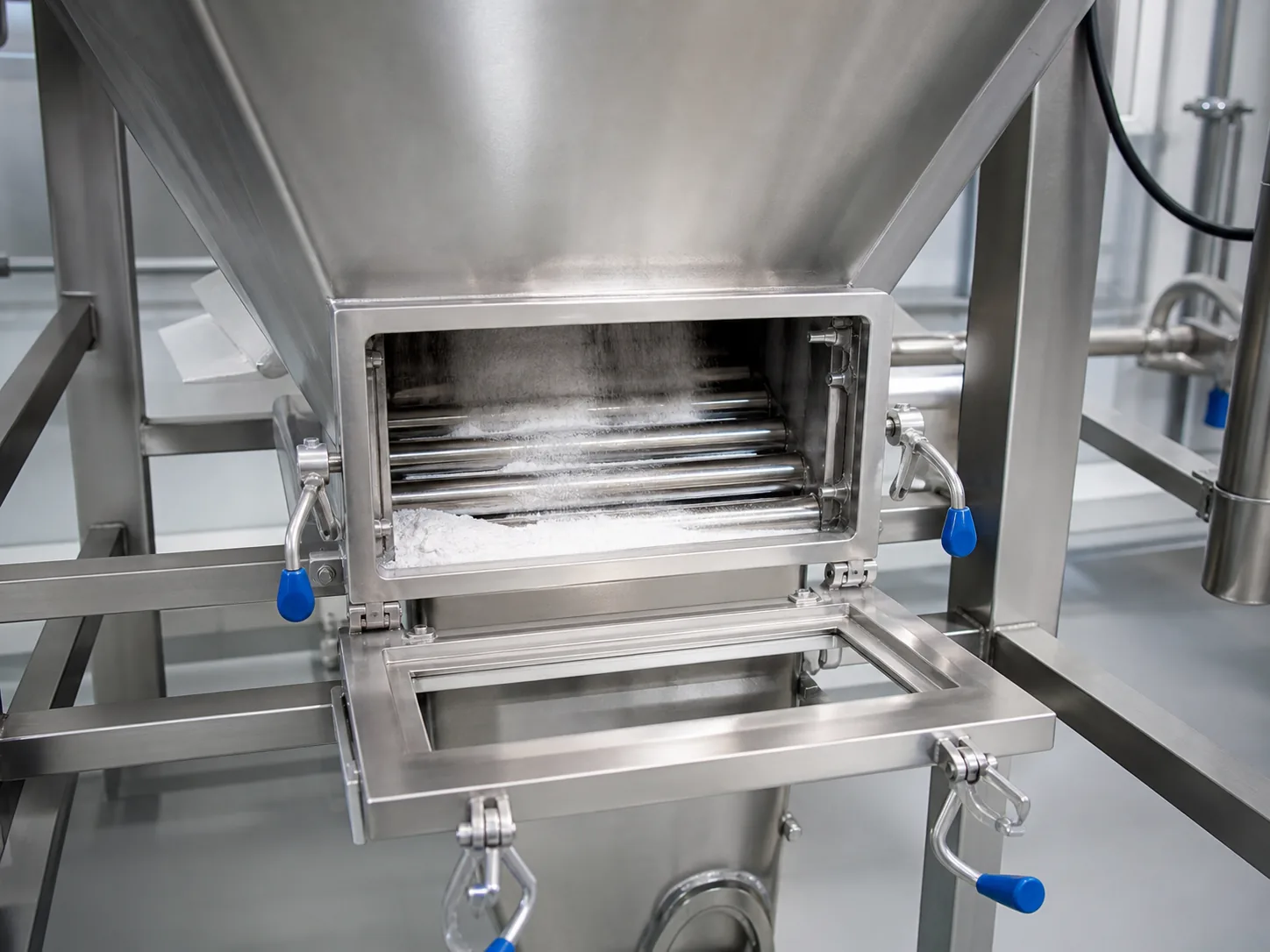
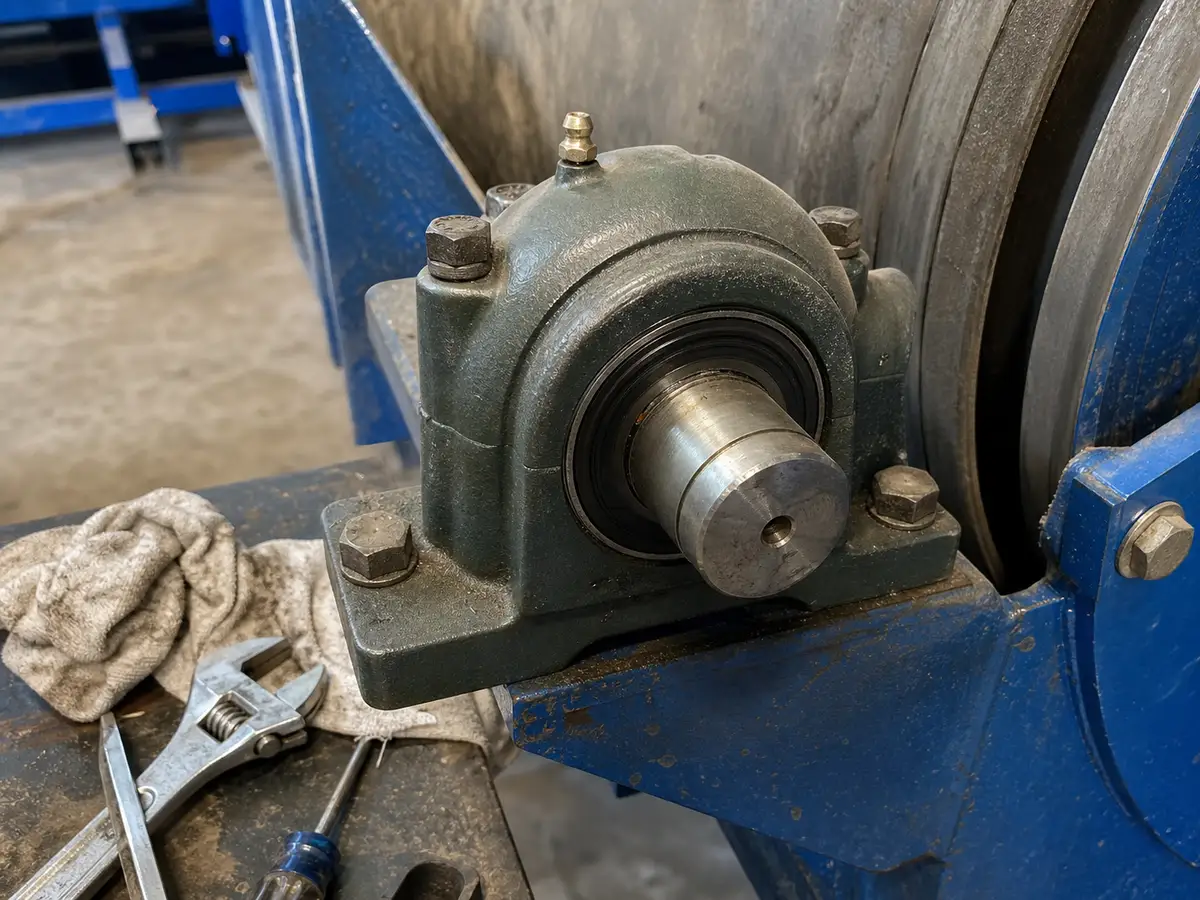
When Testing Is Worthwhile
- The target is fine, weakly responsive, irregular, coated, or attached to nonmagnetic material.
- The customer needs a defined purity, recovery, equipment-protection, or product-loss result.
- Moisture, stickiness, agglomeration, abrasion, or static may change flow and capture.
- Two separator types or operating settings need comparison.
- The commercial consequence of incorrect selection is higher than the cost of a controlled trial.
First Define the Test Question
| Question | Required evidence |
|---|---|
| Will the contaminant respond? | Identified target samples and a controlled magnetic-response check |
| Which separator fits? | Comparable trials using representative feed and documented configurations |
| What setting works? | Feed, speed, gap, splitter, rows, or other variables changed one at a time |
| Can a purity target be met? | Validated sampling and analysis of feed and output fractions |
| What capacity is possible? | Feed stability, equipment dimensions, material properties, result and scale-up basis |
Standard OSENC Test Service
| Item | Published service standard |
|---|---|
| Technical responsibility | OSENC application engineering prepares the test plan, assigns sample IDs, reviews raw data and issues the equipment recommendation. |
| Test location | The quotation names the OSENC-coordinated manufacturing-partner test center or independent laboratory that performs the physical trial. |
| Available test systems | Magnetic tube/grate contact tests, adjustable suspended-magnet working-gap tests, permanent drum separation trials and comparative multi-pass tests. |
| Standard instruments | Calibrated gaussmeter with axial probe, digital pull-force gauge, verified weighing scales, moisture analyzer, sieve set, tachometer and dimensional gauges. |
| Repeat count | Three valid runs at the selected setting; invalid runs are documented and repeated. |
| Mass-balance target | 98.0%–102.0% recovery of the measured input mass across all collected fractions. |
| Variable control | One operating variable is changed per comparison while feed mass, preparation and collection method remain fixed. |
| Reporting | Signed PDF report with test plan, sample traceability, equipment configuration, instrument list, raw data, calculations, photographs, conclusion and scale-up limits. |
| Report issue | Within five working days after completion of the agreed analytical work. |
Information Required Before Shipping Samples
- Material identity, safety data sheet, hazards, composition and prohibited handling conditions
- Particle-size distribution, bulk density, moisture, temperature and flow behavior
- Target contaminant identity, size, shape, content, source and magnetic response
- Current process, normal and peak throughput and proposed installation position
- Existing result, required output, analytical method and numerical acceptance criterion
- Sample quantity, packaging, customs description, return or disposal instruction and confidentiality requirement
Unidentified, explosive, radioactive, infectious, acutely toxic or legally restricted samples are not accepted. Each container must carry the project number, material name, batch number, net mass and sampling date.
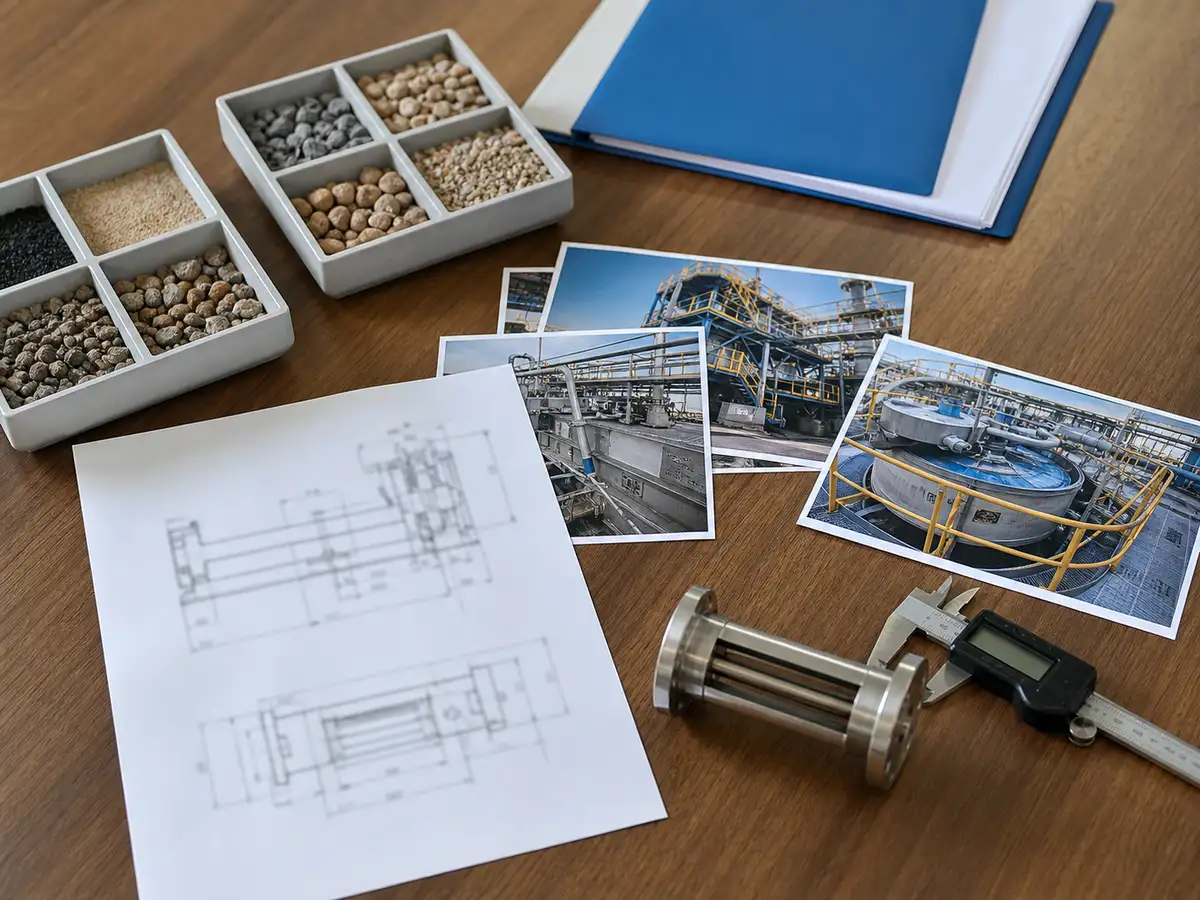
Representative Sampling Matters More Than Sample Size Alone
Take increments across time, locations, bags, or process conditions and combine them under an agreed plan. A convenient handful may omit rare large tramp iron or exaggerate local fine contamination. Preserve moisture and particle distribution during packing where these affect behavior. Label every container with traceable batch and sampling information.
Standard Test Workflow
- OSENC issues a written test plan containing the objective, acceptance criterion, sample quantity, safety controls, separator type, variables and analytical method.
- The receiving laboratory photographs every sealed container, checks identification, records gross and net mass and assigns a traceable internal sample number.
- The bulk sample is homogenized by an appropriate dry or wet method and divided into feed portions. Moisture, apparent bulk density and particle-size distribution are recorded.
- The separator is identified by type and configuration. Working distance, active width, tube spacing, drum speed, belt speed, feed rate, splitter position and cleaning state are recorded where applicable.
- The gaussmeter is checked before use. Magnetic readings record probe orientation, surface or working-distance reference, grid position, temperature and instrument identification.
- A conditioning pass is completed and excluded from the result. Three valid test runs are then performed at each selected setting.
- Feed, magnetic fraction, nonmagnetic fraction and retained material are collected separately and weighed. A valid run requires a mass balance from 98.0% to 102.0%.
- Magnetic recovery, contaminant removal, residual concentration and product loss are calculated only from the agreed laboratory analysis and reconciled masses.
- The report compares the repeated runs, documents anomalies and states the recommended separator, configuration, production validation step and scale-up limits.
Standard Sample Quantities
| Test purpose | Minimum representative sample |
|---|---|
| Magnetic-response screening | 5 kg of process material plus identified contaminant samples |
| Magnetic tube or grate comparison | 20 kg per configuration |
| Suspended-magnet target test | 50 kg of bulk material plus at least 30 representative steel targets |
| Bench drum separation | 50 kg per setting |
| Pilot continuous trial | 200–1,000 kg according to feed rate and stabilization time |
The required shipment quantity equals the per-run quantity multiplied by three valid repeats, plus 20% reserve for conditioning, baseline analysis and repeat work.
Minimum Test Report
- Customer/project reference, date, location, personnel, and sample IDs
- Material description, sampling statement, photographs, mass, and condition
- Equipment identity, configuration, dimensions, magnetic measurement, and settings
- Feed method, test duration, rate, particle size, moisture, and observations
- Fraction masses, analysis, calculations, repeats, and anomalies
- Conclusion tied to the stated acceptance criterion
- Scale-up assumptions, uncertainties, exclusions, and recommended validation
What a Laboratory Test Cannot Guarantee
A small controlled trial may not reproduce production surges, full-width distribution, long-term buildup, wear, temperature cycling, operator cleaning, or upstream changes. A successful test supports feasibility and design; it does not guarantee a plant result unless scale-up conditions and site acceptance are contractually defined and verified.
Testing Responsibility and Result Ownership
OSENC application engineering owns the customer-facing test plan, data review and equipment recommendation. The physical test facility and responsible technician are named in the quotation and final report. Raw instrument readings, mass records, sample photographs and calculation sheets form part of the controlled project file. Test results apply only to the identified samples, equipment configuration and recorded operating conditions; production acceptance is completed against the approved full-scale equipment and site duty.
Request a Test Review
Send material and contaminant data, process conditions, current and required results, analysis method, representative photographs, sample availability, safety data, confidentiality needs, and desired decision date.
Minimum Inputs for a Useful Material Separation Test
Use these inputs to decide whether the proposed separator and process position fit the real operating duty.
| Equipment direction | A test is useful only when the sample represents the production material, target contamination, flow condition and decision the buyer must make. |
|---|---|
| Material condition | Provide material identity, composition, dry or wet condition, particle-size distribution, bulk density, moisture, flowability, abrasion, corrosion and temperature. |
| Target iron or magnetic fraction | Provide target type, magnetic response, typical and maximum size, starting concentration and the acceptable residual or recovery objective. |
| Throughput and presentation | State normal and peak throughput, belt or chute dimensions, layer depth, feed method, speed and whether the production line is continuous or batch. |
| Installation and access | Include proposed installation position, available space, interfaces, cleaning method and any wall, belt, sleeve or liner that adds working distance. |
| Test or acceptance | Agree sample preparation, machine settings, number of passes, fraction collection, analytical method and how product loss will be reported before testing starts. |
Project Support
Need documents, testing support or after-sales help?
Send your order reference, product details, application condition, requested document and supporting photos or videos so we can route the request correctly.
Frequently Asked Questions
Why is “Information Required Before Shipping Samples” important for this decision?
Unidentified, explosive, radioactive, infectious, acutely toxic or legally restricted samples are not accepted. Each container must carry the project number, material name, batch number, net mass and sampling date.
Why is “Representative Sampling Matters More Than Sample Size Alone” important for this decision?
Take increments across time, locations, bags, or process conditions and combine them under an agreed plan.
Why is “Standard Sample Quantities” important for this decision?
The required shipment quantity equals the per-run quantity multiplied by three valid repeats, plus 20% reserve for conditioning, baseline analysis and repeat work.