
OSENC Magnetic Separation
Magnetic Separation for Grain, Milling and Animal Feed Lines
Protect Mills, Mixers and Finished Product
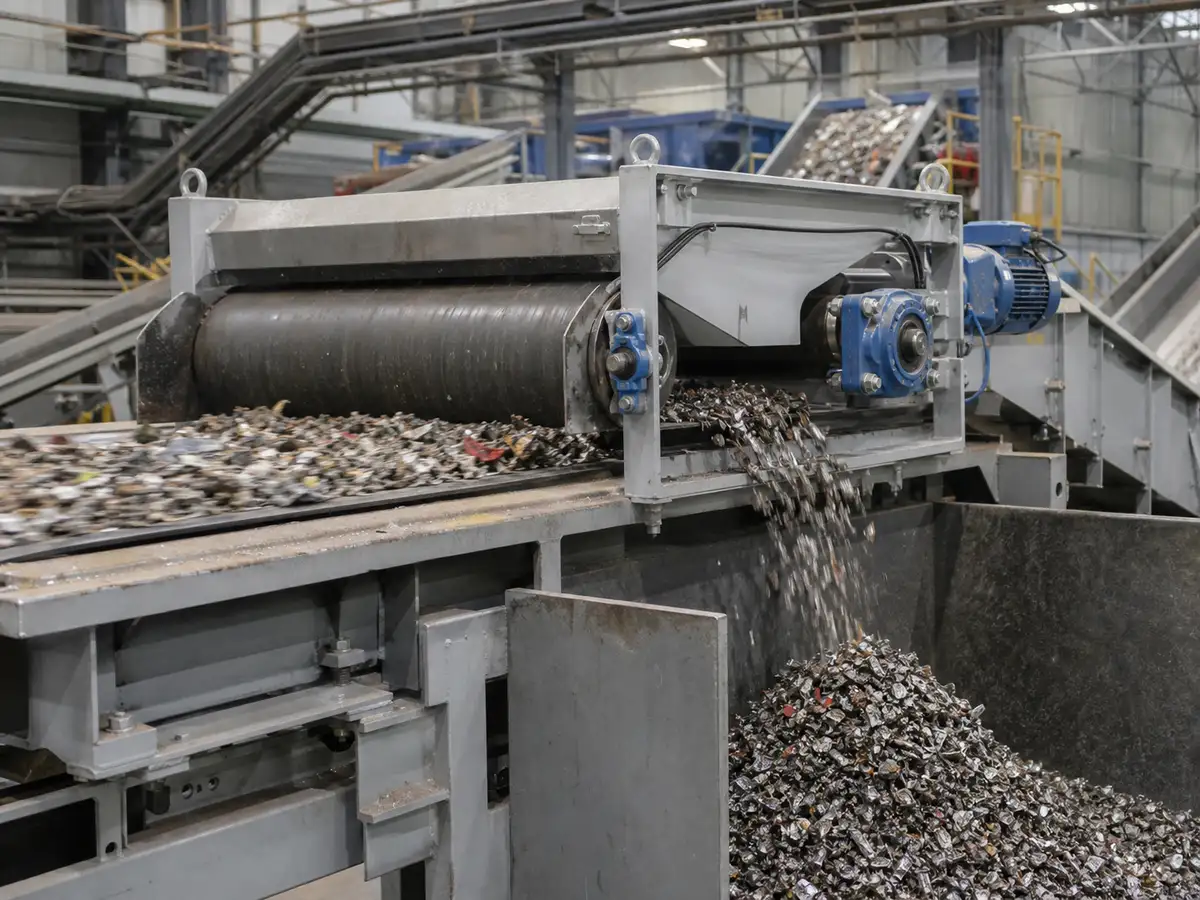
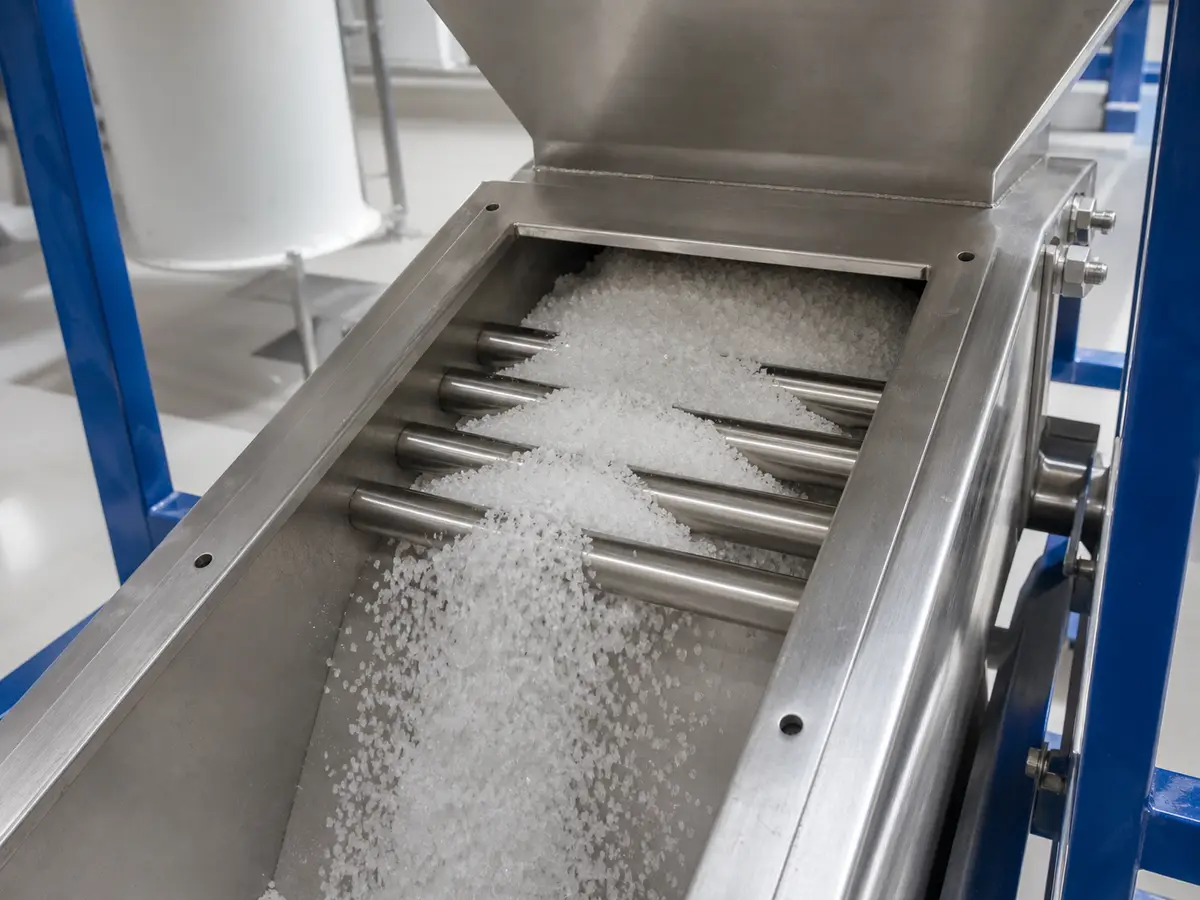
Grain and feed lines often need more than one magnetic control point: remove larger tramp iron before mills or crushers, then capture smaller ferrous wear particles in gravity-fed ingredients before mixing, pelleting, or packing. The correct arrangement depends on where contamination enters, material flow, dust classification, cleaning access, and the equipment being protected.
Common Ferrous Sources
- Wire, nails, fasteners, tools, and farm or transport debris in incoming grain
- Wear from elevators, screws, screens, mills, conveyors, mixers, and pellet equipment
- Maintenance fragments or broken machine components
- Metal introduced during storage, loading, or transfer
Build a Multi-Stage Protection Plan
| Process position | Main objective | Candidate approach |
|---|---|---|
| Receiving conveyor | Remove larger tramp before storage or size reduction | Suspended magnet or overband, subject to burden and access |
| Before mill or crusher | Protect high-consequence equipment | Conveyor magnet, head pulley, or a gravity device matched to the feed |
| Ingredient chute | Capture smaller responsive contamination | Magnetic grate or drawer magnet |
| Before packing | Final magnetic inspection point | Close-contact tubes or grate with defined cleaning and checks |
Do Not Select from Capacity Alone
A stated tonnes-per-hour value is incomplete without grain or feed type, bulk density, moisture, particle-size distribution, surge pattern, chute dimensions, and acceptable pressure drop. Light or fibrous material may bridge differently from dense granules even at the same mass flow.
Key Inputs
- Material at every proposed control point, including additives
- Normal and peak mass or volumetric flow
- Moisture, oil, temperature, particle size, and flow behavior
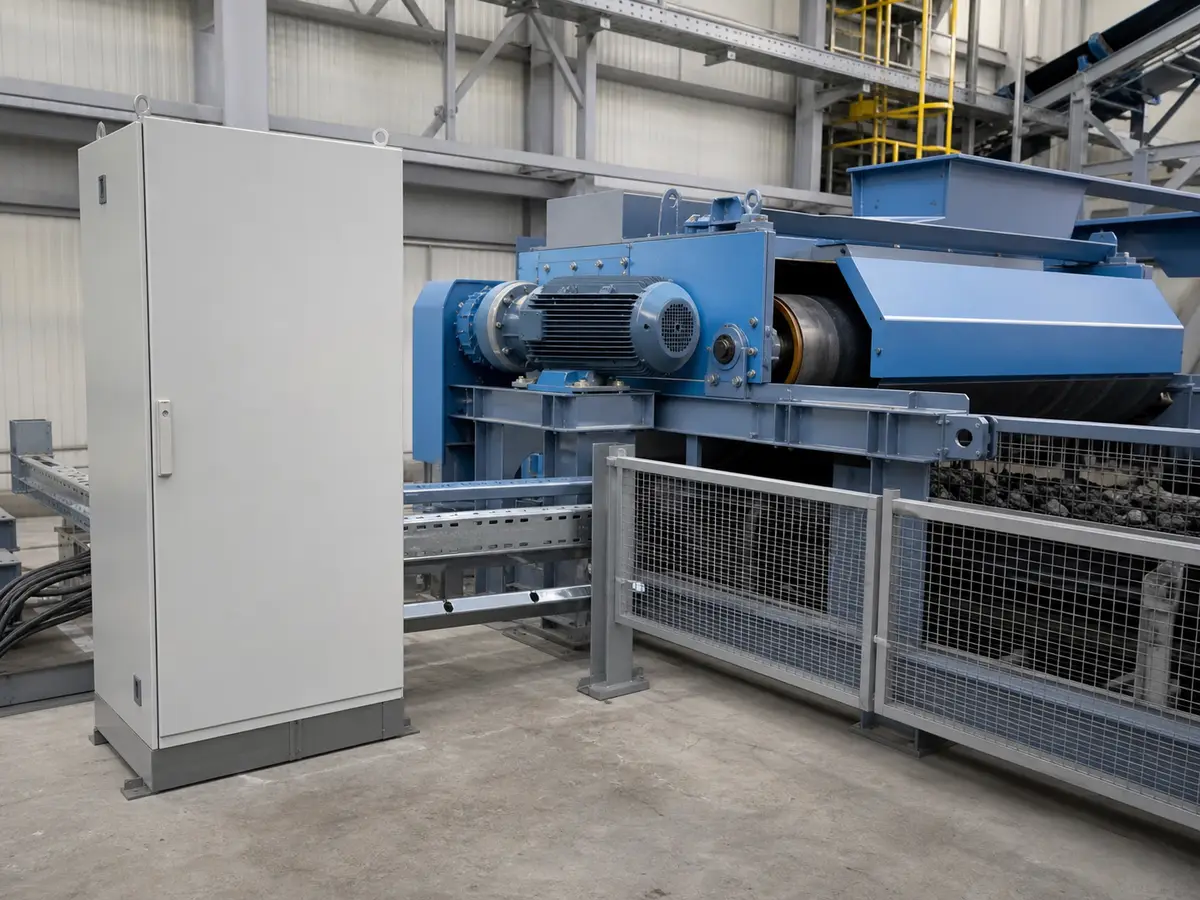
- Conveyor width, speed, burden depth, chute opening, or pipe details
- Target iron type, likely size, frequency, and location in the burden
- Cleaning access, downtime, sanitation, and inspection frequency
- Dust-zone assessment and required equipment documentation
Dust and Explosion Risk
Combustible dust risk must be assessed for the real process and location. A permanent magnet having no excitation coil does not automatically make the complete separator suitable for a hazardous area. Drives, bearings, belts, sensors, grounding, surface temperature, static control, and mechanical ignition sources may still require review. Do not claim ATEX or IECEx without product-specific evidence.
Cleaning and Preventive Maintenance
Collected iron is evidence about upstream conditions. Record its type and quantity, investigate sudden changes, and remove buildup before it creates an excessive gap or returns to the stream. Inspect mounting, tubes, sleeves, welds, seals, belt tracking, bearings, and guards according to the product and site procedure.
Acceptance Should Reflect the Real Line
Define the test target, placement, feed condition, burden depth, speed, flow, cleaning state, and pass/fail result. A safe test with representative material is more useful than comparing unrelated maximum-Gauss values. Never introduce loose test metal without an approved recovery and safety procedure.
Request a Process Review
Send the process flow, protected machines, material data, conveyor or chute dimensions, normal and peak feed, contamination photographs, operating schedule, dust-area requirements, cleaning method, and available installation envelope.
Grain and Feed Data That Changes Magnet Selection
Use these inputs to decide whether the proposed separator and process position fit the real operating duty.
| Equipment direction | A grate or drawer magnet suits gravity-fed grain and meal when material can pass close to the tubes; a suspended or drum arrangement may suit larger conveyed grain or upstream equipment protection. |
|---|---|
| Material condition | Define whole grain, meal, pellets or additives; record particle-size range, bulk density, moisture, oils, fines, bridging, dust and product-temperature variation. |
| Target iron or magnetic fraction | Describe wire, bolts, screen fragments, mill wear and fine iron; state whether the objective is mill protection, product control or both and identify the smallest target of concern. |
| Throughput and presentation | Provide normal and peak t/h, chute or spout size, product head, batch surges and cleaning interval permitted by the production schedule. |
| Installation and access | Confirm chute interface, dust-area requirements, access for withdrawing and cleaning the magnetic element, collection control and prevention of re-entry into product. |
| Test or acceptance | Test representative grain or feed at realistic flow. Review capture, pressure or flow restriction, bridging and saleable material retained with the iron. |
What We Need to Configure This Project
Input set for Magnetic Separation for Grain, Milling and Animal Feed Lines
- How we use your data: We compare your material, contamination risk, production target and line interface before we configure a proposal or rule out an unsuitable option.
- Material: name and composition; dry or wet; powder, granule, lump, fibre or slurry; minimum, maximum and typical particle distribution; moisture, stickiness, tendency to cake or bridge, abrasiveness, corrosiveness, bulk density, normal temperature and maximum temperature.
- Production and target: normal and peak throughput, continuous or batch feed, feed uniformity, contaminant or recovery target, magnetic response if known, typical and maximum target size, initial concentration, acceptable residual and whether product loss is permitted.
- Installation: belt width and speed, normal and maximum burden depth, magnet position and rated working distance, available suspension and maintenance space, support and lifting arrangement; cleaning method, permitted shutdown, contact-material, wear and corrosion requirements; indoor, outdoor, washdown, high-humidity, dusty or hazardous-area conditions.
- Supporting project files: drive voltage, frequency and phase where a self-cleaning unit is considered; control interface and any site air requirement; destination country; current drawings, site photographs, running video and a representative material/contaminant sample when testing is needed.
- What you receive next: We use the confirmed inputs to prepare a project-specific drawing and inspection plan. We do not treat performance as confirmed until the agreed design and any required representative test or site acceptance establish the result.
Project Support
Send your material and process conditions
We can review the process point, material shape, iron source, capacity, available space and cleaning method before recommending a magnetic separator layout.
Frequently Asked Questions
Do Not Select from Capacity Alone?
A stated tonnes-per-hour value is incomplete without grain or feed type, bulk density, moisture, particle-size distribution, surge pattern, chute dimensions, and acceptable pressure drop.
Why is “Dust and Explosion Risk” important for this decision?
Combustible dust risk must be assessed for the real process and location. A permanent magnet having no excitation coil does not automatically make the complete separator suitable for a hazardous area.
Why is “Cleaning and Preventive Maintenance” important for this decision?
Collected iron is evidence about upstream conditions. Record its type and quantity, investigate sudden changes, and remove buildup before it creates an excessive gap or returns to the stream.