
OSENC Magnetic Separation
Drawer Magnet for Dry Powder and Granule Iron Removal
Enclosed Magnetic Protection for Gravity-Fed Material
A drawer magnet places magnetic tube assemblies inside an enclosed housing so material passes through a controlled magnetic contact zone. Select it by the inlet and outlet, material flow, particle size, target contamination, cleaning access, temperature, and required documentation, not by a surface Gauss number alone.
Send Your Material and Interface Drawing Compare an Easy-Clean Magnetic Grate
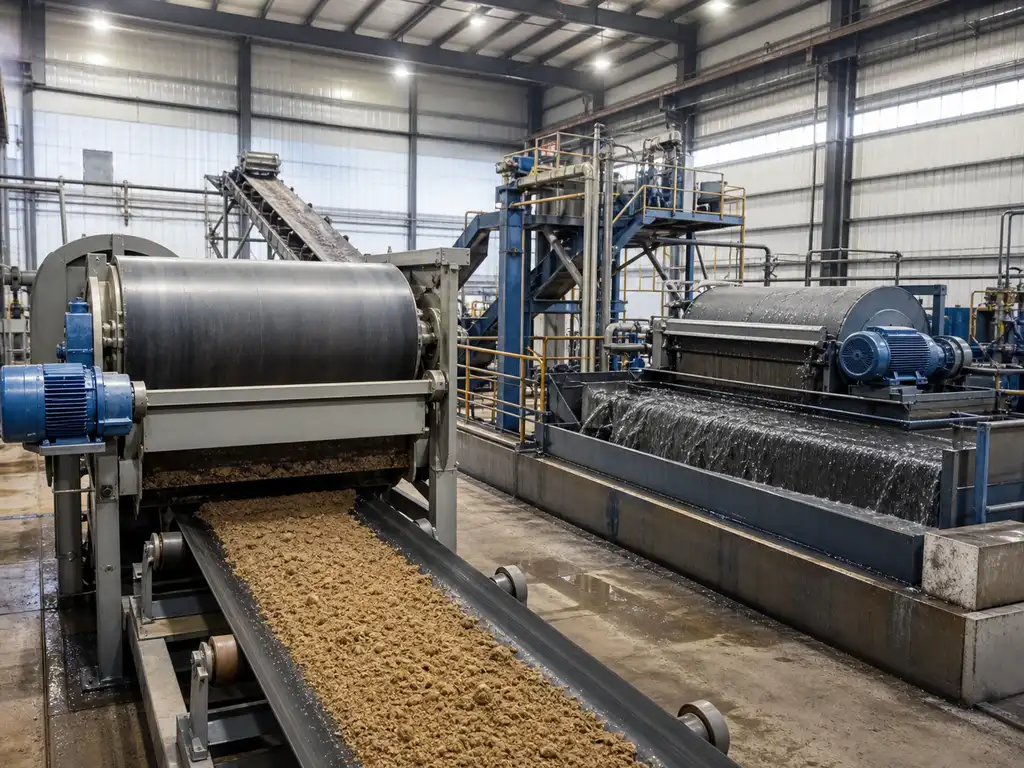
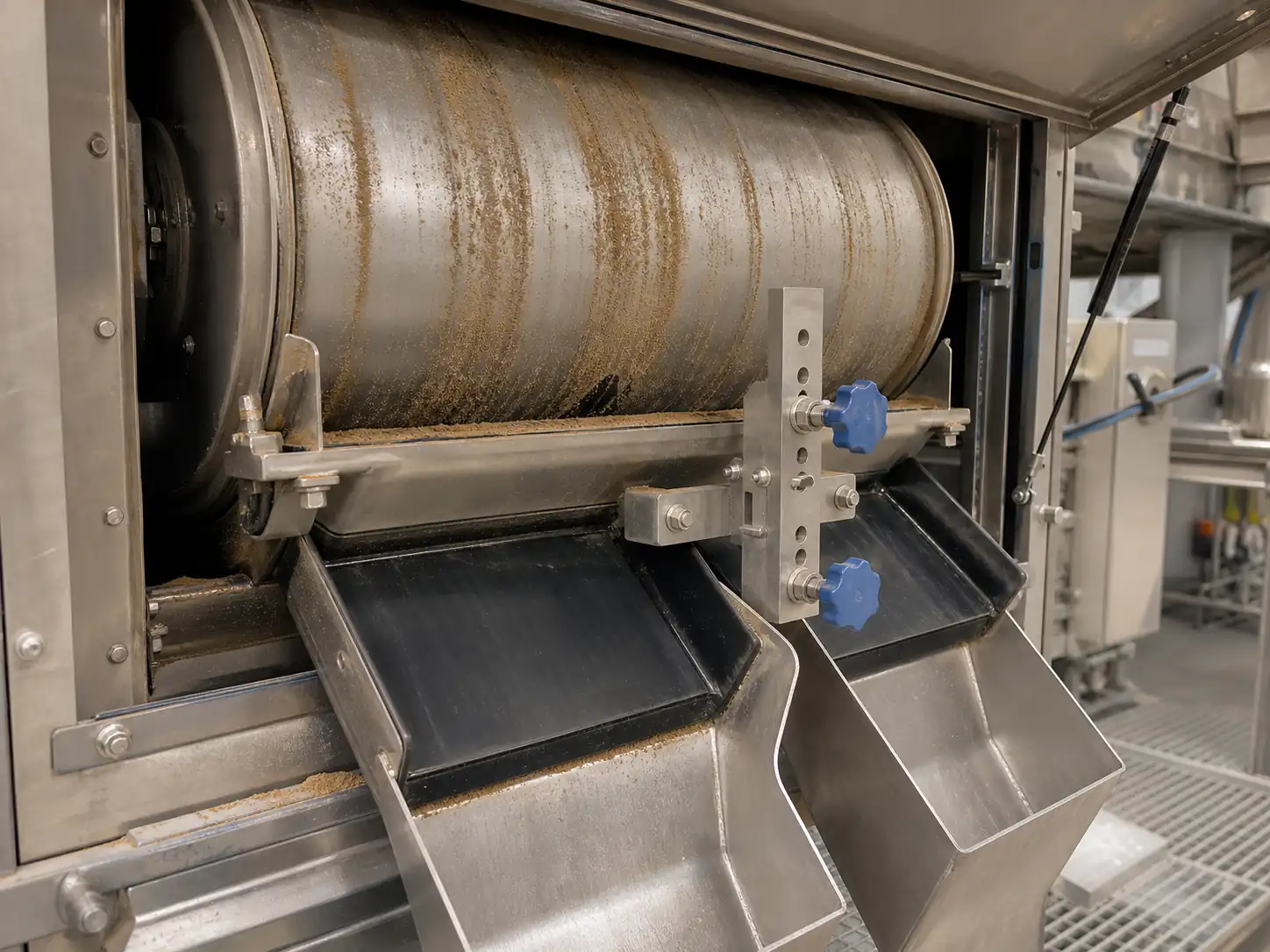
Is a Drawer Magnet Suitable for Your Process?
- Typical material
- Dry, gravity-fed powders, pellets, and granules that can pass between magnetic tubes without bridging.
- Typical position
- Between a hopper, chute, mixer, mill, extruder feed, process machine, or packing line.
- Main purpose
- Capture responsive ferrous contamination before it damages equipment or enters the next process.
- Main advantage
- An enclosed material path with defined inlet, outlet, magnetic rows, and pull-out cleaning access.
- Review carefully
- Sticky material, pneumatic pressure, combustible dust, abrasion, large impact pieces, sanitary requirements, and limited side clearance.
How a Drawer Magnet Works
- Material enters through the upper connection.
- The tube arrangement divides and redirects the flow near magnetic pole areas.
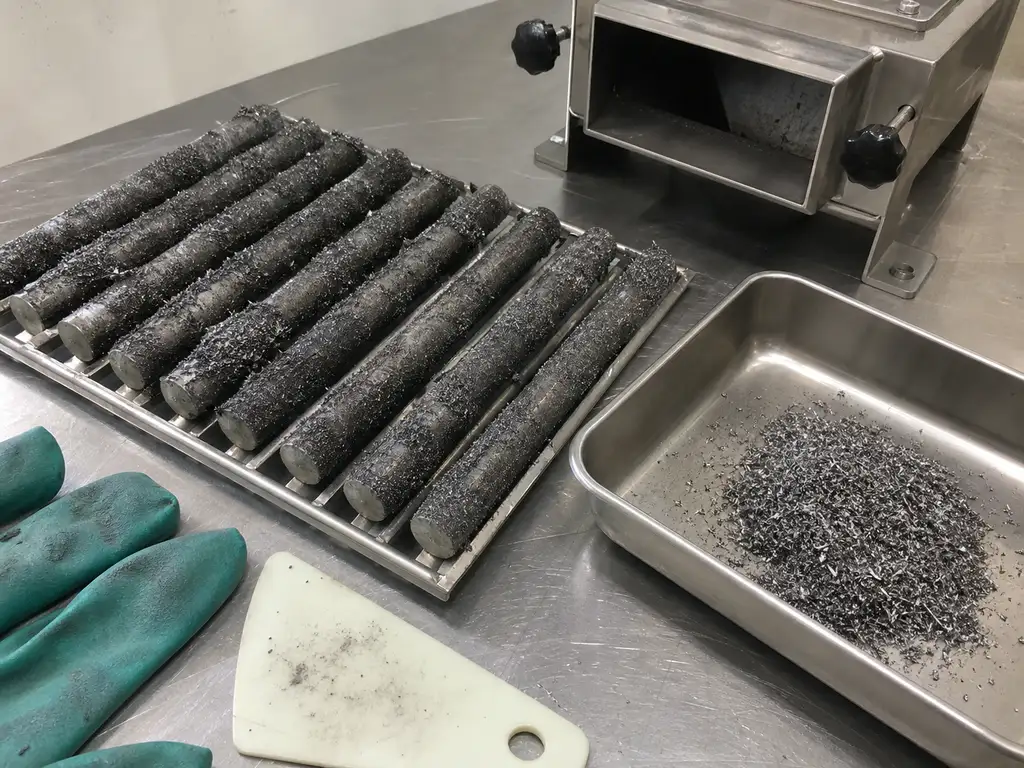
- Responsive ferrous particles are held on the tube or collection-sleeve surface.
- Material leaves through the lower connection.
- At a defined interval, flow is isolated and the drawer is removed for inspection and cleaning.
The real capture result depends on contact distance, material distribution, magnetic response, buildup, flow rate, and cleaning interval. A maximum field value at one surface point does not guarantee removal throughout the inlet area.
Drawer Magnet vs Open Magnetic Grate
| Decision | Drawer magnet | Open magnetic grate |
|---|---|---|
| Material path | Integrated enclosed housing | Installed in the buyer’s hopper, chute, or opening |
| Connections | Defined inlet, outlet, flange, and overall height | Frame size and support interface |
| Cleaning access | Drawer pulls out from one side | Complete grate is removed from its opening |
| Flow behavior | Controlled by housing, tube rows, and outlet | Depends more heavily on surrounding equipment |
| Best reason to choose | The line needs an enclosed connection and repeatable pull-out access | The buyer already has a suitable opening and simple removal is acceptable |
Configuration Decisions
Possible project structures include one or more tube rows, staggered tube positions, manual-clean elements, or an easy-clean release mechanism. These are engineering choices, not automatically available standard options. We confirm the construction and drawing for each quotation.
- More rows: can create additional contact opportunities but reduce open area.
- Tighter tube spacing: can improve contact but increase pressure loss and bridging risk.
- Larger inlet: does not by itself prove the required throughput.
- Easy-clean construction: can reduce scraping but requires more mechanism and withdrawal space.
Information Required for Selection and Drawing
| Category | Required information | Why it matters |
|---|---|---|
| Material | Name, particle size, bulk density, moisture, temperature, and flow behavior | Determines blockage, wear, and practical open area |
| Contamination | Iron type, size, shape, expected amount, and sample if uncertain | Defines the magnetic target and testing need |
| Process | Capacity, gravity or controlled feed, normal and peak flow | Prevents selection from inlet size alone |
| Interface | Inlet, outlet, flange drilling, overall height, and nearby equipment | Ensures the housing fits the line |
| Cleaning | Expected frequency, available side clearance, iron collection method | Defines drawer direction and removal envelope |
| Compliance | Material certificate, finish, sealing, inspection, and documentation requirements | Prevents unsupported sanitary or compliance claims |
Capacity Must Be Stated with Test Conditions
Drawer magnet capacity depends on usable inlet area, spacing between tubes, number of rows, bulk density, particle size, moisture, material flowability, and upstream feeding. Do not rely on a universal t/h value; require the reference material, inlet geometry, tube arrangement, and operating condition behind the capacity statement.
For a new material, provide a representative sample or a video showing how it flows through a similar opening. Cohesive powder may bridge even when a simple area calculation suggests sufficient capacity.
Materials, Seals, and Pressure Boundary
Housing material, product-contact stainless grade, surface finish, weld treatment, seals, wall thickness, and fasteners must be confirmed on the approved drawing. A standard gravity housing must not be described as pressure-rated, explosion-proof, food-contact compliant, or sanitary without the corresponding design review and documentation.
For pneumatic conveying, vacuum service, combustible dust, or regulated food and pharmaceutical use, send the operating pressure, cleaning method, hazard classification, and required standards before quotation.
Cleaning and Maintenance
- Stop and isolate material flow.
- Confirm the housing is depressurized where applicable.
- Place a controlled collection tray in the cleaning area.
- Release the retaining mechanism and pull the drawer out using the approved handling method.
- Remove captured contamination without damaging tube or sleeve surfaces.
- Inspect tubes, seals, guides, fasteners, and housing before returning the drawer to service.
Inspect frequently during commissioning. Set the routine interval from recorded buildup rather than an arbitrary number of hours.
When Further Engineering or Another Technology Is Required
- Wet slurry, sticky, or oily material that cannot pass freely
- Pneumatic pressure or vacuum without a rated housing design
- Combustible dust without a documented hazard review
- Large hard pieces that can dent magnetic tubes
- Aluminum, copper, or non-responsive contamination
- A guaranteed purity or recovery result without representative testing
Inspection and Acceptance
A project inspection plan may include drawing dimensions, housing and flange interfaces, tube alignment, surface condition, drawer movement, weld review, stainless material documents, and magnetic measurements at defined positions. The responsible party, whether OSENC, a manufacturing partner, or a third-party laboratory, should be identified for each record.
Request a Drawer Magnet Review
Send the inlet and outlet drawing, material, particle size, capacity, temperature, target iron, flow behavior, cleaning frequency, side clearance, and required documents. OSENC will confirm the feasible construction and the information still requiring validation.
Drawer-Magnet RFQ Inputs That Change the Design
The quotation should describe gravity-fed powder or granules in an enclosed housing and connect each proposed feature to an operating or acceptance requirement.
| Selection logic | Choose row count and tube spacing from flow coverage, bridging risk, target size and cleaning interval rather than from housing size alone. |
|---|---|
| Application inputs | Material, particle-size distribution, bulk density, moisture, flowability, temperature, target iron size and peak rate |
| Mechanical interface | Inlet and outlet dimensions, flange standard, product head, seal, housing orientation and full drawer-withdrawal clearance |
| Cleaning and service | Confirm whether cleaning stops the line, where released iron is collected and how seals and guide surfaces are inspected. |
| Acceptance method | Define tube field or pull-force method, housing dimensions, material documents, drawer movement and a representative material test if residual level matters. |
Project Scope and Supply Boundary
Boundary for Drawer Magnet for Dry Powder and Granule Iron Removal
- This is a configurable project page, not a released standard model with universal published performance.
- We confirm the manufacturing route, approved drawing and opening and interface, tube layout, contact materials, shell or sleeve construction, extraction space, cleaning method and flow behaviour for the inquiry.
- Dimensions, magnetic values, pull force, capacity, separation result, materials, certification, lead time and warranty become project facts only in traceable quotation, drawing, inspection or order documents.
Project Support
Send your drawing, material data or installation photo
We will review the product structure, magnetic circuit direction, cleaning method, material contact requirements and inspection items before preparing a quotation.
Frequently Asked Questions
How a Drawer Magnet Works?
The real capture result depends on contact distance, material distribution, magnetic response, buildup, flow rate, and cleaning interval.
Why is “Configuration Decisions” important for this decision?
Possible project structures include one or more tube rows, staggered tube positions, manual-clean elements, or an easy-clean release mechanism.
Why is “Capacity Must Be Stated with Test Conditions” important for this decision?
Drawer magnet capacity depends on usable inlet area, spacing between tubes, number of rows, bulk density, particle size, moisture, material flowability, and upstream feeding.