
OSENC Magnetic Separation
“Food grade stainless steel” is not a complete food-contact specification. A magnetic tube, grate or drawer magnet must be reviewed as a finished article: identify every product-contact part, its material, surface condition, welds, seals, joints, lubricants, operating temperature and cleaning method, then match the evidence to the destination market.
Do not accept “FDA approved” as a universal claim. Ask which material or finished article is covered, under which requirement, for what food and conditions of use, and who issued the supporting declaration.
Send your product, process and cleaning requirements for a configuration review
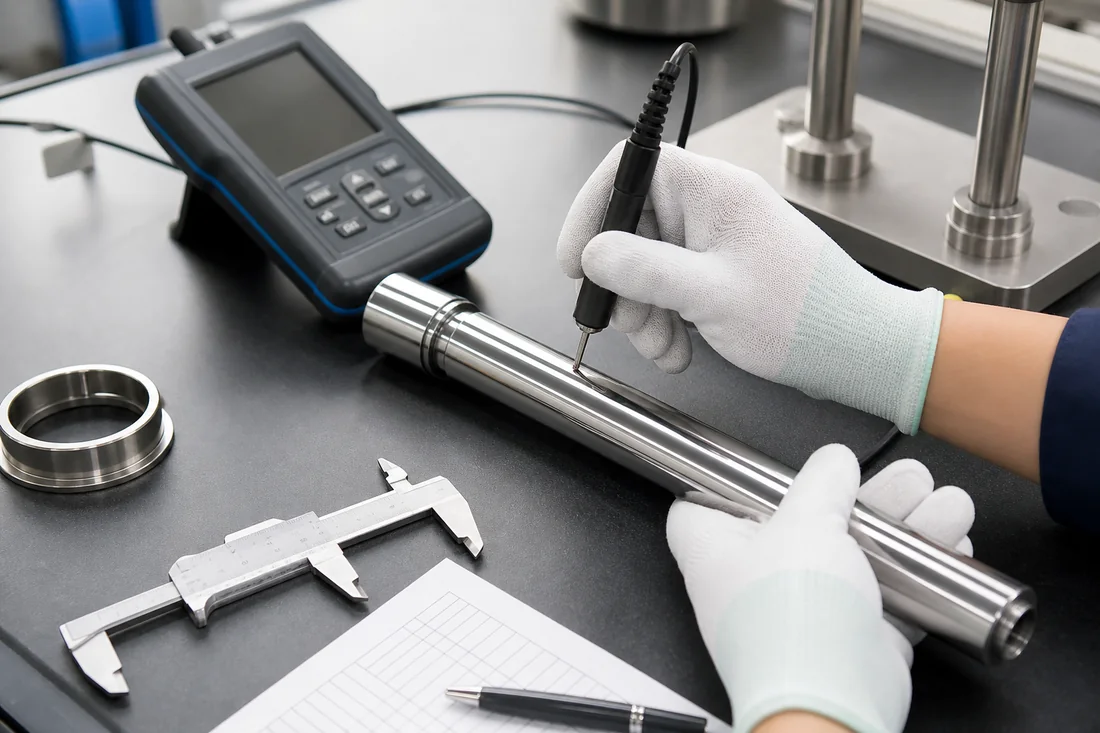
Start with the Actual Contact Boundary
Mark the product flow on the drawing and list all direct and reasonably foreseeable contact surfaces. For a magnetic grate this may include the tube shells, frame, welds and fasteners. For an easy-clean grate, the outer sleeves, stops and any product-side seals also need review. For a drawer magnet, include the housing, inlet and outlet, drawers, tubes, seals and internal ledges.
A stainless outer tube does not establish the suitability of an unreviewed weld, seal, plastic handle or lubricant.
EU Food-Contact Framework
In the EU, food-contact materials placed on the market must comply with the framework in Regulation (EC) No 1935/2004. They must also be manufactured according to good manufacturing practice under Regulation (EC) No 2023/2006. Specific EU measures apply to certain materials, while national rules can apply to others.
The required evidence therefore depends on the materials, intended food contact, temperature, time, cleaning chemicals and destination country. A generic stainless-steel composition report may be one part of the file but is not the complete assessment.
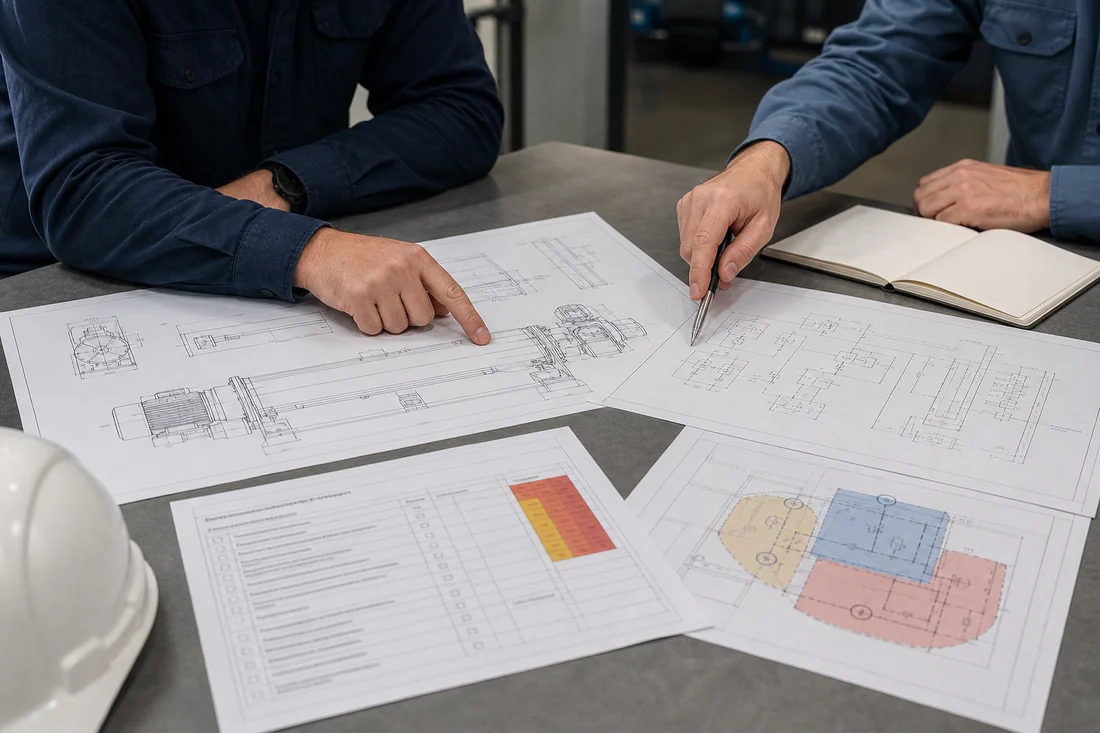
Food-Contact Specification Checklist
- Food or ingredient, including acidity, fat, salt and allergen considerations
- Powder, granule, liquid or paste and whether product can lodge in gaps
- Normal and maximum contact temperature and duration
- Dry cleaning, wet cleaning, clean-in-place or sterilization method
- Cleaning chemicals, concentration, temperature and exposure time
- Required stainless grade for each contact part
- Required surface-finish or roughness acceptance method
- Weld profile, polishing, crevice and drainability requirements
- Seal, gasket, polymer and lubricant requirements
- Destination-market declaration and traceability documents
304, 316 and 316L: Grade Alone Does Not Decide Suitability
The stainless grade should be selected against the product chemistry, chlorides, cleaning regime, weld construction and corrosion risk. 316 or 316L may be preferred in some corrosive or welded conditions, but no grade label guarantees performance in every food process.
Require the selected grade on the drawing and obtain traceable material evidence for the actual contact parts. Also define whether the quoted grade applies to the tube shell, frame, housing, fasteners and sleeves—or only one visible component.
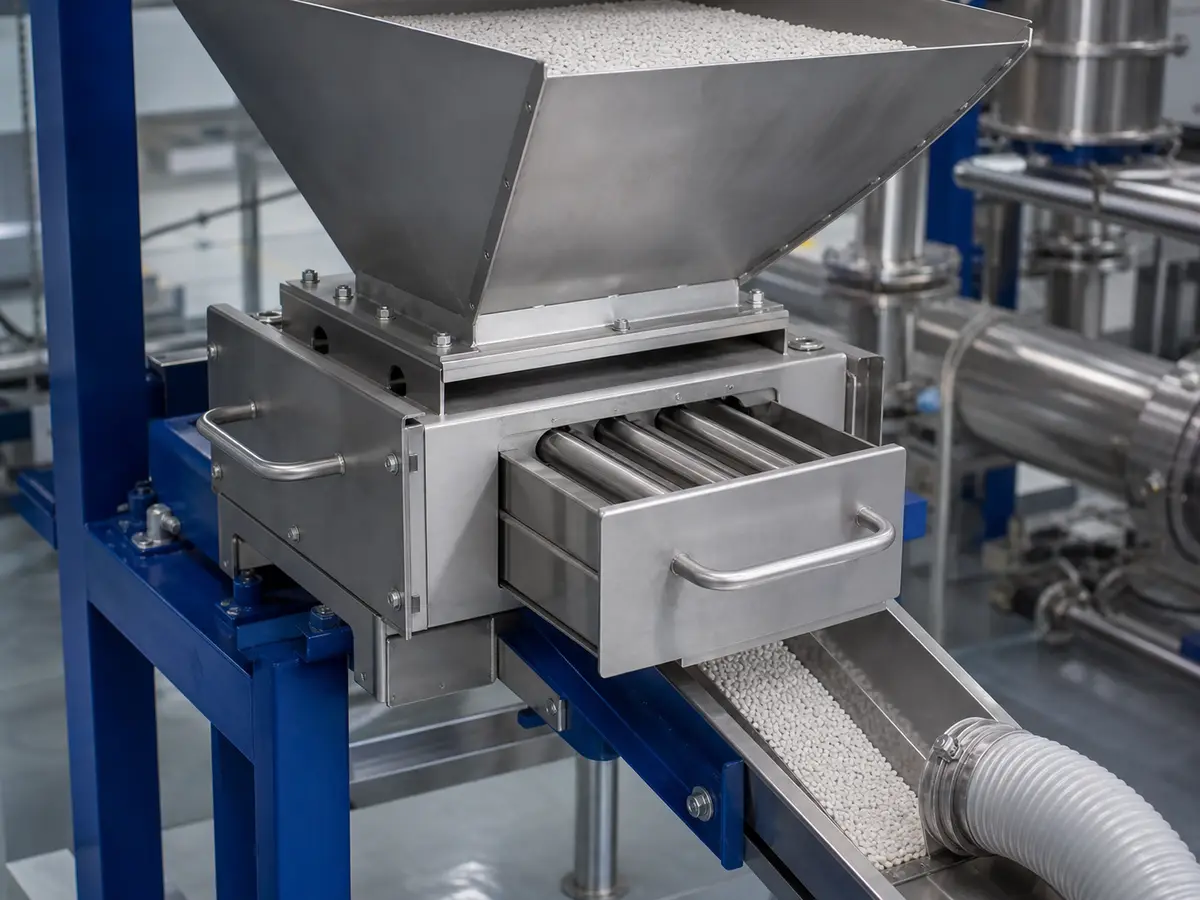
Hygienic Design Questions for Magnetic Grates and Drawer Magnets
- Can every product-contact surface be inspected and cleaned?
- Are there hollow sections, crevices, unsealed threads or dead zones where product can accumulate?
- Can the operator remove captured metal without recontaminating the clean stream?
- Does the easy-clean mechanism introduce an outer sleeve and therefore a larger working gap?
- Is there adequate extraction space without placing removed parts on an uncontrolled surface?
- Can seals tolerate the food, temperature and cleaning chemicals?
- Are welds continuous, finished and inspectable according to the agreed acceptance criteria?
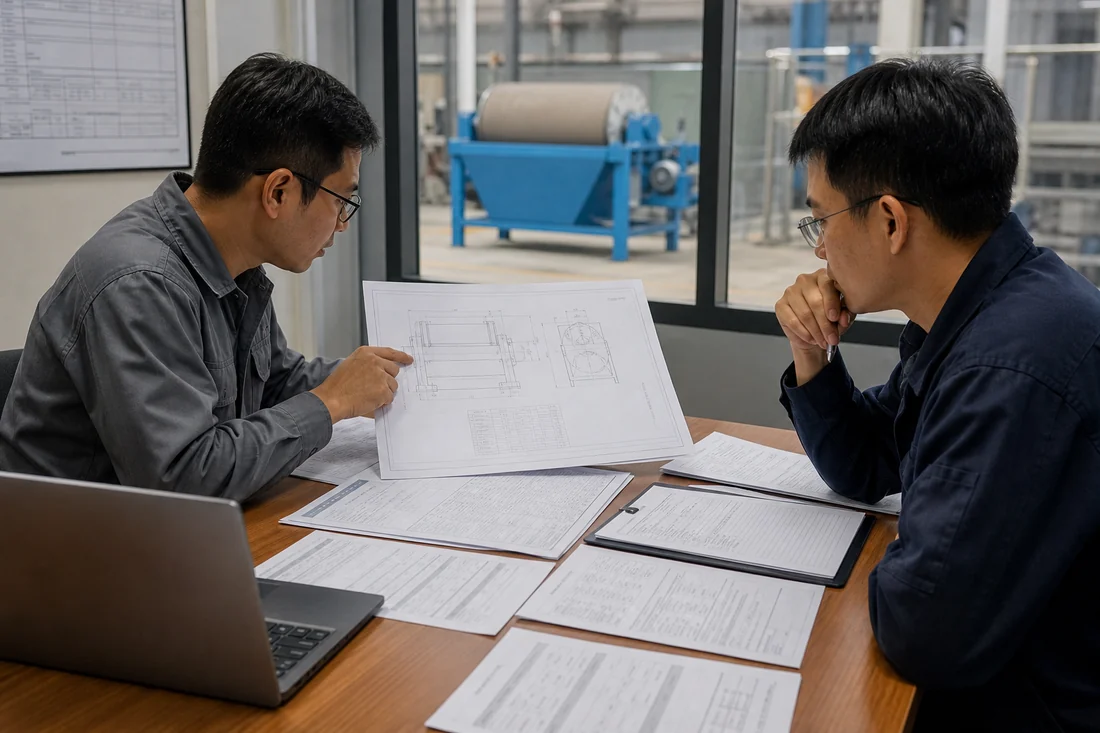
Documents to Request
- Approved contact-part drawing and bill of materials
- Traceable stainless material certificates
- Declarations or evidence for seals, polymers and other contact materials
- Surface-finish inspection record where specified
- Weld and passivation/polishing records where contractually required
- Cleaning and maintenance instructions
- Product identification and batch/serial traceability
- Destination-specific declaration or compliance documentation where required
Quotation and Documentation Boundary
We describe magnetic strength, construction and food-contact documentation only for the confirmed product configuration. For an unconfirmed configuration, request a food-contact application review rather than accepting a general “FDA approved” or “food-grade certified” claim.
Review grate and tube configurations Review enclosed drawer magnets Check material traceability
Food-Contact Approval Questions for the Buyer
| Decision rule | Approve the complete product-contact construction, not a general food-grade label: every tube, frame, housing, weld, seal and surface treatment must match the intended food and cleaning conditions. |
|---|---|
| Inputs to confirm | Contact-material list, stainless grades, finish and roughness, weld treatment, seals, lubricant, temperature, food type, cleaning chemical and destination-market requirement. |
| Risk or limitation | A material report for one stainless part or a generic FDA statement does not cover the finished separator, its fabrication or all conditions of use. |
| Buyer action | Request a drawing-linked contact-parts schedule and supporting declarations or reports before the final specification is released. |
How We Support Your Document Decision
Food-Contact Magnetic Separators: What “Food Grade” Must Actually Define: seller-side application review
- Your procurement risk: A certificate, declaration or material report can name the wrong company, site, model or scope and still look convincing during supplier approval.
- What we review: We compare the quoted configuration, legal manufacturer, intended use, destination, applicable requirement, document issuer, validity and traceability.
- What we provide: We identify which project documents can come from OSENC, the selected manufacturing partner, a material supplier or a third-party body, and we state that source clearly.
- Buyer value: This helps you reduce approval risk, avoid accepting an irrelevant certificate and prevent a documentation gap from delaying import clearance after the equipment is built.
- Boundary: We do not convert a partner management-system certificate or component report into an unsupported OSENC or complete-machine compliance claim.
- Next step: Send the material and target, particle range, moisture, temperature, throughput, contamination, installation drawing, available space, cleaning preference and any sample or site video. Send the configuration and document requirement
Project Support
Need to verify documents before ordering?
Tell us the destination market, product configuration, required declaration, material document, safety requirement and intended operating environment before we confirm what can be supplied.
Frequently Asked Questions
Why is “304, 316 and 316L: Grade Alone Does Not Decide Suitability” important for this decision?
The stainless grade should be selected against the product chemistry, chlorides, cleaning regime, weld construction and corrosion risk.
Why is “Quotation and Documentation Boundary” important for this decision?
We describe magnetic strength, construction and food-contact documentation only for the confirmed product configuration. For an unconfirmed configuration, request a food-contact application review rather than accepting a general “FDA approved” or “food-grade certified” claim.