
OSENC Magnetic Separation
Tramp Iron Removal in Cement Raw-Material Handling
Conveyor and Equipment Protection
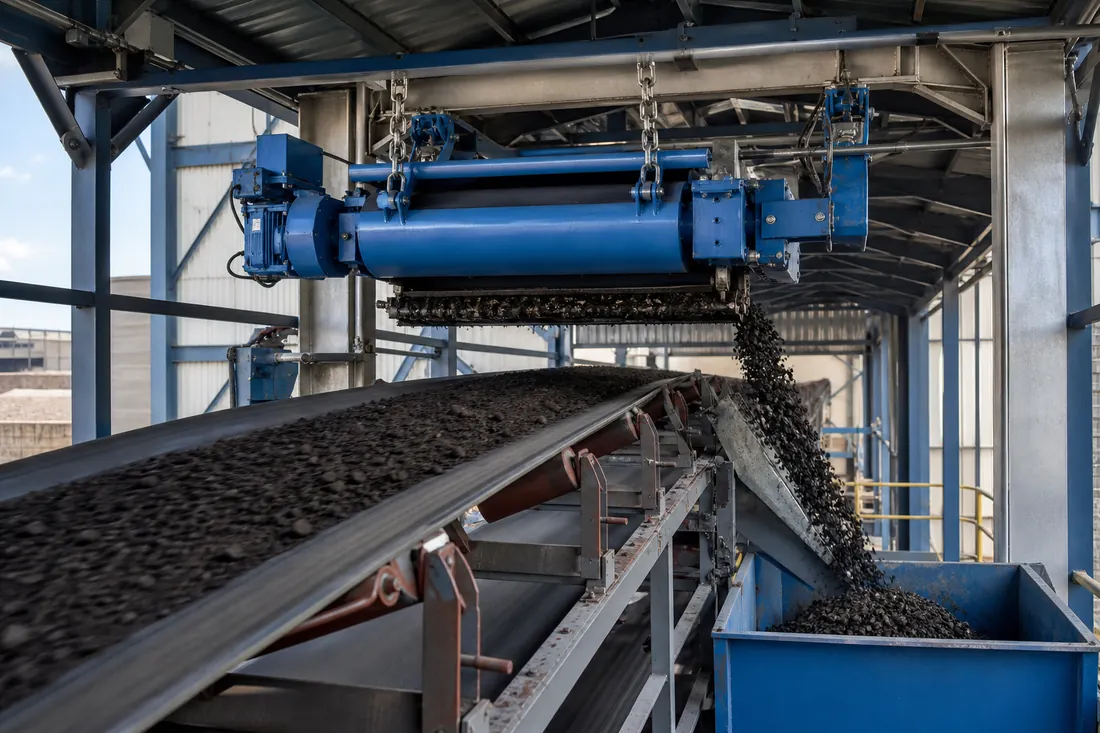
In a cement plant, magnetic separation is normally used to protect crushers, mills, conveyors, and other equipment from ferrous tramp carried with limestone, additives, alternative fuels, or recycled material. Start by identifying the protected machine and the worst burden conditions, then choose the magnetic position and cleaning method; belt width alone is not enough.
Send Conveyor and Raw-Material Data Review Suspended Magnets
Where Tramp Iron Comes From
Typical sources include quarry and demolition debris, loader or transport contamination, broken teeth and wear parts, liner fragments, bolts, tools, wire, and material from alternative-fuel streams. The separator should be located before the equipment where an iron strike has the greatest consequence, while leaving sufficient distance and access for extraction and discharge.
Match the Product to the Process Position
| Condition | Candidate product | Main decision |
|---|---|---|
| Occasional iron above a conveyor | Permanent suspended magnet | Can the line stop safely for manual cleaning? |
| Frequent iron or continuous operation | Self-cleaning overband | Where will discharged iron go? |
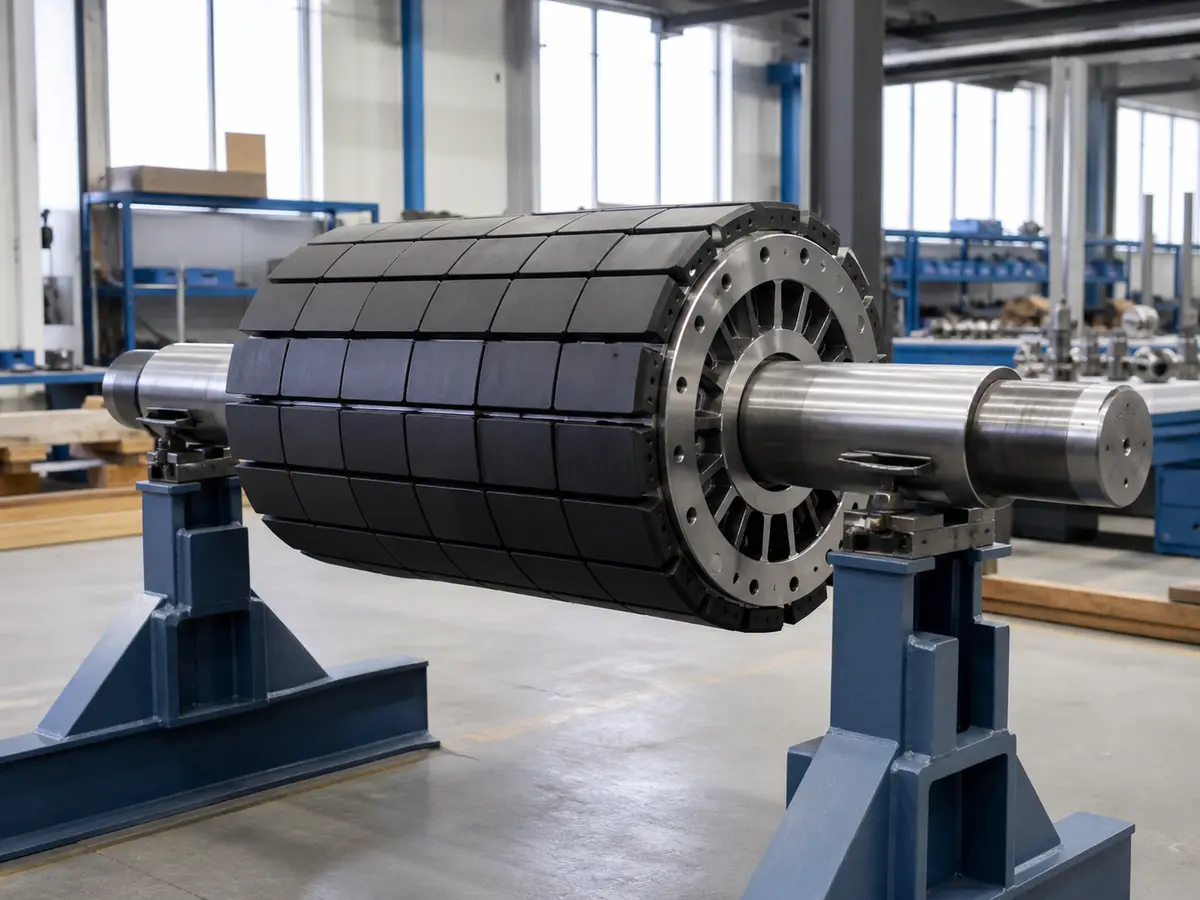
| Separation at conveyor discharge | Magnetic head pulley | Can the pulley interface and trajectory be redesigned? |
| Controlled dry free-fall feed | Housed magnetic drum | Can feed distribution and splitter position be controlled? |
Data That Controls Selection
- Belt width, trough profile, speed, incline, and normal/peak burden depth
- Material type, largest lump, fines content, moisture, bulk density, and temperature
- Normal, surge, and maximum feed conditions
- Target iron dimensions, shape, estimated mass, frequency, and burial depth
- Proposed installation position, steel structure, headroom, and maintenance access
- Dust, weather, vibration, abrasion, and corrosion conditions
- Required operating hours, cleaning method, controls, and acceptance test
Why Working Distance Matters
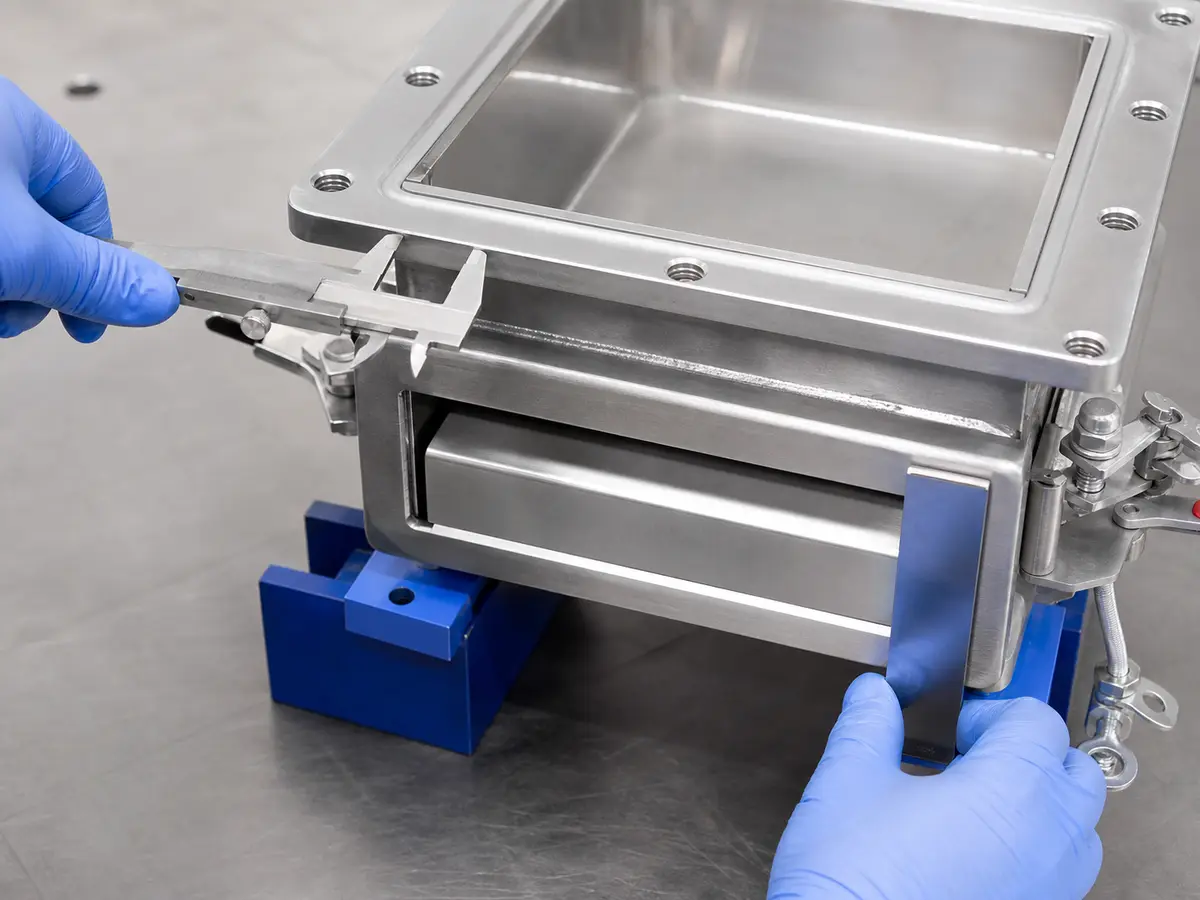
Attraction decreases rapidly as the gap increases. The real working distance includes suspension height plus the depth and position of the iron in the burden. Specify the height datum on the approved drawing and evaluate peak burden, not only an empty-belt measurement. See the suspension-height guide.
Abrasion, Heat and Environment
Abrasive dust affects belt covers, liners, chutes, bearings, and seals. Hot clinker or hot process material requires project-specific magnetic, belt, lubricant, and structural limits. Outdoor units may need rain protection and corrosion review. These conditions cannot be covered by a generic “heavy-duty” label.
Discharge and Access Are Part of the Design
Captured iron must leave the product path without falling back, striking personnel, or accumulating against structures. Confirm crossbelt or inline orientation, discharge side, collection bin, guarding, lifting space, walkway access, and isolation procedure before approving the separator.
Commissioning Records
- Record the installed height from the agreed datum.
- Verify alignment, rotation, belt tracking, guards, clearances, and discharge path.
- Run without load, then introduce material gradually.
- Confirm real peak burden and safe representative test conditions.
- Record captured contamination, missed targets, adjustments, and cleaning frequency.
Request Cement-Plant Selection
Send a process drawing, protected equipment, conveyor details, material and temperature, peak burden, target iron photographs, proposed position, environmental conditions, power, operating schedule, and required documentation.
Cement-Line Inputs for Tramp-Iron Protection
Use these inputs to decide whether the proposed separator and process position fit the real operating duty.
| Equipment direction | A suspended or self-cleaning overband magnet is normally reviewed above belts carrying raw material, clinker additives or fuel where continuous removal protects crushers, mills and conveyors. |
|---|---|
| Material condition | Specify limestone, shale, additives, clinker or alternative fuel; include size distribution, bulk density, moisture, temperature, abrasion, dust and deepest burden. |
| Target iron or magnetic fraction | Describe liner pieces, grinding media fragments, bolts, wire and structural steel by size and expected position in the material layer. |
| Throughput and presentation | Provide design and peak t/h, belt width, speed, trough profile, loading surges and required operating continuity. Cleaning-belt capacity must match the expected iron load. |
| Installation and access | Confirm suspension steelwork, outdoor or hot-dust environment, discharge chute and bin, access for belt and bearing service, lifting route and controls interface. |
| Test or acceptance | Validate at the proposed suspension height with representative steel at center, edges and bottom of the credible burden profile. |
How We Configure a Solution for Your Process
Tramp Iron Removal in Cement Raw-Material Handling: seller-side application review
- Your process problem: Ferrous contamination can damage downstream equipment, reduce product consistency, create rejects or force unplanned cleaning and downtime.
- What we review: We confirm your material form, particle size, moisture, temperature, bulk density, normal and peak throughput, contaminant type and size, required residual and process position.
- What we configure: We compare capture point, magnetic structure, working distance, material presentation, cleaning method and line interface before we prepare a proposal.
- Buyer value: This helps you intercept contamination before a critical machine or quality stage, reduce repeat purchases and avoid a separator that restricts normal production flow.
- Boundary: We do not recommend the application when the target is non-magnetic, the material path prevents exposure or the required result cannot be supported without testing.
- Next step: Send the material and target, particle range, moisture, temperature, throughput, contamination, installation drawing, available space, cleaning preference and any sample or site video. Send your process and contamination data
Project Support
Send your material and process conditions
We can review the process point, material shape, iron source, capacity, available space and cleaning method before recommending a magnetic separator layout.
Frequently Asked Questions
Where Tramp Iron Comes From?
Typical sources include quarry and demolition debris, loader or transport contamination, broken teeth and wear parts, liner fragments, bolts, tools, wire, and material from alternative-fuel streams.
Why Working Distance Matters?
Attraction decreases rapidly as the gap increases. The real working distance includes suspension height plus the depth and position of the iron in the burden.
Why is “Abrasion, Heat and Environment” important for this decision?
Abrasive dust affects belt covers, liners, chutes, bearings, and seals. Hot clinker or hot process material requires project-specific magnetic, belt, lubricant, and structural limits.