
OSENC Magnetic Separation
Magnetic Separation for Ceramic and Chemical Powders
For dry powders, use close-contact magnetic tubes, grates, drawer magnets, or easy-clean grates only after checking flowability, particle size, fine-iron target, abrasion, corrosion, temperature, cleaning, and required purity measurement. Maximum surface Gauss alone does not prove powder performance.
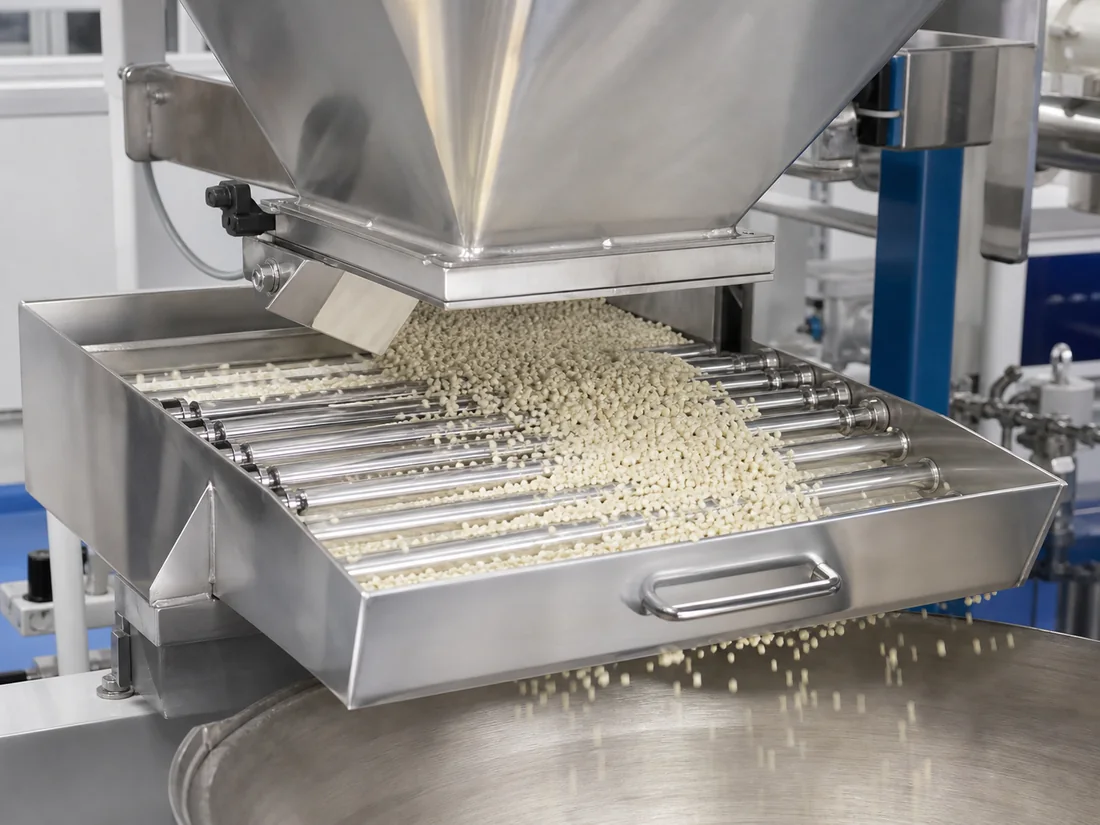
Choose by Line Interface
| Need | First product to review |
|---|---|
| Individual OEM magnetic element | Magnetic tube |
| Existing hopper or open chute | Magnetic grate |
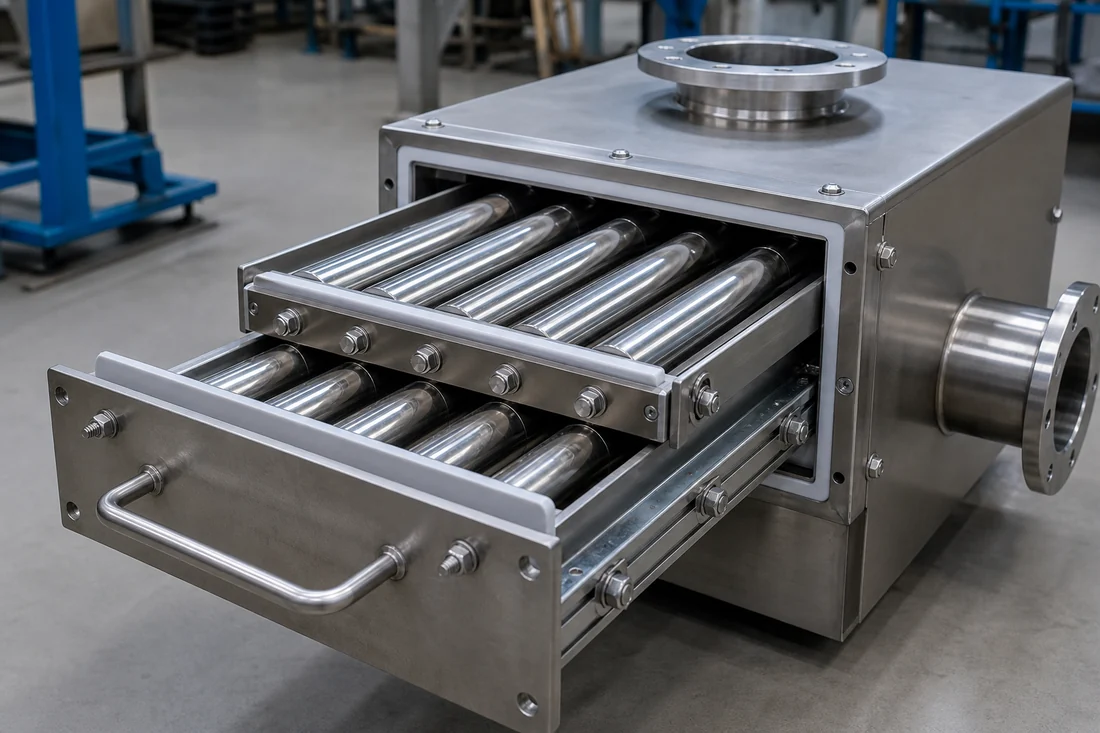
| Enclosed inlet and outlet | Drawer magnet |
| Frequent contamination buildup | Easy-clean magnetic grate |
Material Risks
- Fine cohesive powder may bridge above tubes.
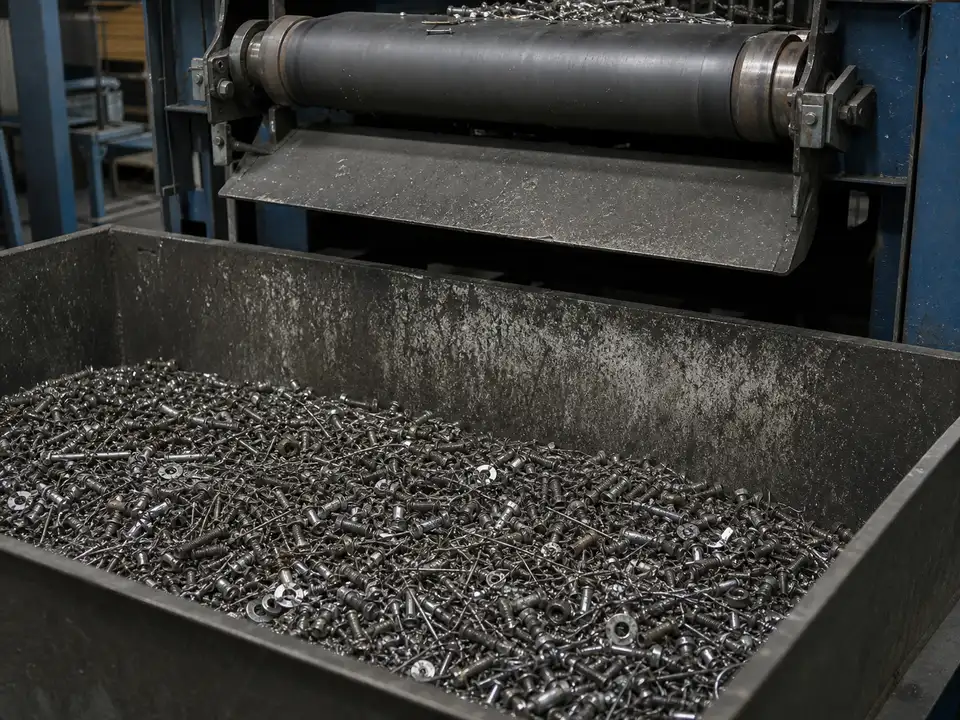
- Abrasive ceramic particles can wear collection sleeves.
- Acids, alkalis, solvents, or cleaning agents require material compatibility review.
- High temperature can change magnet and seal performance.
- Combustible dust requires a documented hazard assessment; a non-powered grate is not automatically explosion compliant.
Specify the Magnetic Test
State the measurement point on the finished tube or sleeve, instrument, temperature, tolerance, and sampling grid. If product purity is contractual, define sample preparation, feed rate, number of passes, analysis method, and acceptance level. A field measurement is not a purity test.
Cleaning and Cross-Contamination
Define how the assembly is isolated, removed, cleaned, inspected, and returned without reintroducing captured iron. Confirm whether dry wiping, washing, or another procedure is allowed and whether the surface finish and seals support it.
When Standard Products Do Not Fit
Do not force cohesive, pressurized, highly corrosive, solvent-rich, or hazardous powder into a standard gravity grate or drawer. These conditions may need agitation, a rated pressure boundary, special alloys, explosion controls, or another separation method.
Required Information
Send powder identity and safety information, particle size, bulk density, moisture, flow behavior, capacity, temperature, chemical exposure, target contamination, opening/flange drawing, cleaning method, required materials, and analytical acceptance method.
Powder Compatibility and Flow Data for Selection
Use these inputs to decide whether the proposed separator and process position fit the real operating duty.
| Equipment direction | Use a grate or drawer magnet only when the powder can approach the magnetic surface and the contact construction is compatible with the chemical, cleaning method and purity requirement. |
|---|---|
| Material condition | Define chemistry, particle-size distribution, bulk density, moisture, cohesiveness, bridging, electrostatic behavior, corrosion, abrasion and maximum process or cleaning temperature. |
| Target iron or magnetic fraction | Describe iron fines, rust, milling media fragments and weakly magnetic wear particles; give expected size and concentration and the analytical limit used for the final powder. |
| Throughput and presentation | Provide batch mass or normal and peak kg/h, inlet size, feed method, head pressure and whether aeration or vibration changes residence time and tube coverage. |
| Installation and access | Confirm contact material, finish, seals, flange or chute interface, cleanout method, dust containment and full withdrawal space for the grate or drawer assembly. |
| Test or acceptance | Test the actual powder and cleaning procedure. Compare contamination before and after separation without assuming that a surface-Gauss value predicts a chemical purity result. |
What We Need to Configure This Project
Input set for Magnetic Separation for Ceramic and Chemical Powders
- How we use your data: We compare your material, contamination risk, production target and line interface before we configure a proposal or rule out an unsuitable option.
- Material: name and composition; dry or wet; powder, granule, lump, fibre or slurry; minimum, maximum and typical particle distribution; moisture, stickiness, tendency to cake or bridge, abrasiveness, corrosiveness, bulk density, normal temperature and maximum temperature.
- Production and target: normal and peak throughput, continuous or batch feed, feed uniformity, contaminant or recovery target, magnetic response if known, typical and maximum target size, initial concentration, acceptable residual and whether product loss is permitted.
- Installation: hopper, chute or pipeline location, opening or flange dimensions and standard, flow direction, product head, extraction and cleaning space, upstream and downstream connections; cleaning method, permitted shutdown, contact-material, wear and corrosion requirements; indoor, outdoor, washdown, high-humidity, dusty or hazardous-area conditions.
- Supporting project files: power and control data for any actuator or automated cleaning option, plus available air supply and pressure where applicable; destination country; current drawings, site photographs, running video and a representative material/contaminant sample when testing is needed.
- What you receive next: We use the confirmed inputs to prepare a project-specific drawing and inspection plan. We do not treat performance as confirmed until the agreed design and any required representative test or site acceptance establish the result.
Project Support
Send your material and process conditions
We can review the process point, material shape, iron source, capacity, available space and cleaning method before recommending a magnetic separator layout.
Frequently Asked Questions
Why is “Specify the Magnetic Test” important for this decision?
State the measurement point on the finished tube or sleeve, instrument, temperature, tolerance, and sampling grid.
Why is “Cleaning and Cross-Contamination” important for this decision?
Define how the assembly is isolated, removed, cleaned, inspected, and returned without reintroducing captured iron. Confirm whether dry wiping, washing, or another procedure is allowed and whether the surface finish and seals support it.
When Standard Products Do Not Fit?
Do not force cohesive, pressurized, highly corrosive, solvent-rich, or hazardous powder into a standard gravity grate or drawer.