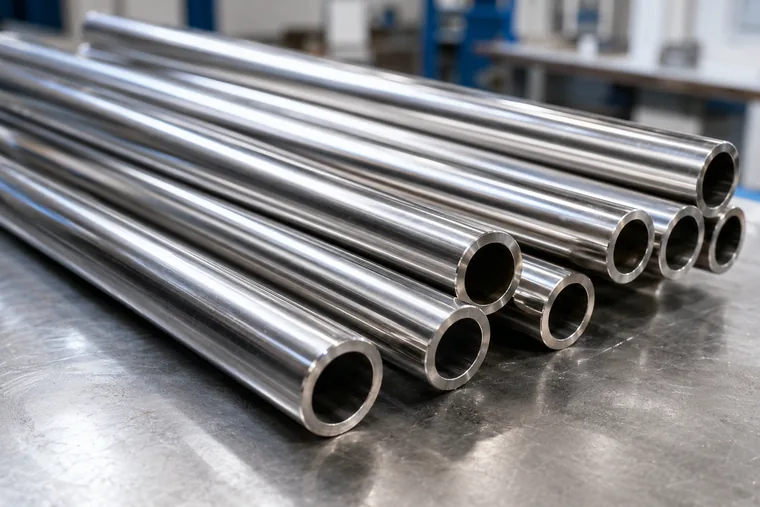
Magnetic tubes
For custom frames, small hoppers, inspection points, and OEM equipment.
25mm, 32mm, or 50mm. 100-1200mm tube length. 304 or 316 stainless. NdFeB or ferrite core.
Magnetic tubes, grates, and easy-clean frames for hoppers, chutes, drawers, ducts, and gravity-fed lines.
| Contaminante | Can it be captured? | Notes |
|---|---|---|
| Iron powder | Yes | Common in powders. |
| Small screws | Yes | Machine parts. |
| Iron chips | Yes | Machining waste. |
| Wire pieces | Yes | From screens and mills. |
| Weak magnetic stainless | Sometimes | Grade and shape decide. |
| Aluminum | No | Non-magnetic. |
| Copper | No | Non-magnetic. |
| Plastic pieces | No | Needs another method. |
| Condiciones del material | Better choice | Why |
|---|---|---|
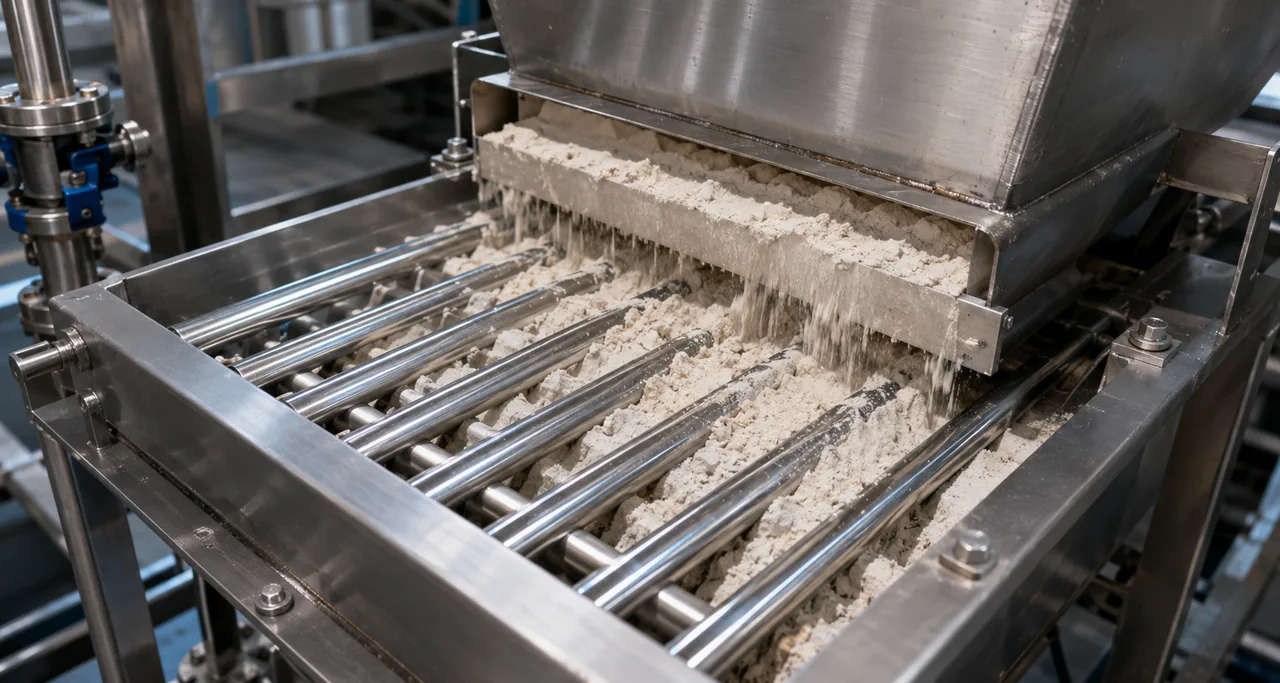
| Free-flowing powder | Standard tubes or grate | Good contact and flow. |
| Plastic pellets | Round tubes or grate | Gentle flow. No hang-up. |
| Fine flour or starch | High-intensity tubes | Fine iron needs field strength. |
| Sticky powder | Rejilla de fácil limpieza | It prevents build-up. |
| Large chunks | Double-row tubes | Better capture area. |
| Abrasive material | Thicker wall tubes | Longer service life. |
| Wet slurry | Not recommended | Magnet rods are not enough. |
| Deep material layer | Multi-layer grate | More contact depth. |
Ask one blunt question first: how does your material move?
For custom frames, small hoppers, inspection points, and OEM equipment.
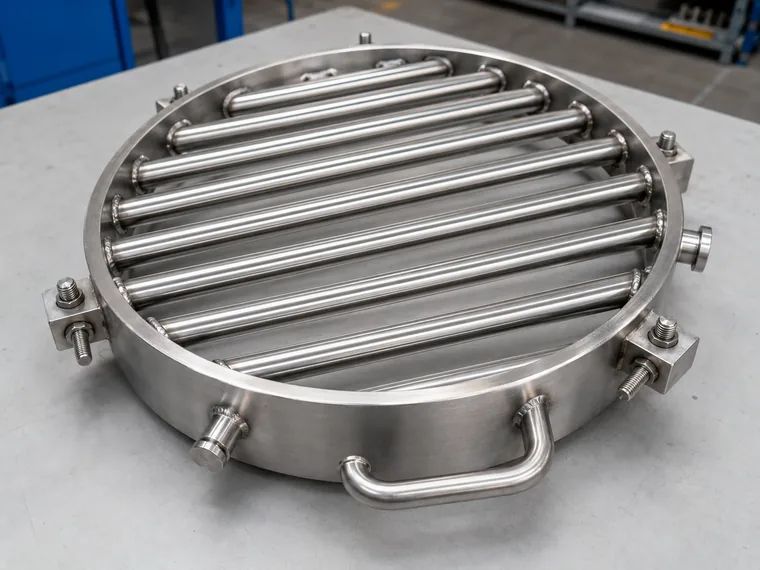
For gravity-fed powder, pellets, granules, grain, plastic, and chemical material.
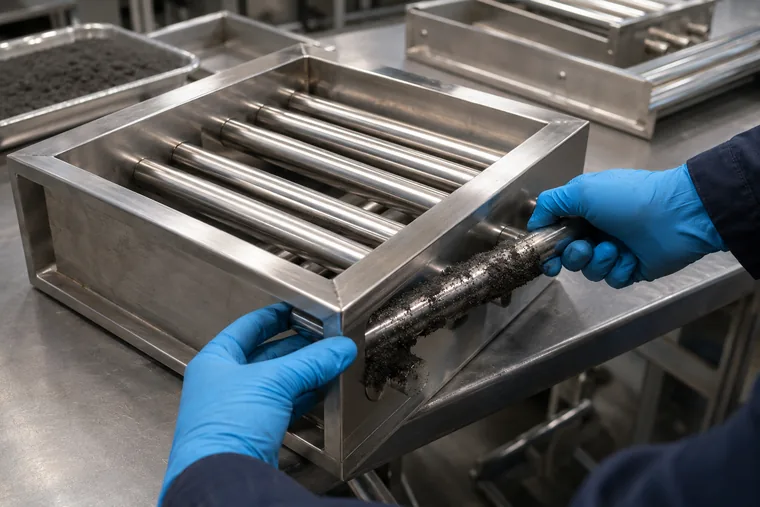
For frequent cleaning, iron shifts, fine iron dust, and tight inspection routines.
| Ubicación | Uso típico | What to check |
|---|---|---|
| Hopper outlet | Primary capture | Opening size and impact. |
| Chute drop | Protect equipment | Flow speed and impact. |
| Drawer housing | Easy cleaning | Drawer direction and space. |
| Duct or pipe | Pneumatic line | Airflow, pressure, mounting. |
| Silo outlet | Bulk discharge | Bridging risk and dead zone. |
| Extruder feed | Plastic or rubber | Heat and pressure. |
| Mixer inlet | Powder blending | Seal and cleaning frequency. |
| Packaging line | Final protection | Food-grade inspection access. |
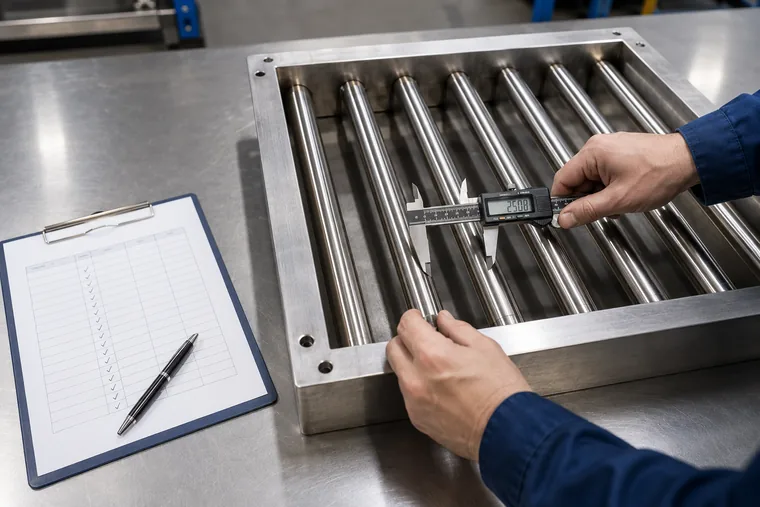
| Concepto | Standard options | Custom options | Notes |
|---|---|---|---|
| Tube diameter | 25 / 32 / 50mm | Custom size | Choose by flow. |
| Tube length | 100-1200mm | Custom length | Match opening depth. |
| Frame shape | Round / square | Custom shape | Fit your equipment. |
| Tube material | SUS304 / SUS316 | SUS316L | Food or chemical use. |
| Magnet material | NdFeB / ferrite | SmCo | Higher heat stability. |
| Surface gauss | 6000-14000G | 12000G+ | Typical range. |
| Working temp. | Hasta 80°C | Up to 250°C | Depends on magnet. |
| Finish | Polished | Sanitary polish | Food-grade option. |
| Limpieza | Manual | Drawer or rotary | By cleaning frequency. |
| Seal | Standard | Food-grade seal | Powder lines. |
Low cleaning frequency.
Weak point:More labor.
Frequent cleaning.
Weak point:Higher initial cost.
Closed systems.
Weak point:Needs room to pull.
Engineering logic: too many tubes can block material. Too few tubes can miss iron. Correct design balances flow, capture, cleaning, and pressure drop.
| Concepto | Details |
|---|---|
| MOQ | 1 piece. |
| Standard lead time | 7-15 days for simple tubes. |
| Custom grate lead time | 15-25 days. |
| Complex structure | 25-35 days. |
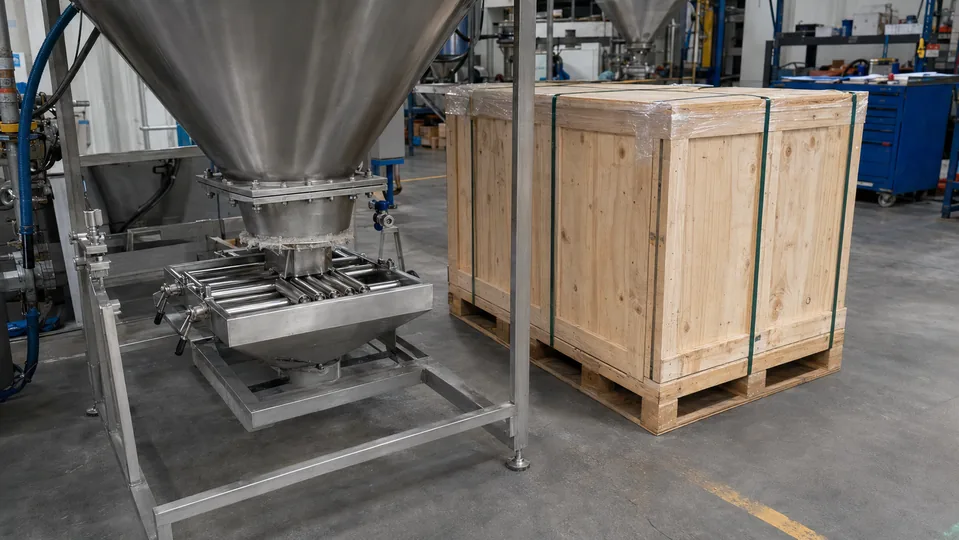
| Packaging | Foam, carton, or wooden case. |
| Documentos | Invoice, packing list, inspection photos. |
| Warranty | 12 months. |
| Not covered | Misuse, impact, overheating, corrosion. |
| Support | Remote install and cleaning advice. |
A tube is one magnetic rod. A grate combines several rods in a frame.
Use 304 for common dry material. Use 316 for corrosive or food lines.
No. Contact distance, tube spacing, and flow depth matter more.
Use it when cleaning happens every shift or every hour.
Only some weak magnetic stainless can be captured.
Yes. Send opening size, flange drawing, and material photos.
No. Aluminum needs eddy current separation, not grate magnets.
Usually no. Wet slurry needs another separator structure.
Fine powder uses tighter spacing. Large chunks need wider spacing.
Material, capacity, opening size, temperature, contamination, and photos.
Do not choose by gauss alone. Send us what runs on your line.
We design the magnetic contact point.