
OSENC Magnetic Separation
Magnetic Separation for Wood Recycling and Biomass Lines
Use a suspended magnet before shredders or grinders to remove nails, screws, hinges, wire, and other exposed ferrous pieces from waste wood. After size reduction, a head pulley or drum may recover liberated iron from a thin controlled stream. Selection must account for light irregular material, deep fluffy burden, moisture, dust, and fire risk.
Why Wood Waste Is Different
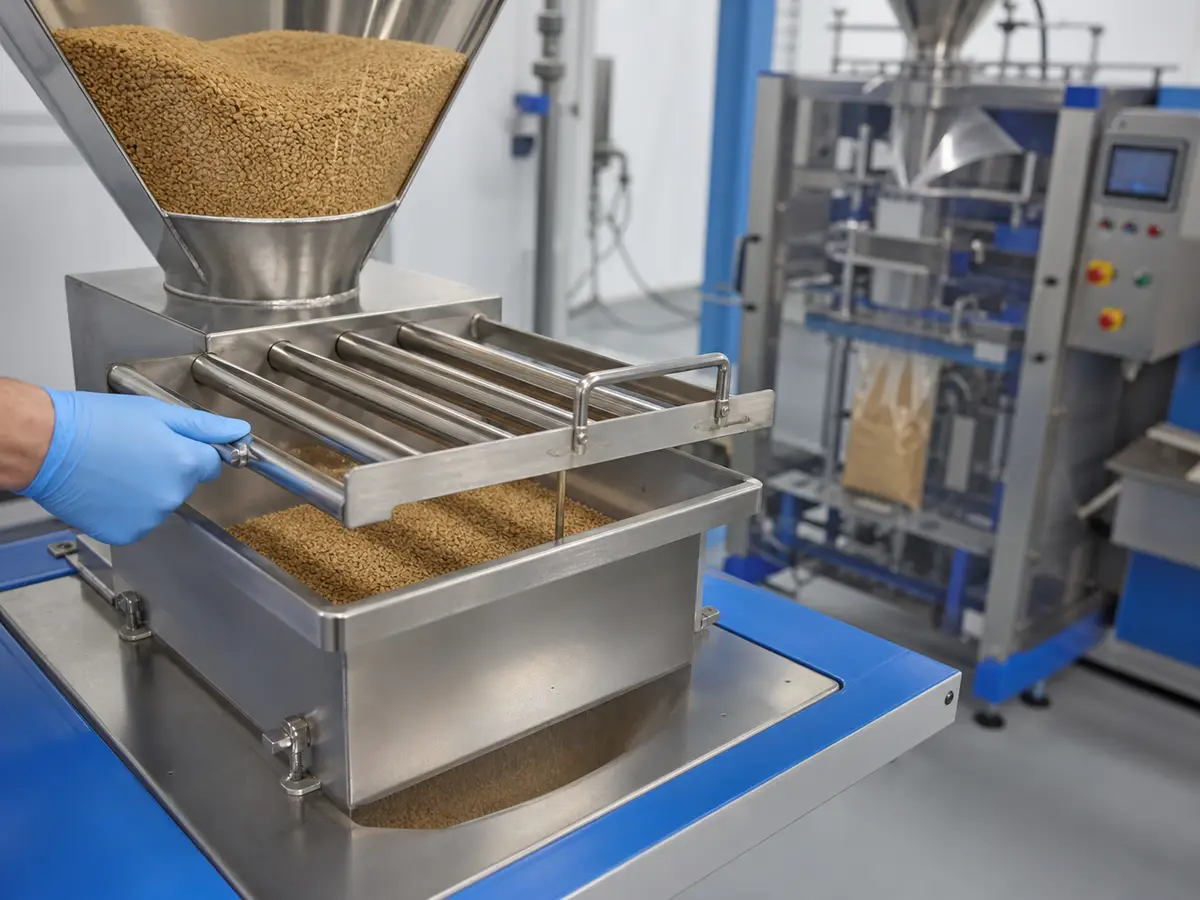
Low bulk density can create a deep layer even at moderate tonnage. Boards and stringy pieces may bridge or carry iron in unpredictable orientations. Nails embedded in dense timber may not separate until shredding exposes them.
Recommended Stages
- Remove oversized metal and unsuitable objects during pre-sort.
- Protect the primary shredder with a suspended magnet where exposed iron can be reached.
- After shredding, spread the material to expose nails and wire.
- Use a self-cleaning overband, head pulley, or drum according to the discharge layout.
- Inspect residual contamination before downstream pelletizing, screening, or combustion.
Manual or Self-Cleaning
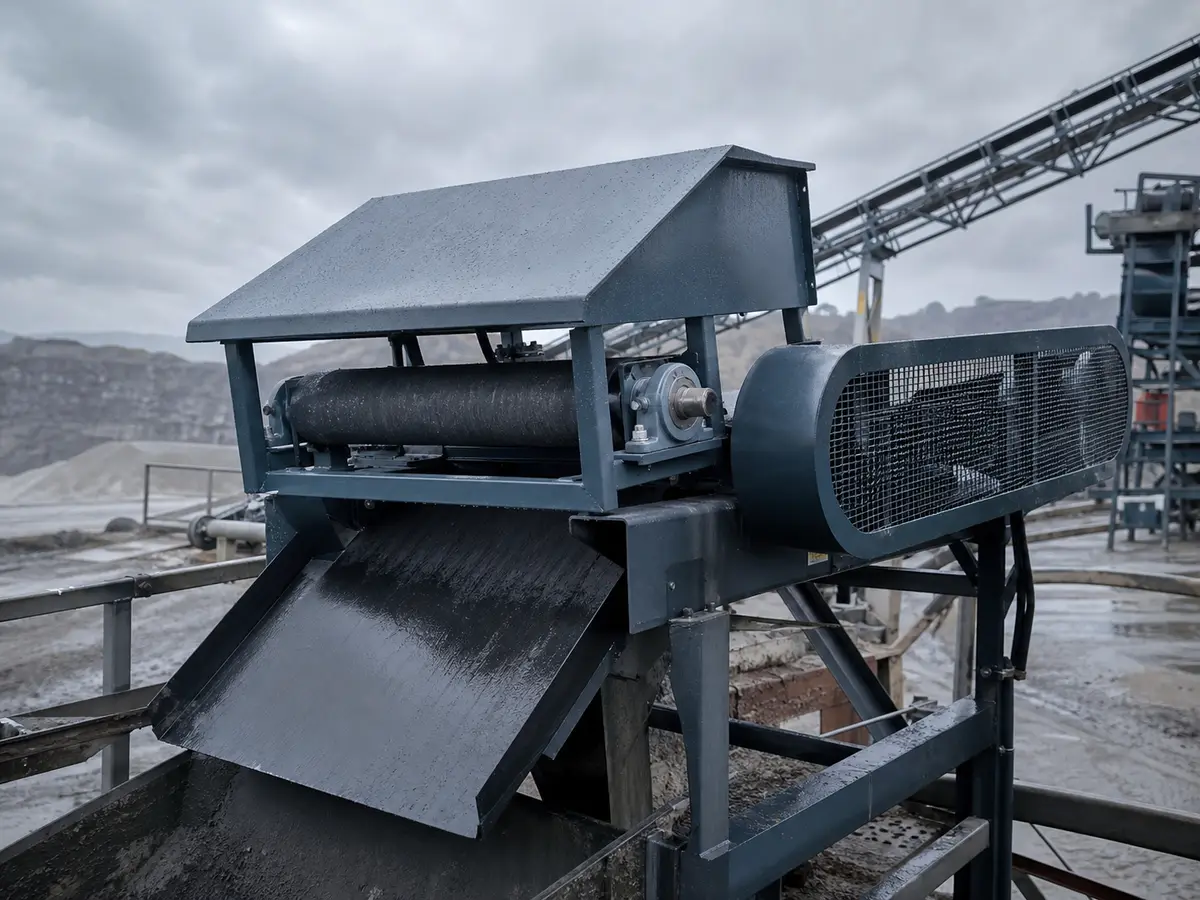
Demolition timber can contain frequent nails and screws, making self-cleaning discharge more practical. Clean biomass with occasional tramp iron may allow manual cleaning. Base the choice on recorded buildup, operating hours, and safe access.
Dust, Moisture, and Fire Review
Wood dust and dry fines create housekeeping and ignition concerns. Bearings, drives, electrical components, guards, and cleaning procedures require site-specific safety review. Wet chips can clump and hide iron; frozen or resinous material may behave differently from the sample used for selection.
What the Magnet May Miss
Nails still embedded inside thick boards may remain attached to the wood, and non-ferrous fasteners will not respond like steel. Verify both the recovered-metal stream and the cleaned wood fraction instead of judging performance only from visible nails on the magnet.
Information OSENC Needs
Send wood source, piece sizes, bulk density, moisture, capacity, belt width/speed/burden, contamination photographs, shredder position, operating hours, dust/fire requirements, available space, and iron discharge plan.
Wood-Waste Data Needed for a Reliable Magnet Layout
Use these inputs to decide whether the proposed separator and process position fit the real operating duty.
| Equipment direction | A suspended or overband magnet is normally used to remove nails, screws and steel fittings from conveyed wood; place it where the material is spread and target steel is liberated from boards or bulky pieces. |
|---|---|
| Material condition | Identify chips, pallets, demolition timber or biomass; record maximum piece length, fines, bulk density, moisture, stringy fibers, dust and the tendency of boards to create an uneven burden. |
| Target iron or magnetic fraction | Describe nails, screws, staples, hinges, wire and tool fragments by size and whether they remain embedded in wood. State which downstream shredder, chipper or mill needs protection. |
| Throughput and presentation | Provide normal and peak volume or mass rate, belt width and speed, actual layer profile and the frequency of bulky surges rather than using average throughput alone. |
| Installation and access | Confirm suspension height, crossbelt discharge clearance, fire and dust controls, access for removing wrapped wire and wood, support steel and maintenance space around the cleaning belt. |
| Test or acceptance | Use representative embedded and free targets at different positions and depths. Record misses as well as wood carried into the collected steel fraction. |
What We Need to Configure This Project
Input set for Magnetic Separation for Wood Recycling and Biomass Lines
- How we use your data: We compare your material, contamination risk, production target and line interface before we configure a proposal or rule out an unsuitable option.
- Material: name and composition; dry or wet; powder, granule, lump, fibre or slurry; minimum, maximum and typical particle distribution; moisture, stickiness, tendency to cake or bridge, abrasiveness, corrosiveness, bulk density, normal temperature and maximum temperature.
- Production and target: normal and peak throughput, continuous or batch feed, feed uniformity, contaminant or recovery target, magnetic response if known, typical and maximum target size, initial concentration, acceptable residual and whether product loss is permitted.
- Installation: belt width and speed, normal and maximum burden depth, magnet position and rated working distance, available suspension and maintenance space, support and lifting arrangement; cleaning method, permitted shutdown, contact-material, wear and corrosion requirements; indoor, outdoor, washdown, high-humidity, dusty or hazardous-area conditions.
- Supporting project files: drive voltage, frequency and phase where a self-cleaning unit is considered; control interface and any site air requirement; destination country; current drawings, site photographs, running video and a representative material/contaminant sample when testing is needed.
- What you receive next: We use the confirmed inputs to prepare a project-specific drawing and inspection plan. We do not treat performance as confirmed until the agreed design and any required representative test or site acceptance establish the result.
How We Configure a Solution for Your Process
Magnetic Separation for Wood Recycling and Biomass Lines: seller-side application review
- Your process problem: Ferrous contamination can damage downstream equipment, reduce product consistency, create rejects or force unplanned cleaning and downtime.
- What we review: We confirm your material form, particle size, moisture, temperature, bulk density, normal and peak throughput, contaminant type and size, required residual and process position.
- What we configure: We compare capture point, magnetic structure, working distance, material presentation, cleaning method and line interface before we prepare a proposal.
- Buyer value: This helps you intercept contamination before a critical machine or quality stage, reduce repeat purchases and avoid a separator that restricts normal production flow.
- Boundary: We do not recommend the application when the target is non-magnetic, the material path prevents exposure or the required result cannot be supported without testing.
- Next step: Send the material and target, particle range, moisture, temperature, throughput, contamination, installation drawing, available space, cleaning preference and any sample or site video. Send your process and contamination data
Project Support
Send your material and process conditions
We can review the process point, material shape, iron source, capacity, available space and cleaning method before recommending a magnetic separator layout.
Frequently Asked Questions
Why Wood Waste Is Different?
Low bulk density can create a deep layer even at moderate tonnage. Boards and stringy pieces may bridge or carry iron in unpredictable orientations.
Why is “Manual or Self-Cleaning” important for this decision?
Demolition timber can contain frequent nails and screws, making self-cleaning discharge more practical. Clean biomass with occasional tramp iron may allow manual cleaning.
Why is “Dust, Moisture, and Fire Review” important for this decision?
Wood dust and dry fines create housekeeping and ignition concerns. Bearings, drives, electrical components, guards, and cleaning procedures require site-specific safety review.