
OSENC Magnetic Separation
Custom Magnetic Tubes and Grates for Powder and Granule Iron Removal
Magnetic tubes and grates capture ferrous contamination only when the material passes close to the magnetic surface. Selection therefore starts with the opening, particle size, flowability, temperature, target iron, tube spacing, and cleaning method—not with a maximum Gauss value by itself.
Product Directions
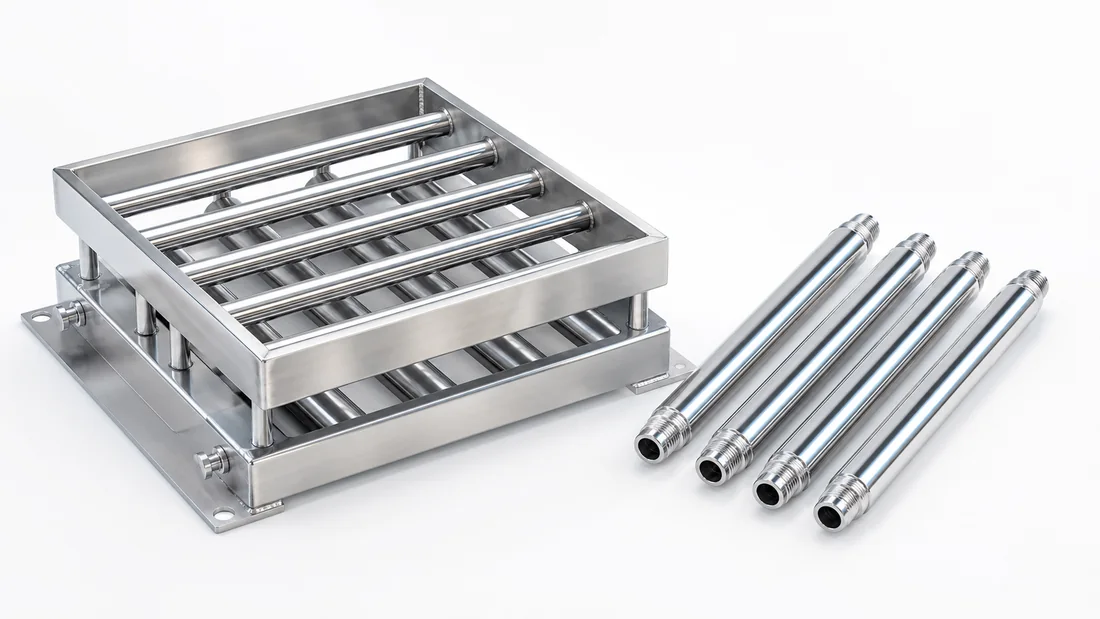
- Magnetic tube: individual rod for OEM frames, hoppers, chutes, or replacement use.
- Magnetic grate: multiple tubes in a round, square, or rectangular frame.
- Easy-clean magnetic grate: removable magnetic cores and collection sleeves for frequent cleaning.
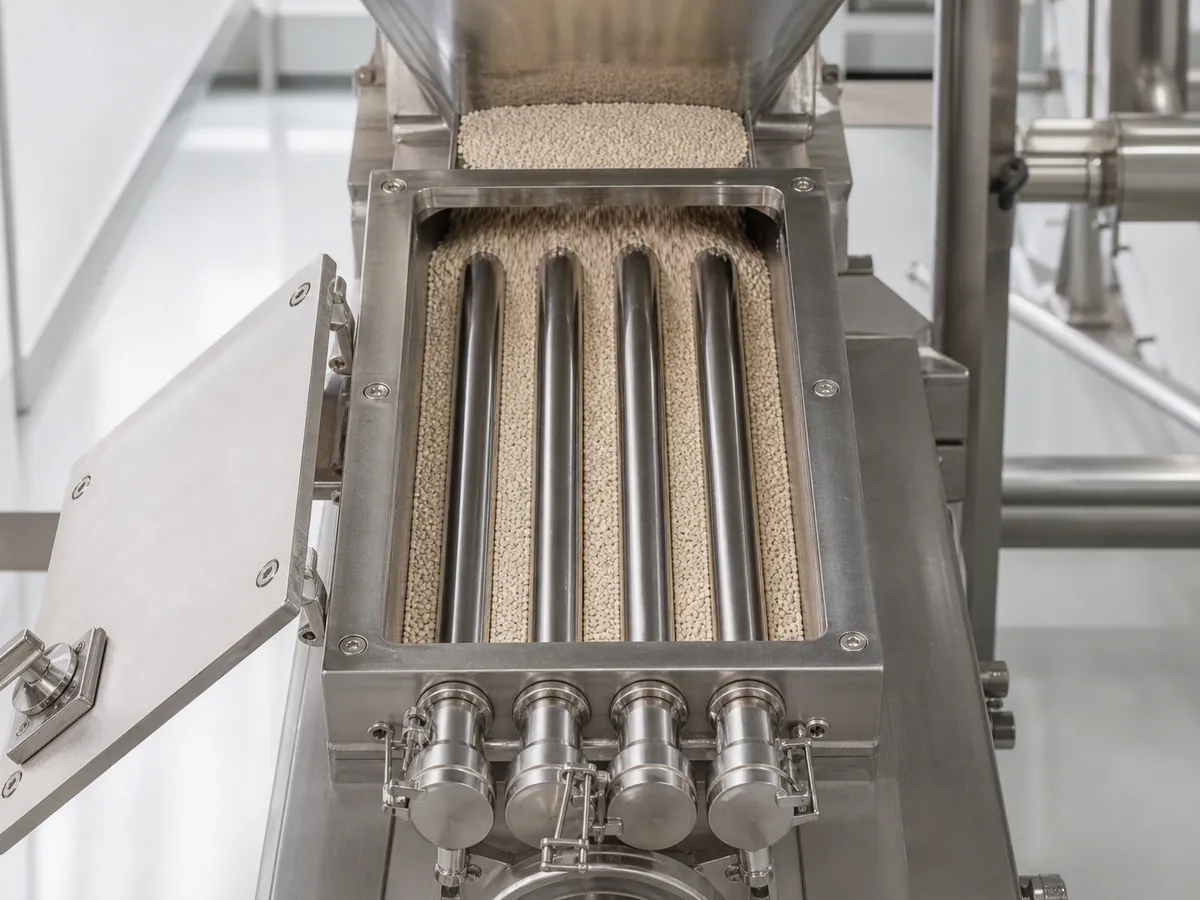
- Drawer magnet: tube assemblies inside an enclosed housing with defined inlet, outlet, and pull-out access.
What the Product Can Capture
| Contamination | Expected response | Boundary |
|---|---|---|
| Fine iron and ferrous wear particles | Often suitable with close contact | Actual magnetic response and flow must be reviewed |
| Small screws, chips, or wire | Generally responsive | Check impact and safe cleaning |
| Some processed stainless steel | Variable | Test the actual sample |
| Aluminum and copper | Not captured | Requires another technology |
Specification Data Required
- Tube diameter and total/effective magnetic length
- End thread, stud, handle, or mounting detail
- Frame shape and opening
- Tube center distance and row arrangement
- SUS304, SUS316, or other confirmed material
- Magnet material and working temperature
- Surface field measurement position, instrument, and tolerance
- Material, particle size, bulk density, flow, and capacity
- Cleaning frequency and available removal space
How to State Surface Magnetic Field Correctly
A defensible statement identifies the maximum or minimum value, measurement position, pole location, instrument, temperature, and tolerance. Example format: “Maximum surface flux density measured directly at the tube surface above the magnetic pole.” The field decreases rapidly with distance, so the highest surface point is not the performance of the full working area.
Flow and Bridging
Closer tube spacing increases contact but reduces open area. Fine free-flowing material may pass through a tighter arrangement, while large granules or cohesive powder can bridge. The final layout should balance capture, throughput, blockage risk, cleaning access, and pressure drop.
Materials and Food-Contact Boundary
Stainless grade, weld, seal, surface roughness, and cleaning method must be confirmed for food, pharmaceutical, or sanitary use. Do not treat “FDA Approved” as a universal equipment claim. Confirm the specific product-contact materials, intended use, and supporting documentation.
Testing and Documentation
Possible checks include dimensions, surface condition, magnetic field at defined points, pole orientation, stainless material record, coating or finish record, and packaging. Some tests may be completed by partner or third-party resources and should be identified accordingly.
Request a Tube or Grate Review
Send the opening, material, particle size, temperature, target iron, flow condition, capacity, and cleaning frequency.
Buyer Checklist for Tubes, Grates, and Enclosed Contact Zones
The quotation should describe dry powder or granules passing near magnetic tubes and connect each proposed feature to an operating or acceptance requirement.
| Selection logic | Choose a single tube for a defined local path, a grate for chute coverage, or a drawer housing when an enclosed multi-row contact zone and controlled removal are required. |
|---|---|
| Application inputs | Material chemistry, particle sizes, bulk density, moisture, flowability, bridging, temperature and target contamination |
| Mechanical interface | Opening or flange, tube diameter and spacing, number of rows, product head, seals and full withdrawal distance |
| Cleaning and service | Confirm cleaning frequency, safe removal, collection of released iron and whether easy-clean sleeves add unacceptable working distance. |
| Acceptance method | Define surface or pull-force test position, material documents, dimensions and a representative flow test where residual contamination matters. |
Combustible Dust and Hazardous-Area Boundary
- For the powder or granular product, the plant owner must identify any combustible dust, vapour or gas and provide the site hazardous-area classification.
- No-coil permanent equipment is not automatically suitable: assess impact, friction, static, hot surfaces, bearings, drives, sensors and controls in the complete configuration.
- Confirm zone or division, substance and ignition data, dust layers, temperatures, earthing and bonding, cable entries, ingress protection, cleaning and destination-country rules.
- Do not claim explosion-proof or ATEX suitability until configuration-specific marking, declaration, instructions and evidence are verified.
What We Need to Configure This Project
Input set for Custom Magnetic Tubes and Grates for Powder and Granule Iron Removal
- How we use your data: We compare your material, contamination risk, production target and line interface before we configure a proposal or rule out an unsuitable option.
- Material: name and composition; dry or wet; powder, granule, lump, fibre or slurry; minimum, maximum and typical particle distribution; moisture, stickiness, tendency to cake or bridge, abrasiveness, corrosiveness, bulk density, normal temperature and maximum temperature.
- Production and target: normal and peak throughput, continuous or batch feed, feed uniformity, contaminant or recovery target, magnetic response if known, typical and maximum target size, initial concentration, acceptable residual and whether product loss is permitted.
- Installation: hopper, chute or pipeline location, opening or flange dimensions and standard, flow direction, product head, extraction and cleaning space, upstream and downstream connections; cleaning method, permitted shutdown, contact-material, wear and corrosion requirements; indoor, outdoor, washdown, high-humidity, dusty or hazardous-area conditions.
- Supporting project files: power and control data for any actuator or automated cleaning option, plus available air supply and pressure where applicable; destination country; current drawings, site photographs, running video and a representative material/contaminant sample when testing is needed.
- What you receive next: We use the confirmed inputs to prepare a project-specific drawing and inspection plan. We do not treat performance as confirmed until the agreed design and any required representative test or site acceptance establish the result.
How We Turn This Product into a Project Proposal
Custom Magnetic Tubes and Grates for Powder and Granule Iron Removal: seller-side application review
- Your buying problem: A catalogue name does not confirm that the magnetic circuit, capacity, cleaning method and installation envelope fit your material or production line.
- What we review: We confirm your material, particle size, moisture, temperature, throughput, contaminant type and size, working distance, interfaces, space, environment and cleaning frequency.
- What we supply: After feasibility and drawing approval, we configure the product scope and coordinate manufacturing and inspection through the appropriate qualified resources.
- Buyer value: This helps you avoid blockage, missed contamination, difficult maintenance, interface rework and paying for magnetic performance that cannot be used at the real working gap.
- Boundary: We do not treat website dimensions, Gauss, capacity, certification or lead time as final until they are confirmed in project documents.
- Next step: Send the material and target, particle range, moisture, temperature, throughput, contamination, installation drawing, available space, cleaning preference and any sample or site video. Send your material and interface data
Project Support
Send your drawing, material data or installation photo
We will review the product structure, magnetic circuit direction, cleaning method, material contact requirements and inspection items before preparing a quotation.
Frequently Asked Questions
How to State Surface Magnetic Field Correctly?
A defensible statement identifies the maximum or minimum value, measurement position, pole location, instrument, temperature, and tolerance.
Why is “Flow and Bridging” important for this decision?
Closer tube spacing increases contact but reduces open area. Fine free-flowing material may pass through a tighter arrangement, while large granules or cohesive powder can bridge.
Why is “Testing and Documentation” important for this decision?
Possible checks include dimensions, surface condition, magnetic field at defined points, pole orientation, stainless material record, coating or finish record, and packaging.