
OSENC Magnetic Separation
Magnetic Separation for Food Powders and Granular Ingredients
Dry Ingredient Contamination Control
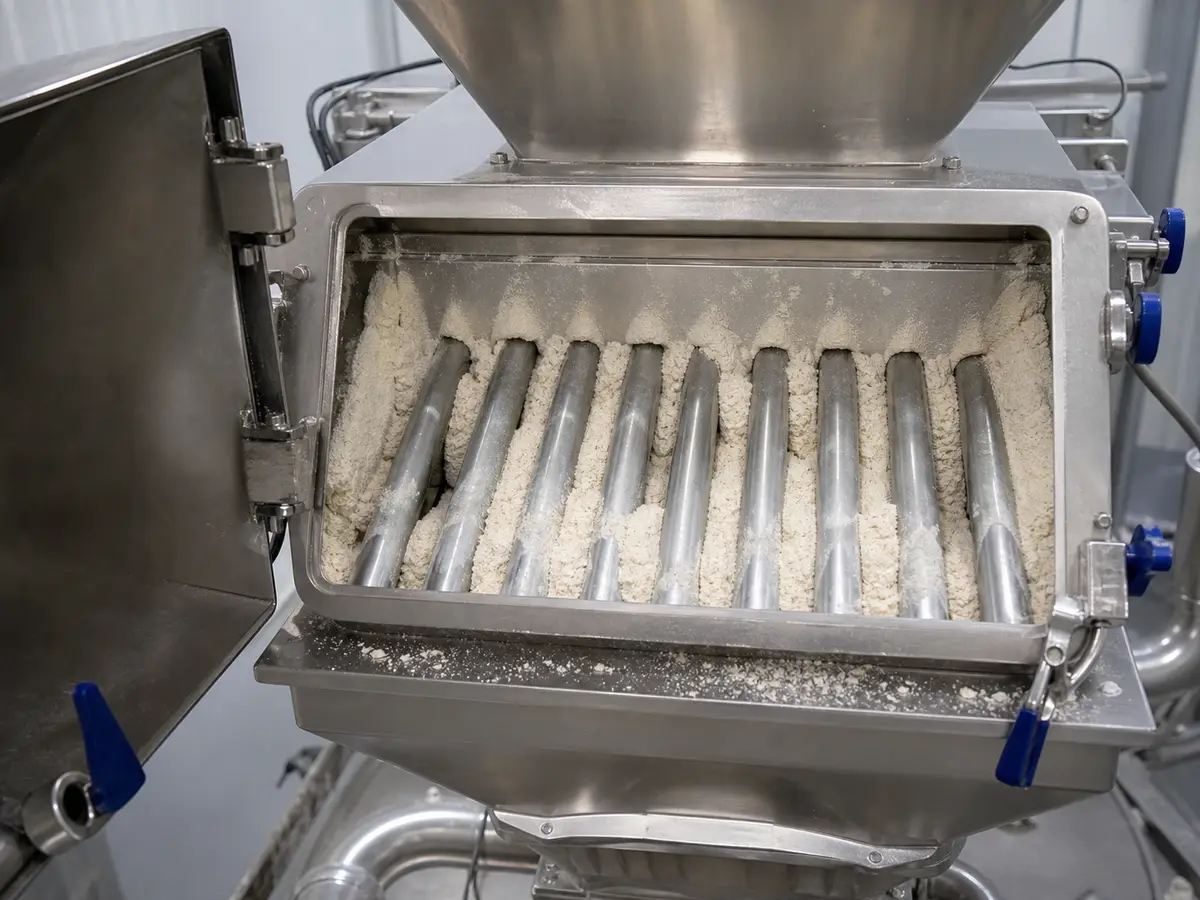
For dry, free-flowing food ingredients, place magnetic tubes, grates, or an enclosed drawer magnet where the full product stream can pass close to a clean magnetic surface—commonly after receiving, before sensitive processing, or before final packing. Selection must also address hygienic construction, contact material, cleanability, temperature, flow restriction, and documented inspection; a high surface-Gauss number alone does not establish food suitability or removal performance.
What Problem Is the Magnet Solving?
Ferrous contamination may enter with incoming ingredients or come from screens, mills, screws, conveyors, fasteners, tools, and wear parts. A magnet can capture responsive particles before they damage equipment or remain in product, but it does not replace supplier controls, sieving, metal detection, maintenance, or a site hazard-control plan.
Choose the Process Position First
| Position | Purpose | Typical review |
|---|---|---|
| Receiving or bulk discharge | Intercept incoming ferrous contamination | Large flow, access, foreign-object size, cleaning frequency |
| Before milling or mixing | Protect process equipment | Particle size, full stream coverage, pressure or gravity flow |
| Before packing | Final magnetic control point | Fine contamination, cleanability, inspection records |
| After a wear-producing machine | Capture process-generated particles | Source investigation and preventive maintenance |
Product Options
- Magnetic tube: an individual element for OEM equipment or replacement where mounting and flow geometry are already defined.
- Magnetic grate: multiple tubes across a gravity-fed opening; verify tube spacing and bridging risk.
- Easy-clean magnetic grate: useful when frequent cleaning justifies a removable-core structure; confirm sleeve construction and loss across the working gap.
- Drawer magnet: enclosed multi-row arrangement when inlet, outlet, seals, pull-out access, and housing conditions are defined.
Food-Contact Claims Require Documents
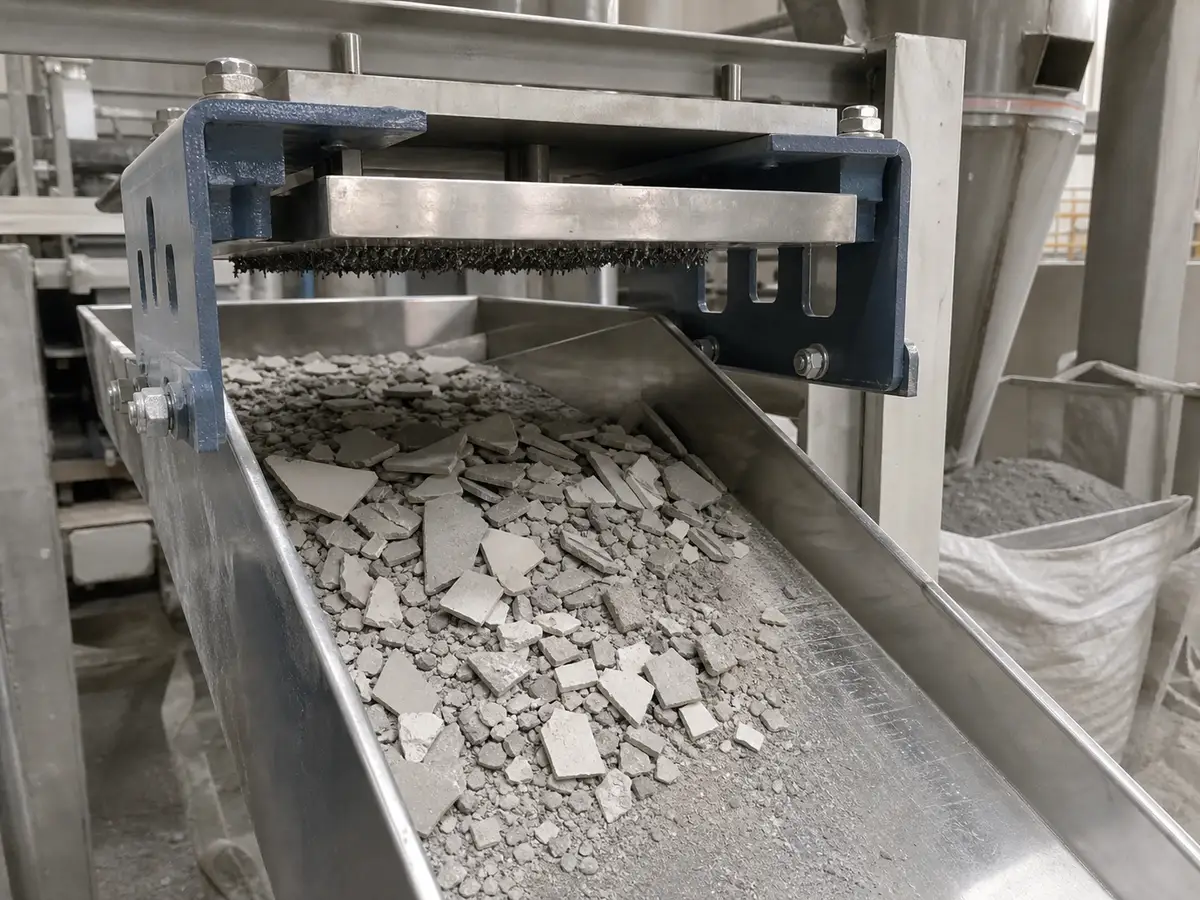
Do not describe a separator as “FDA approved” merely because one stainless grade or seal may be used. Confirm the actual wetted materials, certificates, surface finish, weld treatment, crevice control, seals, lubricants, cleaning chemistry, and applicable destination-market requirements. We state whether documents come from OSENC, a manufacturing partner, a material supplier, or a third party.
Selection Data Required
- Ingredient name, particle size, bulk density, moisture, fat or stickiness, and temperature
- Normal and peak flow with the conditions used to calculate it
- Gravity, vacuum, pressure, or dense-phase conveying
- Opening, inlet/outlet, available height, and pull-out space
- Target contamination size, shape, magnetic response, and source
- Required contact material, finish, seals, and cleaning method
- Inspection frequency, acceptance test, and document requirements
Flow and Cleaning Boundaries
Closer tube spacing can improve opportunities for contact but can also restrict cohesive material, increase breakage, or cause bridging. Product buildup creates a nonmagnetic gap and reduces collection. Establish a cleaning limit from actual captured load and process risk rather than using an arbitrary calendar interval.
Verification and Records
- Verify material certificates and approved construction against the drawing.
- Define magnetic measurement position, instrument, orientation, temperature, and tolerance.
- Inspect dimensions, welds, finish, seals, and cleanability.
- Run the actual ingredient at normal and peak conditions where practical.
- Document inspection, cleaning, findings, corrective action, and reinstallation.
A surface reading at the strongest point should not be presented as guaranteed performance throughout the product stream.
When Another Control Is Needed
Nonferrous metal, weakly magnetic stainless, product trapped inside contaminant, or contamination that does not approach the magnetic surface may require metal detection, X-ray, sieving, filtration, eddy-current separation, maintenance correction, or another validated control.
Request an Application Review
Send a process diagram, ingredient data, flow conditions, opening dimensions, contact-material requirement, cleaning method, target contaminant samples or photographs, current control points, and required documents.
Food-Process Inputs to Confirm Before Selecting a Magnet
Use these inputs to decide whether the proposed separator and process position fit the real operating duty.
| Equipment direction | Choose a tube, grate or drawer arrangement from product flow and cleaning access first; magnetic strength, contact materials and documentation must then be specified for the exact finished assembly. |
|---|---|
| Material condition | Identify the ingredient, powder or granule size distribution, bulk density, moisture, fat or oil content, stickiness, allergen controls, bridging and normal and cleaning temperature. |
| Target iron or magnetic fraction | Define iron fines, wire, screen fragments and equipment-wear particles; state the inspection objective, typical size and the sampling or detection method used after separation. |
| Throughput and presentation | Provide batch size or normal and peak kg/h, gravity or pneumatic conveying method, inlet dimensions, product head and whether production must continue during cleaning. |
| Installation and access | Confirm product-contact grade and finish, weld and seal requirements, cleanout method, withdrawal space, foreign-material controls and integration with sanitation procedures. |
| Test or acceptance | Evaluate capture and cleanability with the actual ingredient. Documentation should identify the supplied contact parts and test method rather than relying on a general food-grade label. |
Engineering Conditions Behind the Recommendation
- Do not select from a surface Gauss value alone.
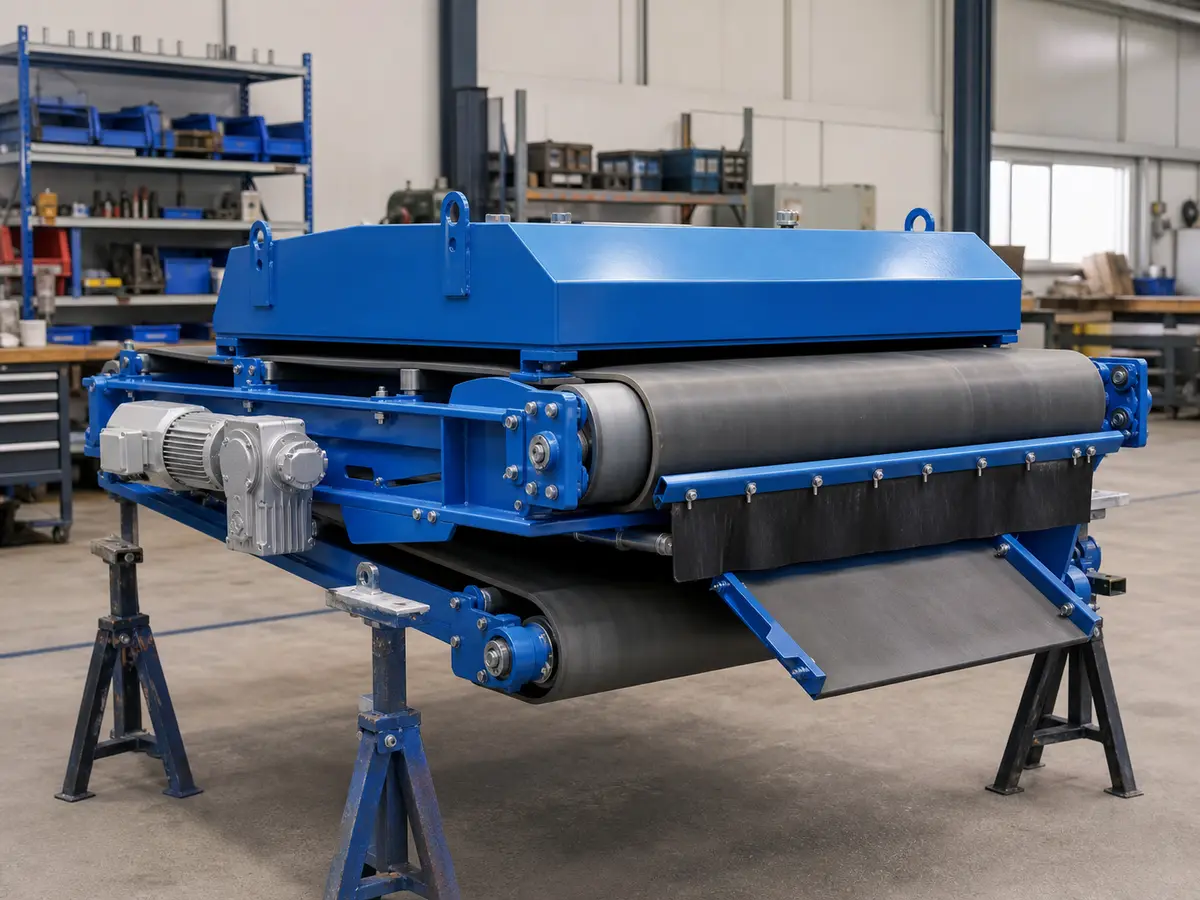
- Review field strength and gradient at the rated working distance, including the conveyor belt, burden depth and any protective plate.
- Belt speed, feed uniformity, target size, shape and magnetic response determine how much time and force are available for capture.
- Mechanical passage capacity is not the same as effective separation capacity.
- Quote or test conditions must identify material, size distribution, moisture, bulk density, normal and peak rate, feed distribution, speed, layer or flow geometry, contamination loading and cleaning interval.
How We Configure a Solution for Your Process
Magnetic Separation for Food Powders and Granular Ingredients: seller-side application review
- Your process problem: Ferrous contamination can damage downstream equipment, reduce product consistency, create rejects or force unplanned cleaning and downtime.
- What we review: We confirm your material form, particle size, moisture, temperature, bulk density, normal and peak throughput, contaminant type and size, required residual and process position.
- What we configure: We compare capture point, magnetic structure, working distance, material presentation, cleaning method and line interface before we prepare a proposal.
- Buyer value: This helps you intercept contamination before a critical machine or quality stage, reduce repeat purchases and avoid a separator that restricts normal production flow.
- Boundary: We do not recommend the application when the target is non-magnetic, the material path prevents exposure or the required result cannot be supported without testing.
- Next step: Send the material and target, particle range, moisture, temperature, throughput, contamination, installation drawing, available space, cleaning preference and any sample or site video. Send your process and contamination data
Project Support
Send your material and process conditions
We can review the process point, material shape, iron source, capacity, available space and cleaning method before recommending a magnetic separator layout.
Frequently Asked Questions
What Problem Is the Magnet Solving?
Ferrous contamination may enter with incoming ingredients or come from screens, mills, screws, conveyors, fasteners, tools, and wear parts.
Why is “Flow and Cleaning Boundaries” important for this decision?
Closer tube spacing can improve opportunities for contact but can also restrict cohesive material, increase breakage, or cause bridging.
Why is “Verification and Records” important for this decision?
A surface reading at the strongest point should not be presented as guaranteed performance throughout the product stream.