
OSENC Magnetic Separation
Custom Neodymium Magnets Made to Your Drawing and Application
Confirmed OSENC Core Business
We supply custom NdFeB magnets from drawings, samples, and application requirements. Grade, temperature, coating, magnetization direction, tolerance, quantity, assembly conditions, and acceptance tests are confirmed before production. There is no fixed company-wide MOQ because the manufacturing process differs by size, shape, tooling, and material.
Custom Shapes and Project Types
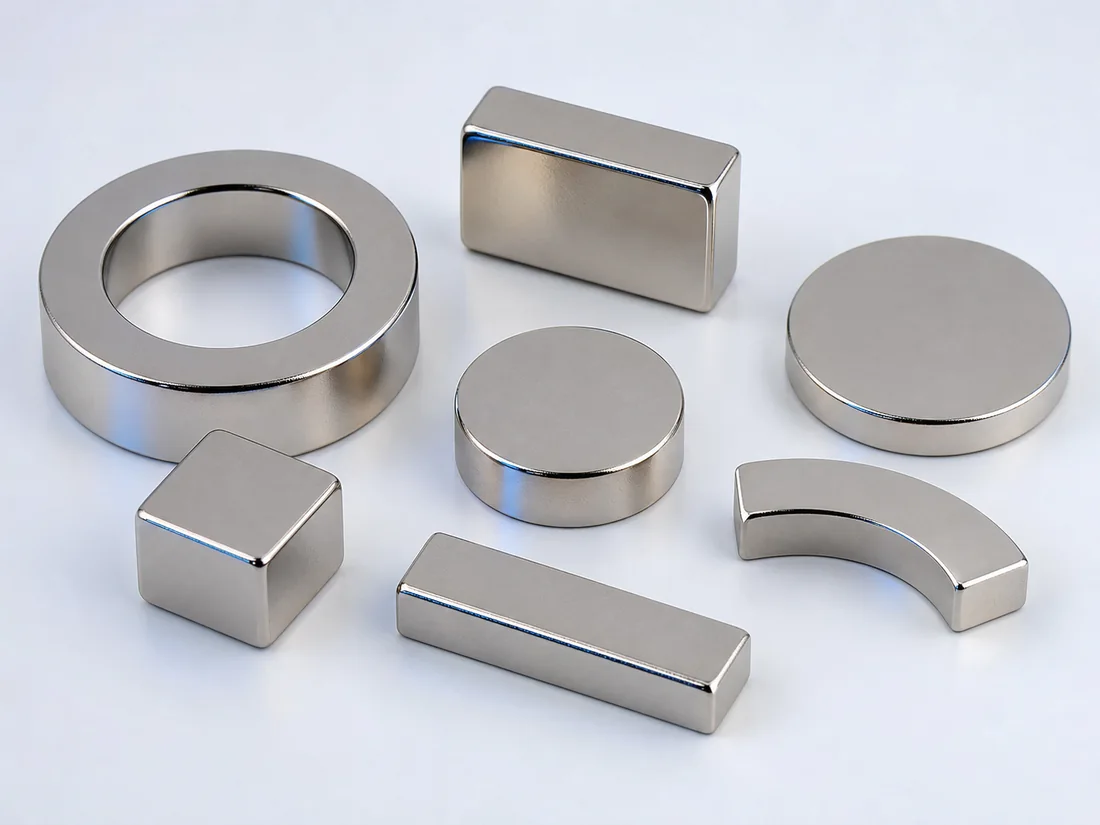
- Disc, block, ring, cylinder, and arc magnets
- Countersunk and special-shaped magnets
- Miniature and large-size magnet projects
- Axial, diametrical, radial, and multipole magnetization projects where technically available
- Sample, small-batch, and production orders
Final dimensional range and magnetization feasibility depend on the specific project and manufacturing route.
Choose the Grade by Working Conditions
A higher energy-product grade is not automatically the best choice. Working temperature, magnet dimensions, magnetic circuit, opposing field, air gap, and long-term stability also matter. Conventional and high-performance NdFeB grades can be reviewed, including requests up to N56 where the selected material source and current production route can support the drawing. Grade availability, magnetic properties and temperature limits must be confirmed for each project before quotation approval.
Available Coating Directions
OSENC has publicly supported Ni-Cu-Ni, zinc, chrome, gold, epoxy, plastic, PTFE, and parylene coating projects. Some surface treatments are completed by specialist partner suppliers rather than an OSENC-owned plating line.
| Coating direction | Reason to review | Important condition |
|---|---|---|
| Ni-Cu-Ni | Common general-purpose metallic finish | Exposure and coating damage |
| Zinc | Cost-sensitive dry applications | Required corrosion life |
| Epoxy / PTFE / Parylene | Selected corrosion, friction, or barrier requirements | Thickness, edge coverage, adhesion, and test method |
| Plastic cover | Handling, impact, identification, or surface protection | Changes final size and magnetic air gap |
Magnetization Direction Must Be Defined
- Axial: poles on the flat faces.
- Diametrical: poles across the diameter.
- Radial: field through inner and outer radius; feasibility must be reviewed.
- Multipole: multiple pole pairs for selected rotors, sensors, and encoders.
Mark north/south orientation and assembly position on the drawing. A correct shape with the wrong pole direction is not usable.
Tolerance and Manufacturing Limits
Sintered NdFeB is brittle. Thin sections, small holes, sharp corners, countersinks, tight post-coating tolerances, and large aspect ratios can increase breakage and cost. Confirm whether dimensions apply before or after coating and identify the truly critical features.
Testing and Reports
Depending on the order, OSENC can coordinate magnetic properties reports, BH curves, total flux, flux density, surface magnetic field, dimensional inspection, coating thickness, salt spray testing, RoHS, REACH, and MSDS. High/low temperature, humidity, mechanical strength, drop, PCT, or HAST tests require project-specific confirmation.
Some tests are performed by manufacturing partners or third-party laboratories. The report issuer, sample, method, date, and acceptance criteria should be identified.
MOQ and Lead Time
OSENC does not use one fixed MOQ for all custom magnets. Some samples can start from one piece, while special shapes, tooling, grinding, coating, or production fixtures may require 50–100 pieces or more.
Typical custom production is approximately 20–30 days after drawing, specification, and payment confirmation. Samples and repeat orders may be shorter. The quotation is the controlling commercial document.
Sample-First Process
- Review drawing, application, and quantity.
- Confirm grade, coating, magnetization, tolerance, and test method.
- Produce samples when fit, force, coating, or magnetization is uncertain.
- Inspect dimensions, surface, and magnetic performance.
- Obtain sample approval before batch production.
Magnetic Packing and International Delivery
Strong or large magnets may need spacing, fixation, shielding, and Gauss checks before air shipment. OSENC has experience coordinating magnetic shielding, IATA-related transport testing and reports, and delivery through international couriers. Sea freight may be selected when the external field, package size, or cost makes air shipment impractical.
Information Required for a Quote
- 2D drawing and 3D model if available
- Dimensions and tolerance
- Quantity and annual forecast
- Grade or magnetic performance
- Working temperature
- Coating and environment
- Magnetization direction
- Assembly conditions
- Required reports and test method
Custom Magnet Shapes
- Neodymium disc magnets: diameter, thickness, axial or diametric magnetization and edge condition.
- Neodymium block magnets: length, width, thickness, datums and magnetization axis.
- Neodymium ring magnets: OD, ID, wall, concentricity and axial, diametric or multipole patterns.
- Arc segment magnets: radii, segment angle, motor conditions, polarity sets and retention.
- Countersunk magnets: through-hole, recess, screw interface, polarity and mounting load.
- Custom-shaped magnets: slots, flats, steps, curves and nonstandard profiles.
- Miniature neodymium magnets: micro dimensions, coating build, handling and precision inspection.
- Large neodymium magnets: segmentation, magnetic circuit, safety, packaging and transport.
Information Required for a Defensible Custom-Magnet Specification
The quotation should describe the final magnetic circuit and operating environment and connect each proposed feature to an operating or acceptance requirement.
| Selection logic | Select grade from required working flux, geometry, opposing field, temperature and stability; do not choose from maximum energy product alone. |
|---|---|
| Application inputs | Drawing revision, dimensions, tolerances, grade, magnetization direction, coating, temperature, corrosion and annual quantity |
| Mechanical interface | Define mating steel, air gap, adhesive or retention method, assembly forces and any restricted magnetic leakage zone. |
| Cleaning and service | Confirm handling, separation, shielding and cleaning restrictions; brittle magnets require protection from impact and uncontrolled attraction. |
| Acceptance method | Agree dimensional sampling, magnetic-property report or total-flux method, coating checks and any environmental test tied to the actual batch. |
Engineering Conditions Behind the Recommendation
- A higher magnet grade is not a universal correction for an incomplete magnetic circuit.
- Air gap, pole geometry, steel saturation, opposing field, magnet dimensions, operating temperature, coating and assembly tolerances must be reviewed together.
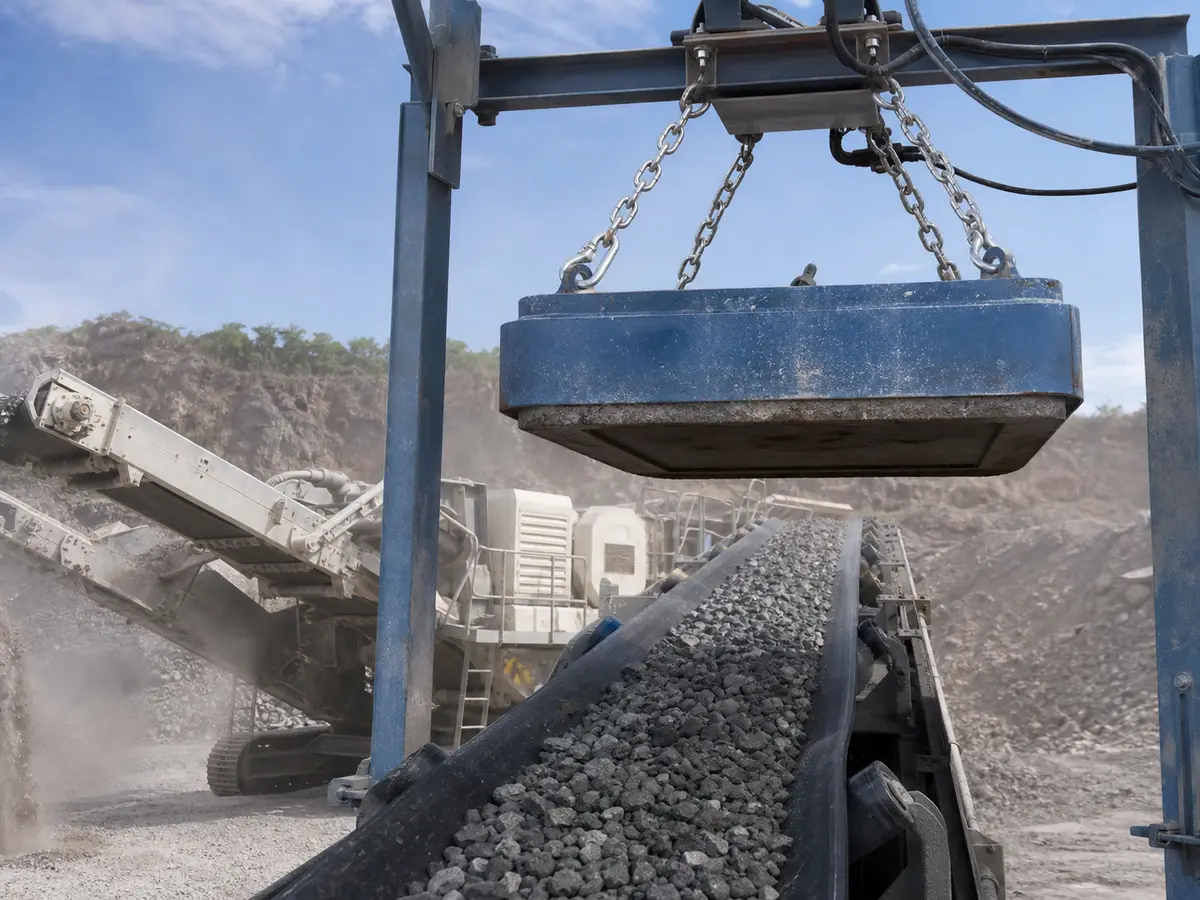
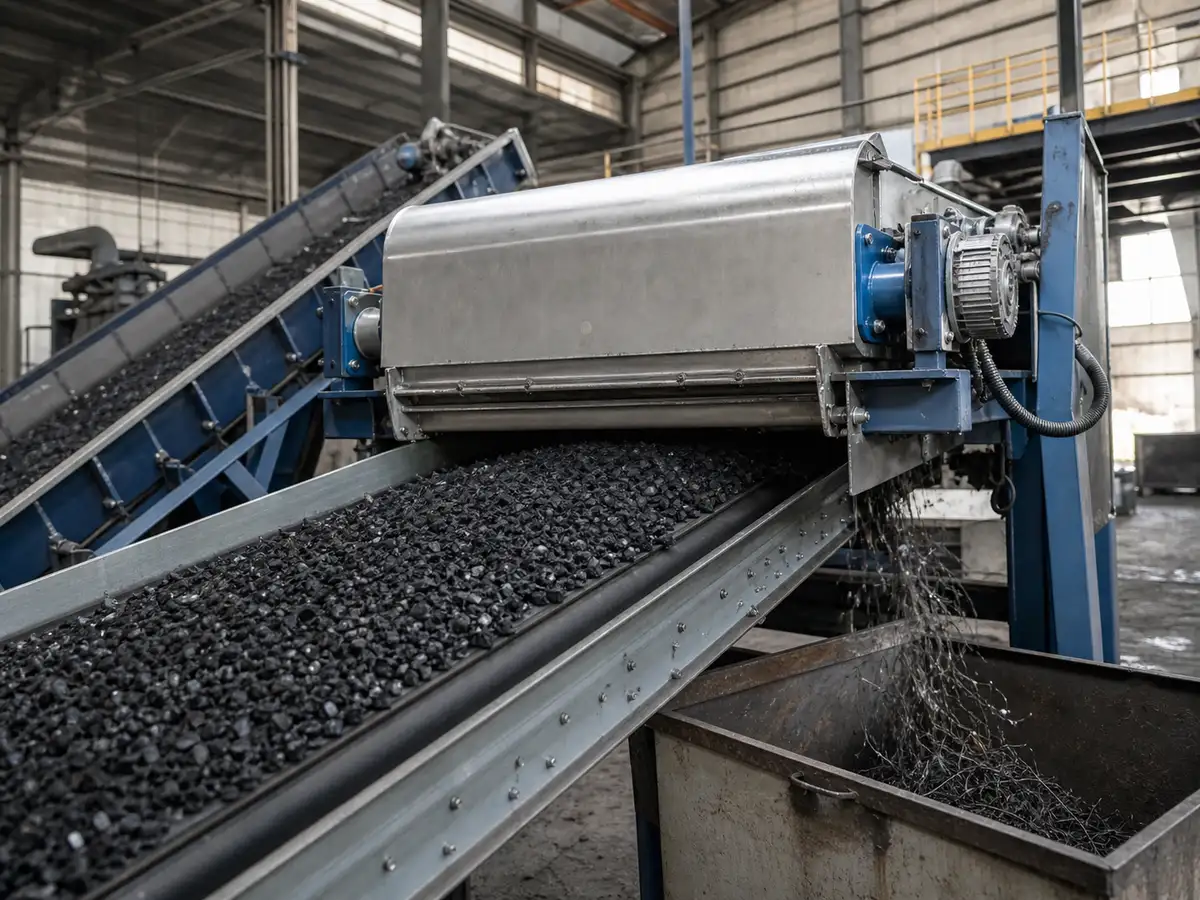
- Mechanical passage capacity is not the same as effective separation capacity.
- Quote or test conditions must identify material, size distribution, moisture, bulk density, normal and peak rate, feed distribution, speed, layer or flow geometry, contamination loading and cleaning interval.
What We Need to Configure This Project
Input set for Custom Neodymium Magnets Made to Your Drawing and Application
- How we use your data: We compare your material, contamination risk, production target and line interface before we configure a proposal or rule out an unsuitable option.
- Material: name and composition; dry or wet; powder, granule, lump, fibre or slurry; minimum, maximum and typical particle distribution; moisture, stickiness, tendency to cake or bridge, abrasiveness, corrosiveness, bulk density, normal temperature and maximum temperature.
- Production and target: normal and peak throughput, continuous or batch feed, feed uniformity, contaminant or recovery target, magnetic response if known, typical and maximum target size, initial concentration, acceptable residual and whether product loss is permitted.
- Installation: drawing, envelope, mating features, tolerances, magnetization direction, magnetic working gap, loads, assembly sequence and available inspection access; cleaning method, permitted shutdown, contact-material, wear and corrosion requirements; indoor, outdoor, washdown, high-humidity, dusty or hazardous-area conditions.
- Supporting project files: any electrical, control, cooling or pneumatic interface used by the final assembly; destination country; current drawings, site photographs, running video and a representative material/contaminant sample when testing is needed.
- What you receive next: We use the confirmed inputs to prepare a project-specific drawing and inspection plan. We do not treat performance as confirmed until the agreed design and any required representative test or site acceptance establish the result.
Project Support
Send your drawing, material data or installation photo
We will review the product structure, magnetic circuit direction, cleaning method, material contact requirements and inspection items before preparing a quotation.
Frequently Asked Questions
Why is “Custom Shapes and Project Types” important for this decision?
Final dimensional range and magnetization feasibility depend on the specific project and manufacturing route.
Why is “Choose the Grade by Working Conditions” important for this decision?
A higher energy-product grade is not automatically the best choice. Working temperature, magnet dimensions, magnetic circuit, opposing field, air gap, and long-term stability also matter.
Why is “Available Coating Directions” important for this decision?
OSENC has publicly supported Ni-Cu-Ni, zinc, chrome, gold, epoxy, plastic, PTFE, and parylene coating projects. Some surface treatments are completed by specialist partner suppliers rather than an OSENC-owned plating line.