
OSENC Magnetic Separation
Magnetic Separation for Fertilizer Powders and Granules
Protect Process Equipment and Product
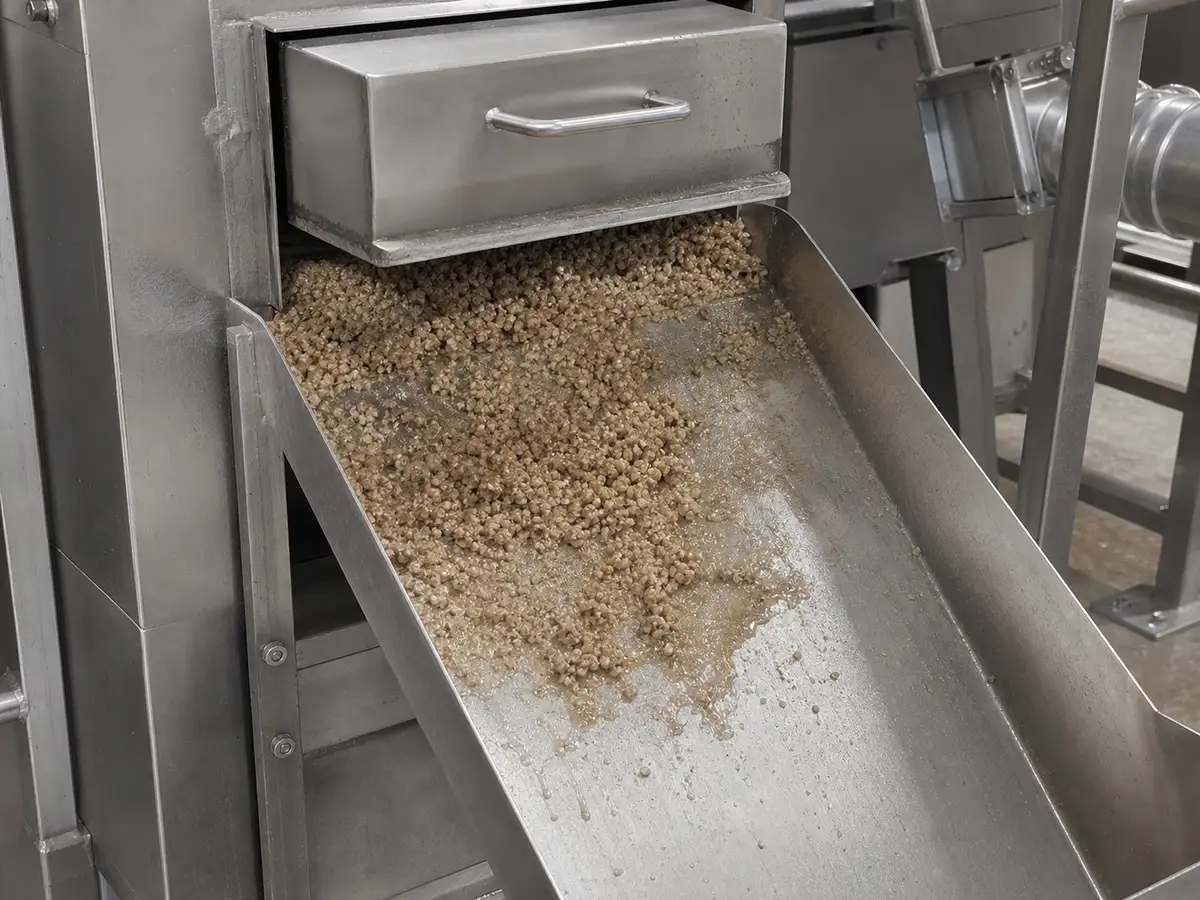
For dry fertilizer powders and granules, place magnetic controls where the entire stream can approach the magnetic surface—often before mills, mixers, granulators, screens, or packing. Selection must account for moisture pickup, caking, corrosive chemistry, dust, temperature, and cleaning; a standard stainless housing is not automatically suitable for every fertilizer.
Contamination and Consequence
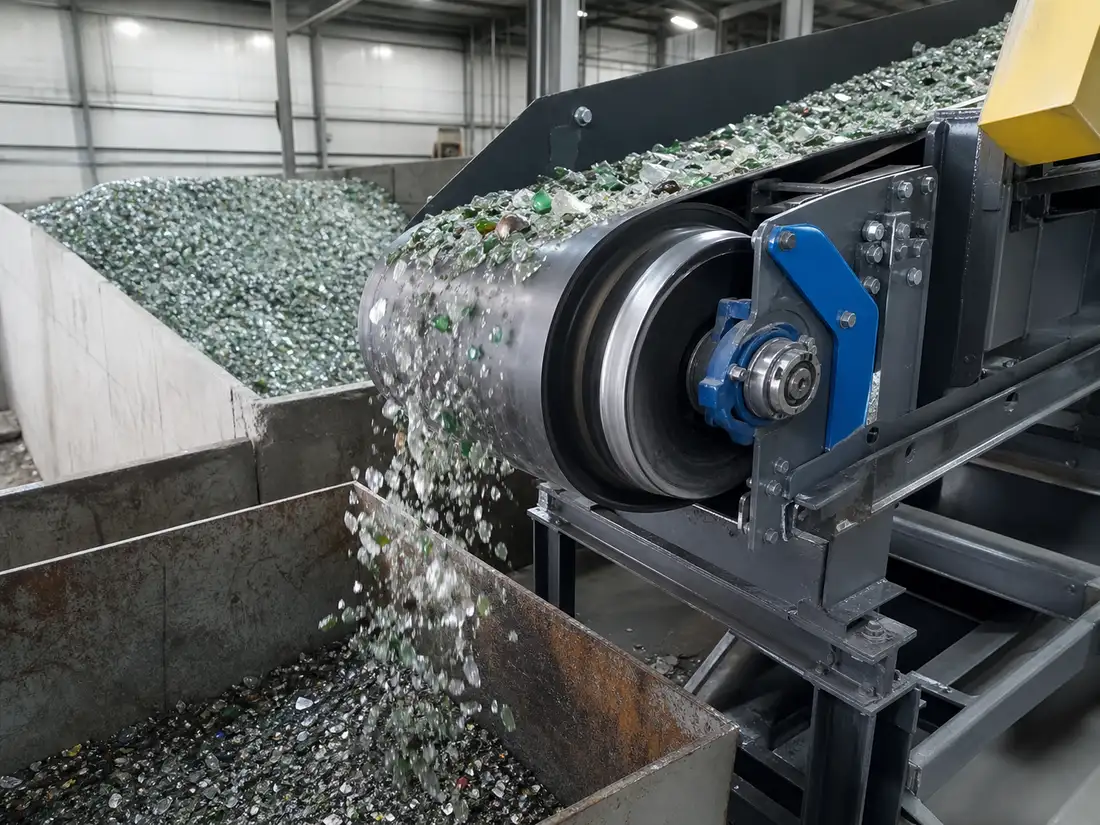
Iron can arrive with mined or recycled raw materials and can also come from conveyors, screws, screens, mills, mixers, granulators, fasteners, and maintenance. Define whether the main objective is protecting equipment, controlling visible metal, reducing fine wear particles, or identifying abnormal machinery wear.
Candidate Control Points
| Position | Purpose | Candidate structure |
|---|---|---|
| Raw-material conveyor | Remove larger tramp before processing | Suspended magnet or self-cleaning overband |
| Gravity chute before equipment | Capture smaller exposed ferrous pieces | Magnetic grate or drawer magnet |
| After wear-producing stage | Capture newly generated contamination | Close-contact magnetic stage matched to flow |
| Before packing | Final magnetic inspection point | Grate, drawer, or tube assembly with documented cleaning |
Corrosion Must Be Reviewed by Chemistry
Product name alone does not define corrosion risk. Provide composition, concentration, moisture, temperature, cleaning chemicals, and whether deposits remain during shutdown. Confirm the actual stainless grade, weld treatment, finish, seals, fasteners, and any coatings. Do not infer suitability from a generic “stainless steel” description.
Caking and Bridging
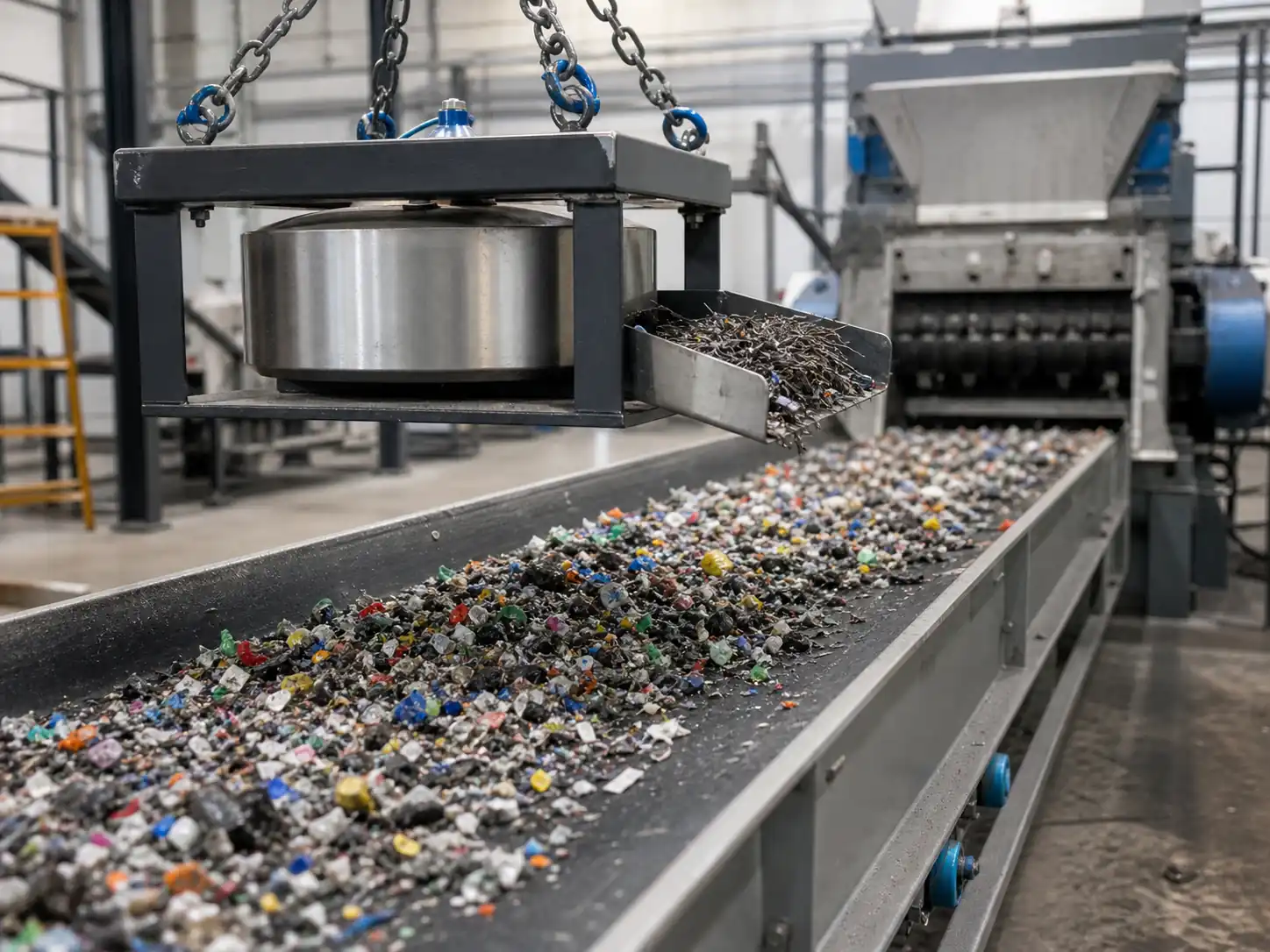
Hygroscopic or sticky fertilizer can coat tubes, reduce the effective field at the product, block tight openings, and make cleaning hazardous. Review tube spacing, number of rows, chute angle, vibration, flow aids, peak feed, and available pull-out space. If the material does not flow freely through the proposed geometry, a different process position may be required.
Information Required
- Fertilizer type and composition or safety data available for design review
- Particle size, bulk density, moisture, temperature, and caking behavior
- Normal and peak flow, conveying method, and pressure
- Target contamination and likely source
- Opening dimensions and installation envelope
- Material compatibility, cleaning chemical, and contact time
- Dust-area requirements, grounding, inspection, and documents
Dust and Safety Boundary
Fine fertilizer dust may create health, corrosion, visibility, or combustible-dust concerns depending on composition and process. Complete equipment—including drives, bearings, belts, sensors, and static control—must be evaluated for the real installation. No hazardous-area certification should be claimed without matching product-specific documents.
Testing and Acceptance
Document material condition, feed rate, flow pattern, target particle, cleaning state, test location, and result. Magnetic measurements should state instrument, position, orientation, temperature, and tolerance. Inspection after exposure may be required to verify corrosion and cleanability, not only magnetic capture.
Request Fertilizer Application Selection
Send the material safety and composition information available, flow diagram, process objective, particle and moisture data, throughput, equipment opening, contamination photographs, cleaning procedure, corrosion history, and required documents.
Fertilizer Properties That Control Separator Construction
Use these inputs to decide whether the proposed separator and process position fit the real operating duty.
| Equipment direction | A grate or drawer magnet may suit free-flowing fertilizer powder or granules, but corrosion, caking and cleaning access can determine construction before magnetic strength is selected. |
|---|---|
| Material condition | Identify formulation, granule and fines distribution, bulk density, moisture, hygroscopic behavior, caking, corrosion, dust and normal and maximum temperature. |
| Target iron or magnetic fraction | Describe iron fines, rust, screen wire and process-equipment wear; state target size, expected loading and whether the objective is machinery protection or product contamination control. |
| Throughput and presentation | Provide batch or continuous rate, normal and peak kg/h, inlet size, product head, flow aids and the time available before accumulated iron must be cleaned. |
| Installation and access | Confirm stainless grade or coating compatibility, sealed interfaces, withdrawal space, dust control, cleaning method and prevention of fertilizer buildup behind tubes or seals. |
| Test or acceptance | Run a compatibility and flow test with the actual formulation. Check capture, caking, cleanability and material attack on the proposed contact construction. |
Combustible Dust and Hazardous-Area Boundary
- For the named dry material, the plant owner must identify any combustible dust, vapour or gas and provide the site hazardous-area classification.
- No-coil permanent equipment is not automatically suitable: assess impact, friction, static, hot surfaces, bearings, drives, sensors and controls in the complete configuration.
- Confirm zone or division, substance and ignition data, dust layers, temperatures, earthing and bonding, cable entries, ingress protection, cleaning and destination-country rules.
- Do not claim explosion-proof or ATEX suitability until configuration-specific marking, declaration, instructions and evidence are verified.
Engineering Conditions Behind the Recommendation
- Do not select from a surface Gauss value alone.
- Review field strength and gradient at the rated working distance, including the conveyor belt, burden depth and any protective plate.
- Belt speed, feed uniformity, target size, shape and magnetic response determine how much time and force are available for capture.
- Mechanical passage capacity is not the same as effective separation capacity.
- Quote or test conditions must identify material, size distribution, moisture, bulk density, normal and peak rate, feed distribution, speed, layer or flow geometry, contamination loading and cleaning interval.
What We Need to Configure This Project
Input set for Magnetic Separation for Fertilizer Powders and Granules
- How we use your data: We compare your material, contamination risk, production target and line interface before we configure a proposal or rule out an unsuitable option.
- Material: name and composition; dry or wet; powder, granule, lump, fibre or slurry; minimum, maximum and typical particle distribution; moisture, stickiness, tendency to cake or bridge, abrasiveness, corrosiveness, bulk density, normal temperature and maximum temperature.
- Production and target: normal and peak throughput, continuous or batch feed, feed uniformity, contaminant or recovery target, magnetic response if known, typical and maximum target size, initial concentration, acceptable residual and whether product loss is permitted.
- Installation: belt width and speed, normal and maximum burden depth, magnet position and rated working distance, available suspension and maintenance space, support and lifting arrangement; cleaning method, permitted shutdown, contact-material, wear and corrosion requirements; indoor, outdoor, washdown, high-humidity, dusty or hazardous-area conditions.
- Supporting project files: drive voltage, frequency and phase where a self-cleaning unit is considered; control interface and any site air requirement; destination country; current drawings, site photographs, running video and a representative material/contaminant sample when testing is needed.
- What you receive next: We use the confirmed inputs to prepare a project-specific drawing and inspection plan. We do not treat performance as confirmed until the agreed design and any required representative test or site acceptance establish the result.
Project Support
Send your material and process conditions
We can review the process point, material shape, iron source, capacity, available space and cleaning method before recommending a magnetic separator layout.
Frequently Asked Questions
Why is “Contamination and Consequence” important for this decision?
Iron can arrive with mined or recycled raw materials and can also come from conveyors, screws, screens, mills, mixers, granulators, fasteners, and maintenance.
Why is “Corrosion Must Be Reviewed by Chemistry” important for this decision?
Product name alone does not define corrosion risk. Provide composition, concentration, moisture, temperature, cleaning chemicals, and whether deposits remain during shutdown.
Why is “Caking and Bridging” important for this decision?
Hygroscopic or sticky fertilizer can coat tubes, reduce the effective field at the product, block tight openings, and make cleaning hazardous.