
OSENC Magnetic Separation
How to Select a Magnetic Separator for Crusher Protection
For most conveyor-fed crushers, review a suspended permanent magnet above the belt before the crusher. The correct selection depends on belt width, actual burden depth, belt speed, suspension height, target iron size and shape, and how often iron must be discharged. Belt width alone is not enough.
Send Conveyor and Tramp-Iron Details Review Suspended Magnets
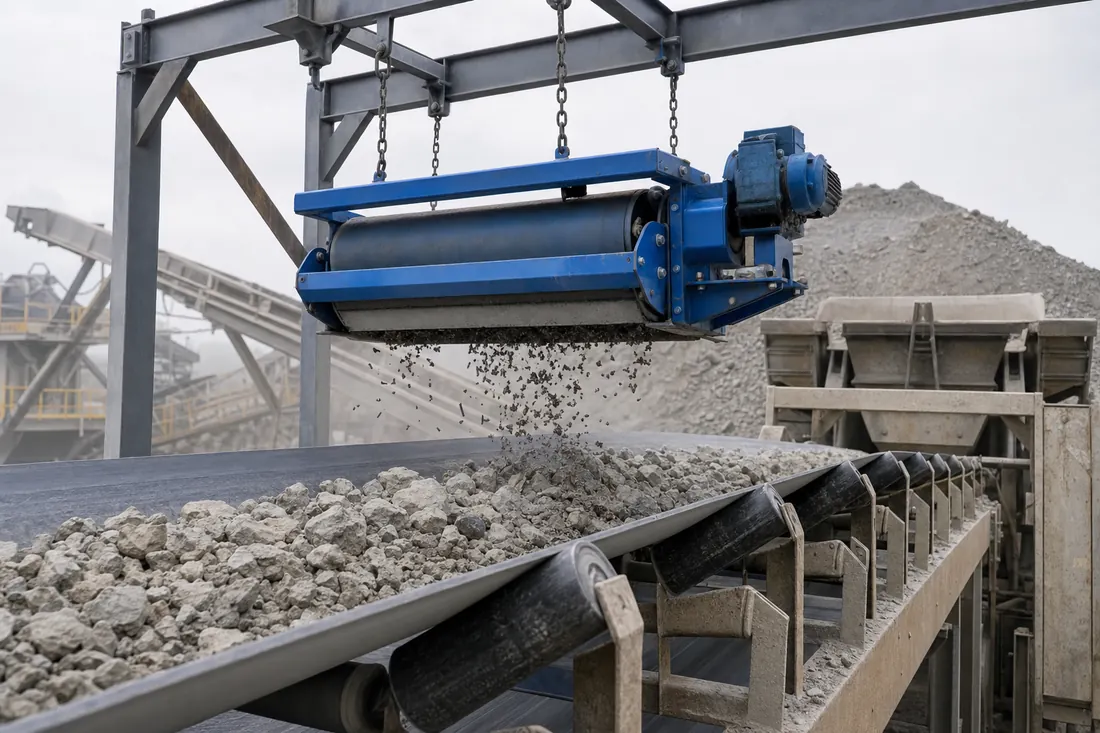
What the Magnet Is Protecting Against
Common crusher hazards include loader bucket teeth, bolts, tools, drill parts, wire, chain, plate, and wear fragments. Large rigid pieces can jam or damage a crusher; long wire can wrap around rotating parts; sharp fragments can also cut conveyor belts. Record the smallest critical piece as well as the largest expected piece because they do not respond or travel in the same way.
Best Installation Position
| Position | Advantage | Selection concern |
|---|---|---|
| Inline over the head pulley | Material opens as it leaves the belt, which can expose buried iron | Requires suitable headroom, discharge trajectory, and an acceptable magnetic pulley/idler environment |
| Crossbelt over a flat or troughed conveyor | Can be installed before the crusher without changing the head discharge | Iron must be lifted through the burden; belt speed and non-magnetic structure beneath the magnet matter |
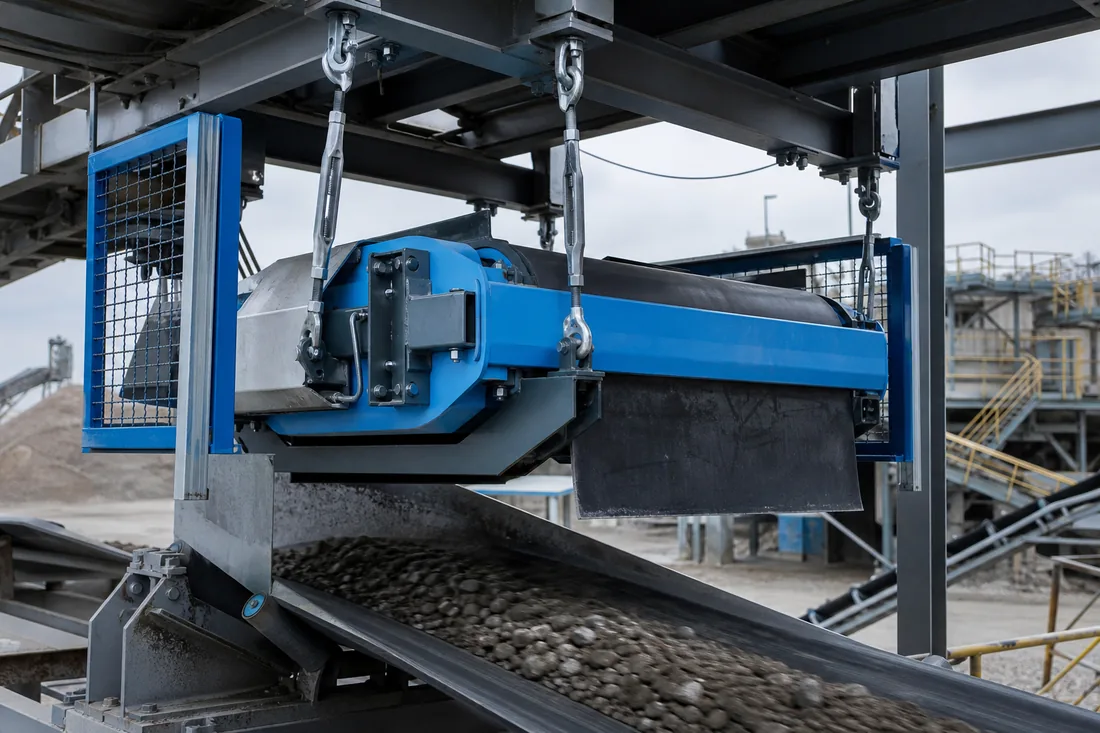
Place the magnet as close to the burden as practical without obstructing normal material flow or the self-cleaning belt. The rated working height must be defined from a stated reference point; it should not be replaced by a surface Gauss claim.
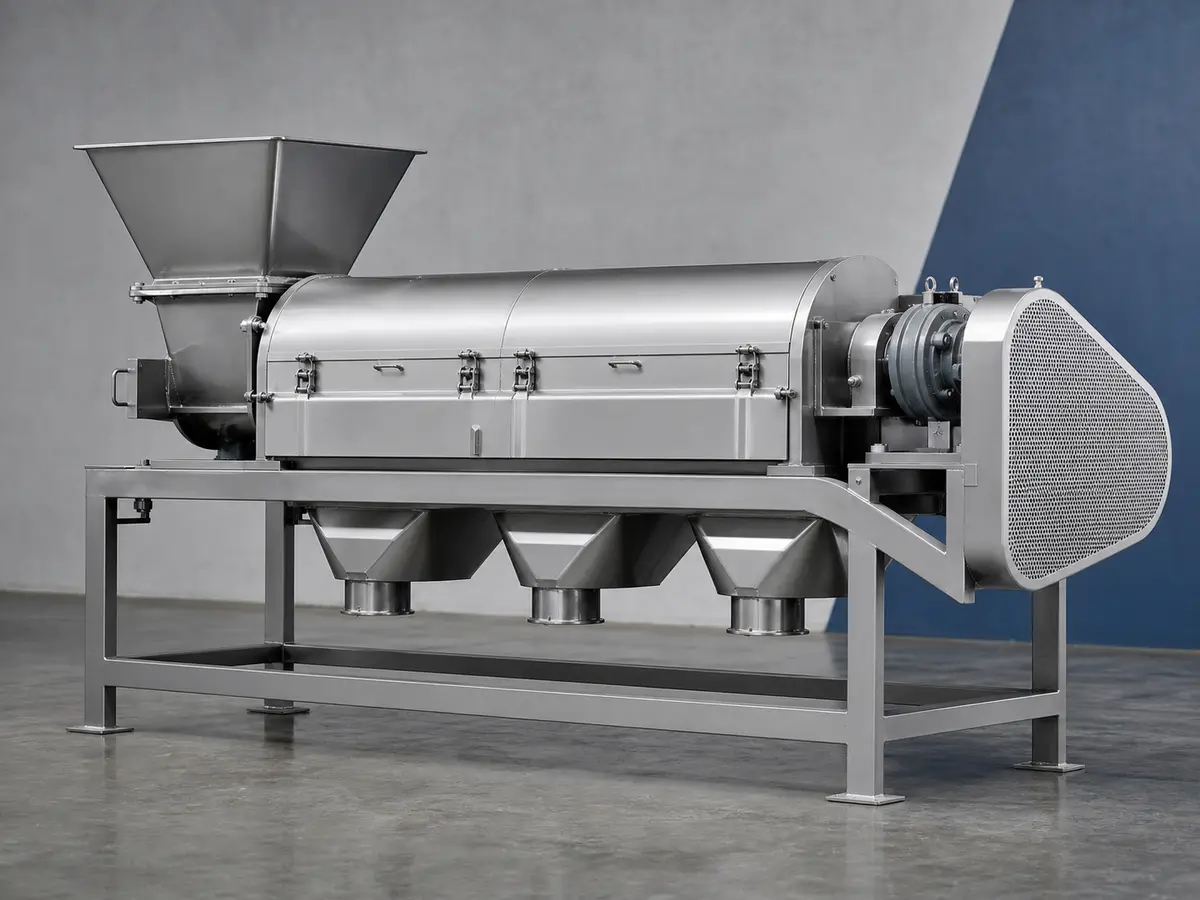
Six Inputs That Control Selection
- Belt width: defines the coverage needed across the material stream.
- Burden depth: iron at the bottom must be pulled through the full layer.
- Belt speed: faster material gives the magnetic field less time to attract and discharge iron.
- Suspension height: magnetic force falls with working distance.
- Iron size and shape: flat plate or rod can respond differently from a compact sphere of similar mass.
- Iron frequency: determines whether manual cleaning is practical or continuous discharge is needed.
Manual-Clean or Self-Cleaning?
Choose manual cleaning when tramp iron is occasional, planned stoppages are acceptable, and operators can clean the magnet safely. Review a self-cleaning overband structure when iron is frequent, the conveyor runs continuously, or accumulated iron could shield the magnet face. The self-cleaning belt still needs drive, tracking, discharge clearance, guards, and maintenance.
What a Suspended Magnet Cannot Solve by Itself
- Iron completely enclosed inside thick non-magnetic lumps may not be exposed to the field.
- Excessive burden depth or uncontrolled surges can hide iron below the practical lifting zone.
- Aluminum, copper, and many stainless grades are not reliable targets for an ordinary permanent magnet.
- A magnet cannot compensate for steel structures that distort the field or block discharge.
- No supplier should guarantee every piece without defining the target, feed condition, and acceptance test.
Commissioning and Verification
Before production, verify mounting security, clearance, belt direction and tracking where applicable, discharge path, and the absence of interfering steel in critical field areas. Use representative test pieces only with an agreed safe procedure. Record their material, size, shape, placement in the burden, belt speed, layer depth, magnet height, and result.
Common Selection Errors
- Selecting only from conveyor width
- Measuring height from the wrong reference surface
- Using average capacity instead of peak burden depth
- Ignoring small critical iron beneath the material
- Installing a self-cleaning unit without iron discharge clearance
- Placing magnetic steel idlers or support directly in the active field without review
Information OSENC Needs
Send belt width, trough angle, belt speed, normal and maximum burden depth, material and bulk density, crusher type, target iron photographs and dimensions, proposed magnet position, available space, cleaning frequency, temperature, power supply if self-cleaning, and an installation drawing or video.
Inputs That Determine Crusher-Protection Magnet Selection
Use these inputs to decide whether the proposed separator and process position fit the real operating duty.
| Equipment direction | Use a suspended or overband magnet when large tramp steel must be removed before a crusher; consider a head pulley only when the conveyor discharge and downstream chute can separate the two trajectories. |
|---|---|
| Material condition | Identify the conveyed ore, aggregate or recycled feed; record minimum, typical and maximum lump size, bulk density, moisture, stickiness and the deepest burden during surges. |
| Target iron or magnetic fraction | Describe rebar, bucket teeth, drill steel, bolts, wire and other damaging pieces by material, shape, typical size, maximum size and whether they are buried or exposed. |
| Throughput and presentation | Provide normal and peak t/h, belt width, belt speed, feed uniformity and burden-depth profile. A short surge can govern working distance even when average throughput is moderate. |
| Installation and access | Confirm the distance from magnet face to the lowest target, available suspension structure, discharge-bin position, cleaning access, lifting route and clearance from the crusher feed chute. |
| Test or acceptance | Use representative targets placed at different depths and belt positions. Record capture, misses and safe discharge rather than relying on a surface-Gauss value alone. |
How We Configure a Solution for Your Process
How to Select a Magnetic Separator for Crusher Protection: seller-side application review
- Your process problem: Ferrous contamination can damage downstream equipment, reduce product consistency, create rejects or force unplanned cleaning and downtime.
- What we review: We confirm your material form, particle size, moisture, temperature, bulk density, normal and peak throughput, contaminant type and size, required residual and process position.
- What we configure: We compare capture point, magnetic structure, working distance, material presentation, cleaning method and line interface before we prepare a proposal.
- Buyer value: This helps you intercept contamination before a critical machine or quality stage, reduce repeat purchases and avoid a separator that restricts normal production flow.
- Boundary: We do not recommend the application when the target is non-magnetic, the material path prevents exposure or the required result cannot be supported without testing.
- Next step: Send the material and target, particle range, moisture, temperature, throughput, contamination, installation drawing, available space, cleaning preference and any sample or site video. Send your process and contamination data
Project Support
Send your material and process conditions
We can review the process point, material shape, iron source, capacity, available space and cleaning method before recommending a magnetic separator layout.
Frequently Asked Questions
What the Magnet Is Protecting Against?
Common crusher hazards include loader bucket teeth, bolts, tools, drill parts, wire, chain, plate, and wear fragments.
Why is “Best Installation Position” important for this decision?
Place the magnet as close to the burden as practical without obstructing normal material flow or the self-cleaning belt.
Why is “Manual-Clean or Self-Cleaning” important for this decision?
Choose manual cleaning when tramp iron is occasional, planned stoppages are acceptable, and operators can clean the magnet safely.