
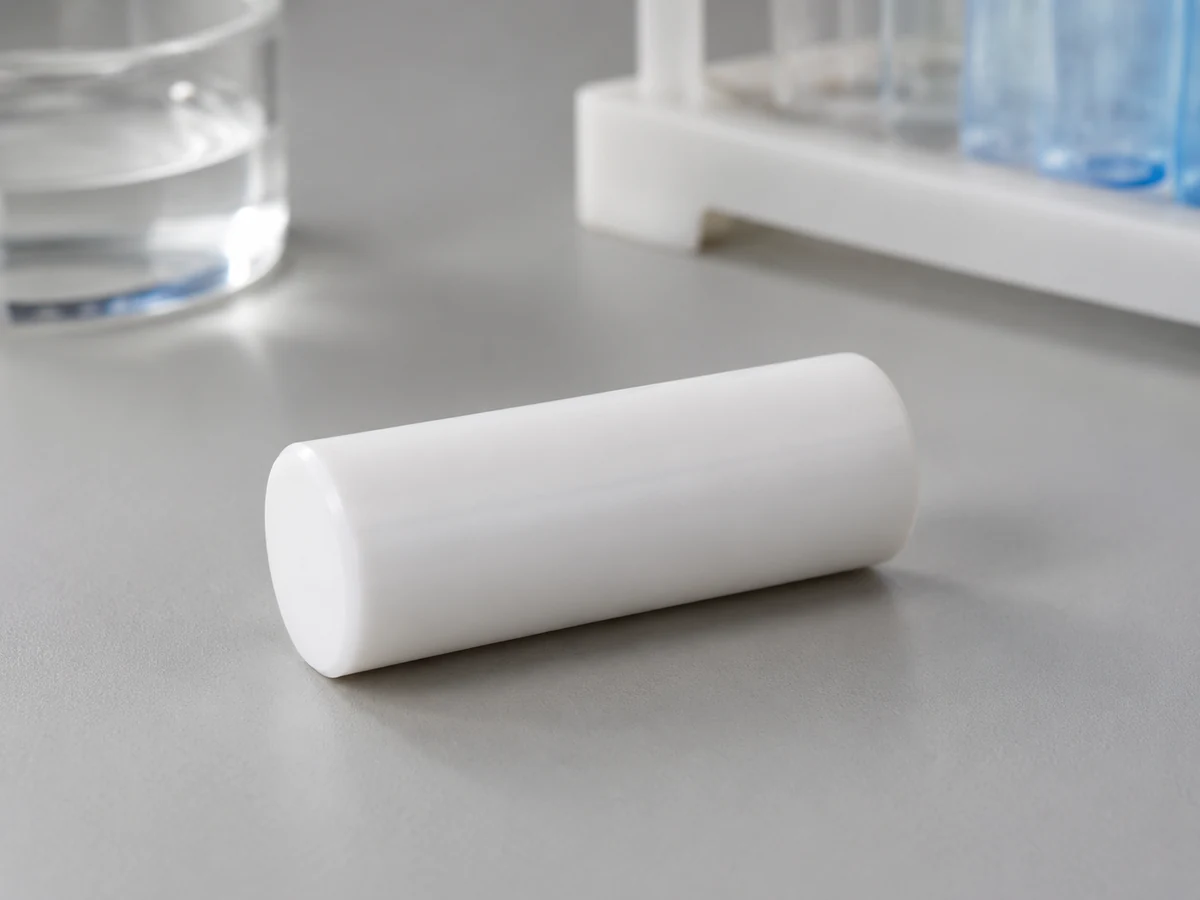
17 × 52 mm PTFE Magnetic Bar
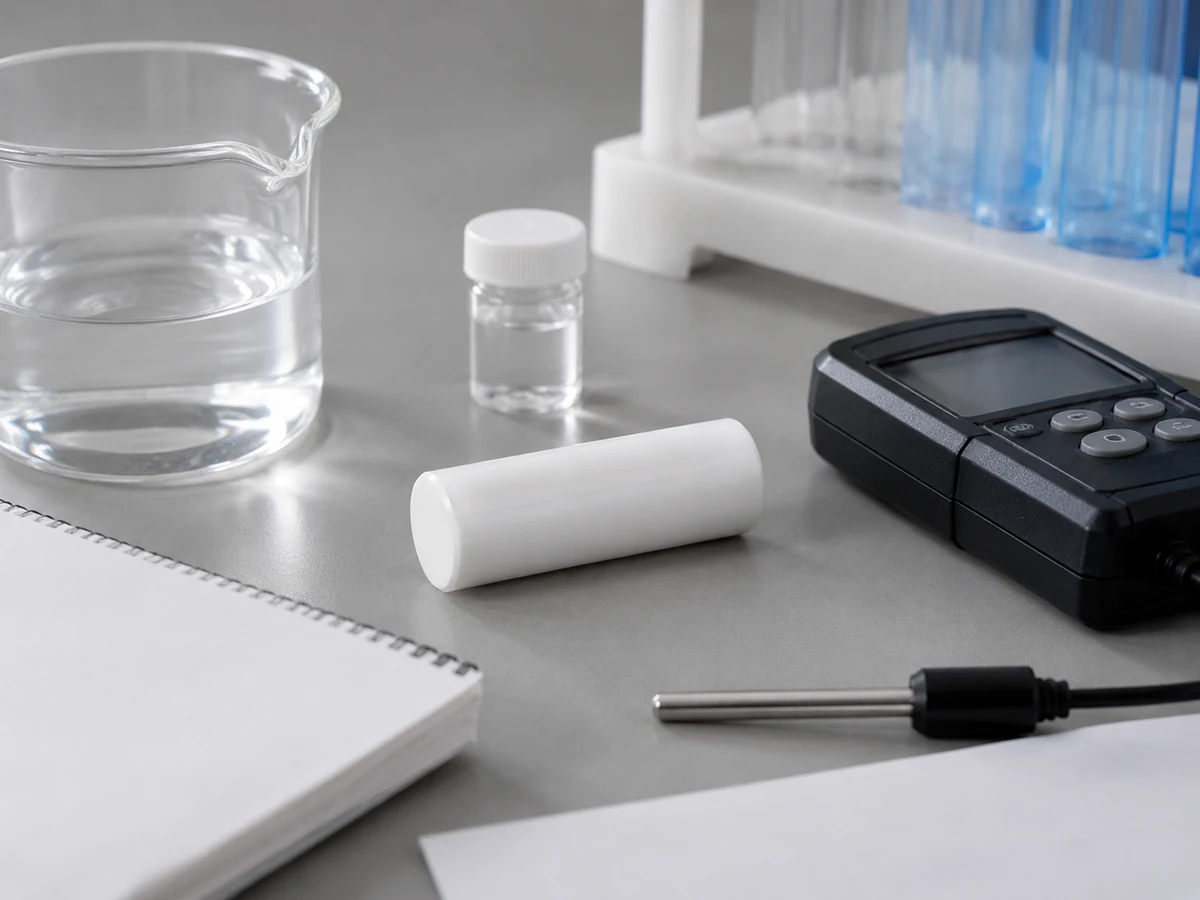
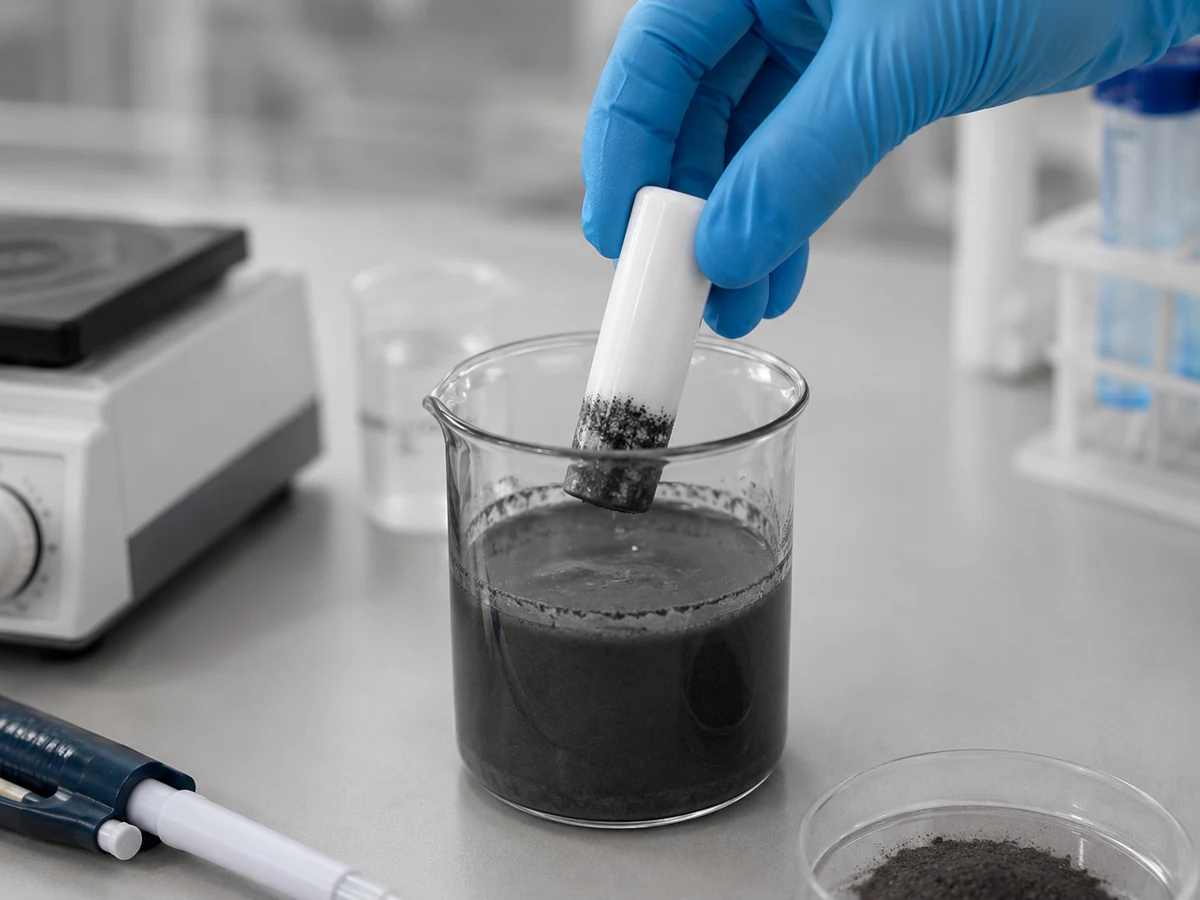
OSENC supplies a compact PTFE-encapsulated magnetic rod for collecting ferromagnetic particles from battery powders, NMP-based slurries and laboratory sample-preparation workflows. We review the finished-surface field target, coating integrity, pole arrangement, chemistry, temperature and test method before production.
Is This Magnetic Bar a Good Fit?
Best Fit
Laboratory and small-batch magnetic impurity collection where the sample should contact PTFE rather than an exposed metal shell.
Validate First
Fine-particle collection in battery powders or slurries, because viscosity, particle composition, mixing and contact time change the result.
Choose Another System
Industrial throughput, continuous slurry purification or a guaranteed recovery target. Those jobs need a larger separator and process data.
Why Specify a PTFE Contact Surface?
PTFE helps isolate the magnetic circuit from the sample and provides a smooth, low-adhesion contact surface for controlled cleaning. The practical reason to specify PTFE is test-system control, not a blanket claim that NMP automatically destroys every 316 stainless-steel component.
Chemical suitability still depends on the exact solvent or acid, concentration, temperature, exposure time, coating continuity and mechanical handling. A chip, cut or thin spot can defeat an otherwise suitable material choice.
Controlled Product Specification
| Parameter | OSENC Page Definition | What Must Be Confirmed |
|---|---|---|
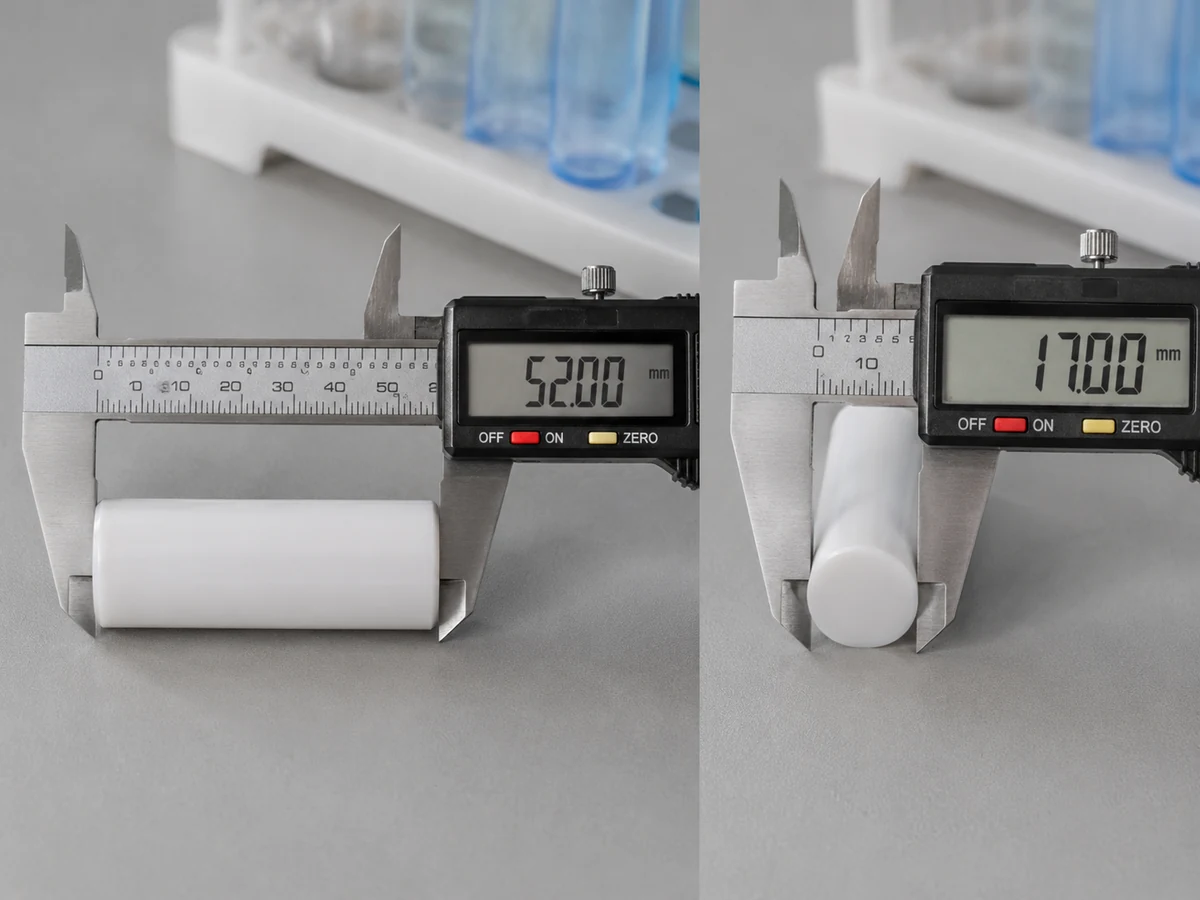
| Overall size | 17 mm diameter × 52 mm length | Tolerance and coating build on the approved drawing |
| Product type | PTFE-encapsulated magnetic impurity collection rod | End form, sealing construction and required surface finish |
| Magnetic circuit | NdFeB-based assembly | Grade, coercivity, geometry and pole arrangement |
| Surface field | 6,000–7,000 G target range when specified | Finished PTFE surface, defined points, room temperature, probe orientation and tolerance |
| Pole arrangement | Drawing-controlled | Axial or custom layout and pole map |
| Chemical exposure | Reviewed for battery-material laboratory use | Chemical, concentration, temperature, duration and cleaning cycle |
| Operating temperature | Application-specific | Use the lowest limit of the magnet, internal assembly and PTFE construction |
| Evidence options | Project-specific inspection package | Dimensional report, gauss map, coating inspection or agreed immersion test |
What Actually Controls Performance?
- Magnetic circuit: internal geometry and pole spacing can matter more than the grade label.
- PTFE build: PTFE is not a magnetic shield, but every added millimetre increases the working gap.
- Temperature: the assembled rod limit can be far below the material limit of PTFE.
- Sample matrix: viscosity, agglomeration, particle composition and mixing change collection behaviour.
- Measurement method: peak gauss, average gauss and field gradient are not interchangeable.
Battery-Material Test Workflow
A typical project may involve preparing a defined powder or slurry sample, exposing it to the finished PTFE magnetic surface under controlled mixing, rinsing or digesting the collected material, and analyzing it by the laboratory’s validated method. OSENC supplies the magnetic component; the buyer owns the analytical protocol, acceptance limit and method validation.
Compare the Contact-Surface Options
| Option | Useful When | Main Limitation |
|---|---|---|
| PTFE-encapsulated magnetic bar | A non-metallic sample-contact surface and chemical isolation are important | Coating continuity, thickness and mechanical damage must be controlled |
| Stainless-housed magnetic rod | Mechanical durability, welding and process integration are priorities | Metal contact may be undesirable in trace-contamination methods; compatibility depends on the exact chemistry |
| Bare NdFeB magnet | Dry, protected fixtures with no direct chemical contact | Brittle and corrosion-sensitive; generally unsuitable for direct slurry or acid contact |
OSENC Validation Route
Define the Matrix
Send powder or slurry composition, liquid chemistry and temperature.
Lock the Drawing
Confirm size, end geometry, PTFE construction and pole map.
Make a Sample
Use a prototype or pilot lot before volume release.
Verify the Bar
Inspect dimensions, surface condition and finished-surface gauss.
Validate the Method
Run the buyer’s actual sample matrix and analytical procedure.
Suitable Applications
- Battery cathode or anode powder impurity extraction
- Small-volume slurry screening and sample preparation
- Pre-analysis magnetic-particle collection before ICP workflows
- R&D and QC methods requiring a PTFE contact surface
Not Suitable Without Further Engineering
- Industrial bulk or continuous separation
- Guaranteed sub-micron capture based only on gauss
- Continuous use at the PTFE resin temperature limit
- Aggressive impact, abrasion or prolonged ultrasound
- Food, pharmaceutical, medical or sterile use without scoped evidence
Frequently Asked Questions
Is the 6,000–7,000 G value measured through the PTFE?
Does PTFE block the magnetic field?
Can this rod capture 1 μm iron particles?
Is N56 required?
Can it be used in NMP, acids or alkaline solutions?
Can the rod be autoclaved?
What should I send for a quotation?
Send the Test Conditions, Not Just the Gauss Number
For a useful quotation, include the sample material, solvent or acid, concentration, temperature, sample volume, target field, measurement points, cleaning method, quantity and required reports.