
Dry Bulk Magnetic Separator for Sand, Minerals, Aggregate, and Recycling Material
A dry bulk magnetic separator removes ferrous metal from free-flowing material before it reaches screens, crushers, packing equipment, or sorting machines.
For sand, aggregate, dry minerals, slag, and crushed recycling material, OSENC checks capacity, feed width, material depth, and iron size before recommending a magnetic drum, suspended magnet, or another separator. The right choice depends on how the material falls, how deep the burden is, and whether the goal is machine protection, product cleaning, or metal recovery.
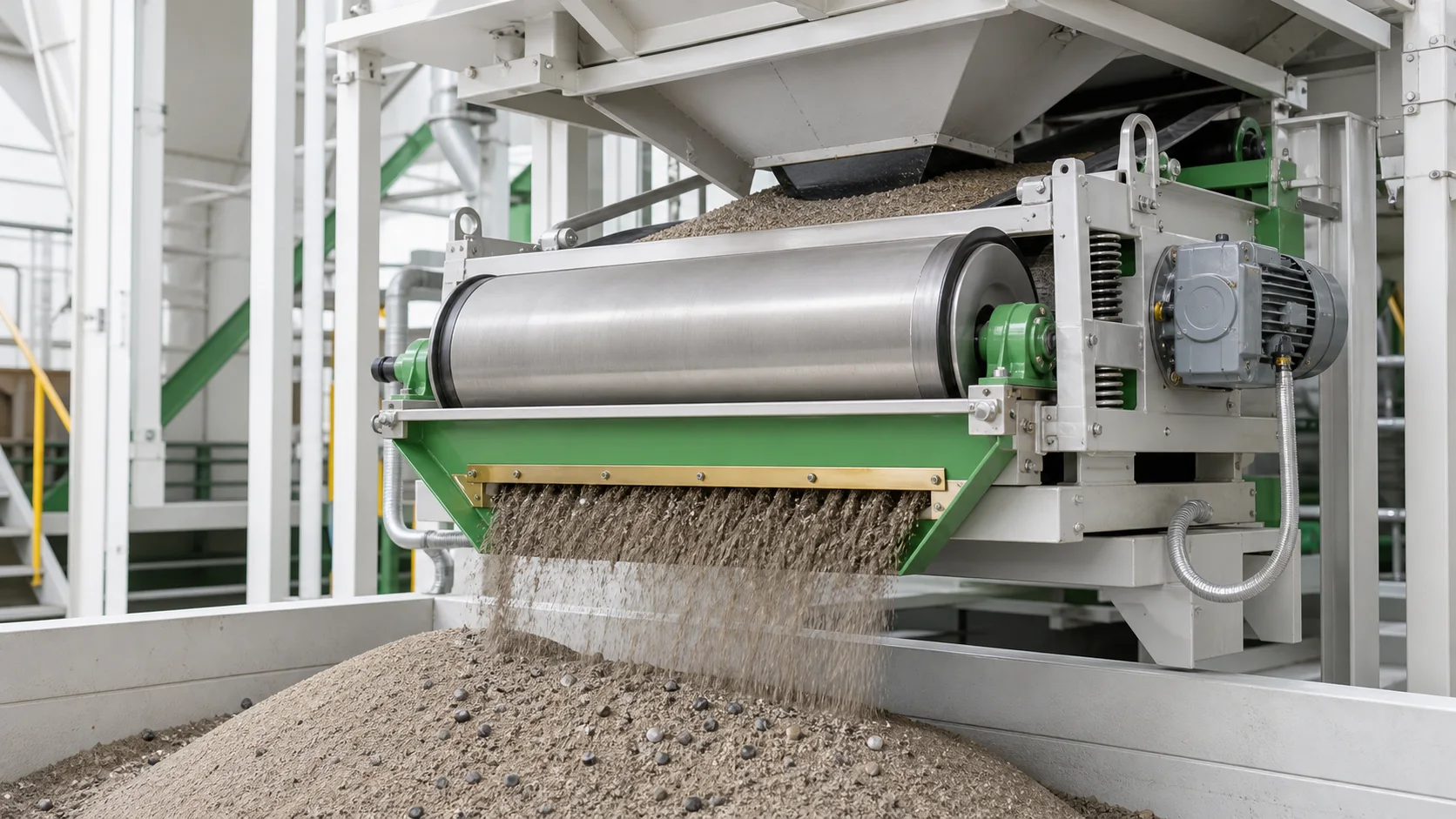
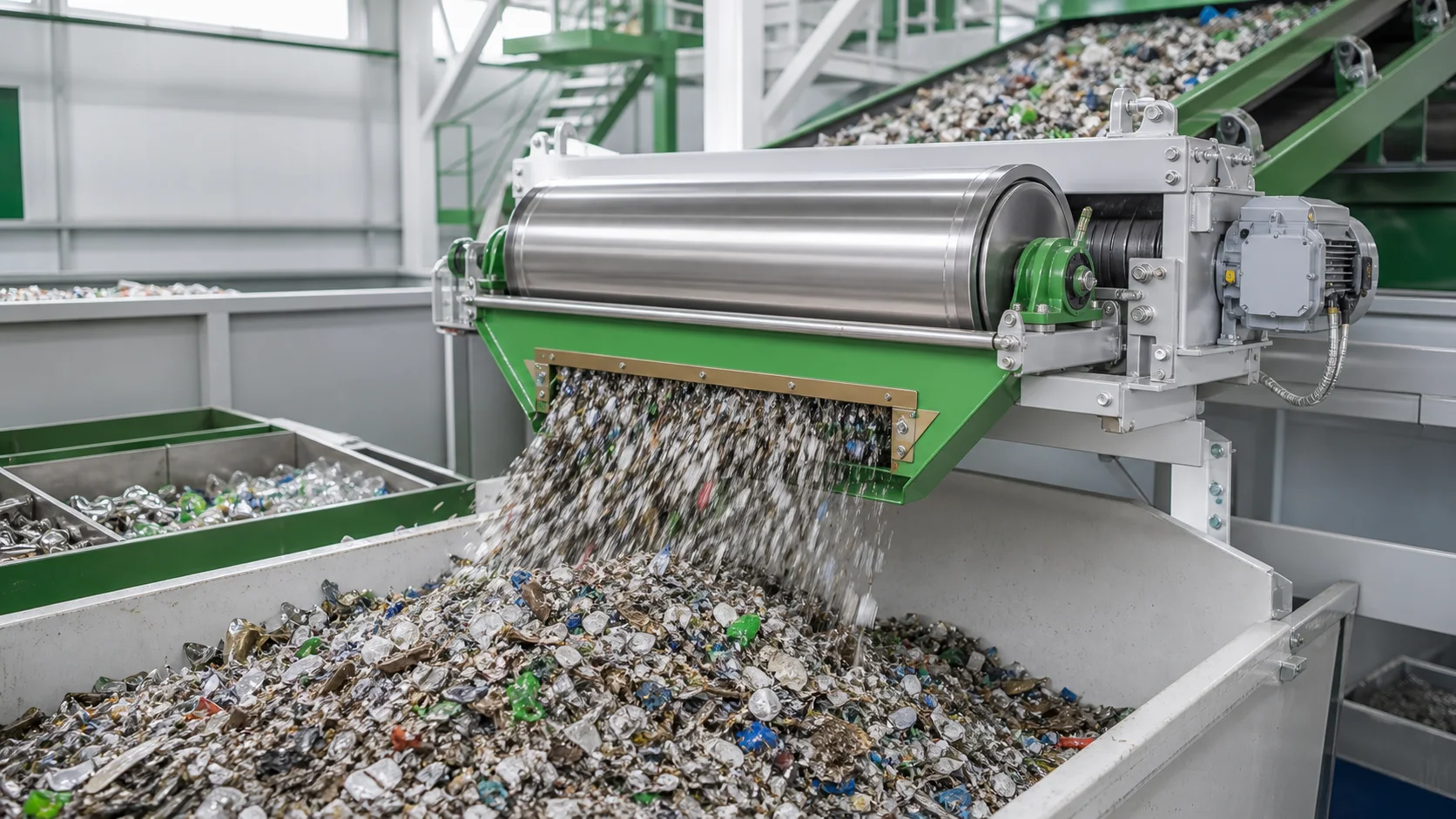
Sand, aggregate, dry minerals, slag, crushed stone, glass cullet, plastic flakes, and other dry free-flowing material.
Bolts, nails, wire, iron chips, small scrap, or tramp metal damaging downstream equipment or reducing product quality.
Capacity, particle size, feed width, burden depth, iron size, moisture, and the exact installation point.
Common Dry Bulk Lines Reviewed Before Selection
Photos or short videos from the real line are useful because dry bulk material can look similar in a catalog but behave differently at the discharge point. The feed width, material layer, drop path, and available cleaning space often decide whether a drum, suspended magnet, grate, or chute separator is practical.
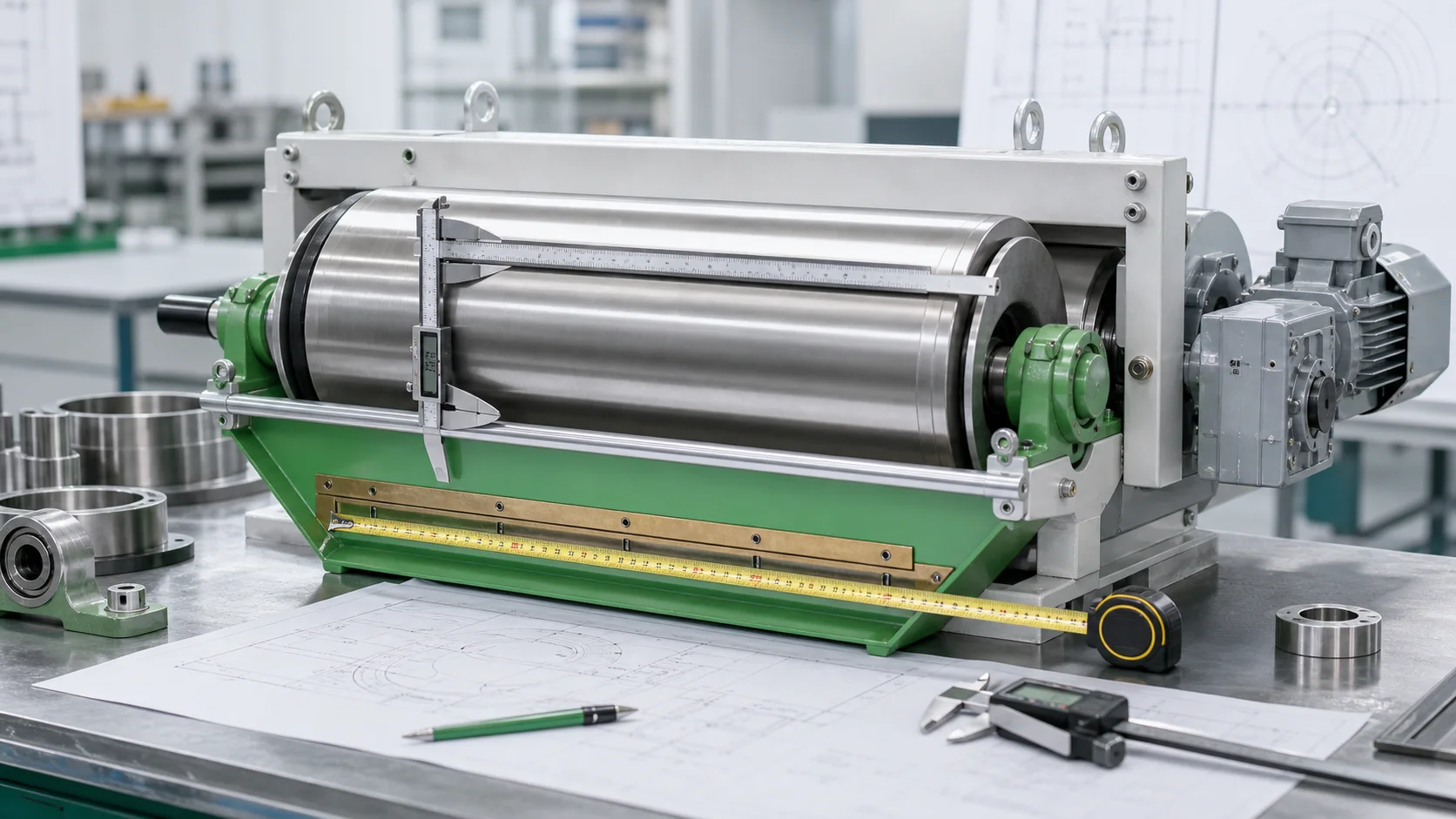
Where This Separator Fits
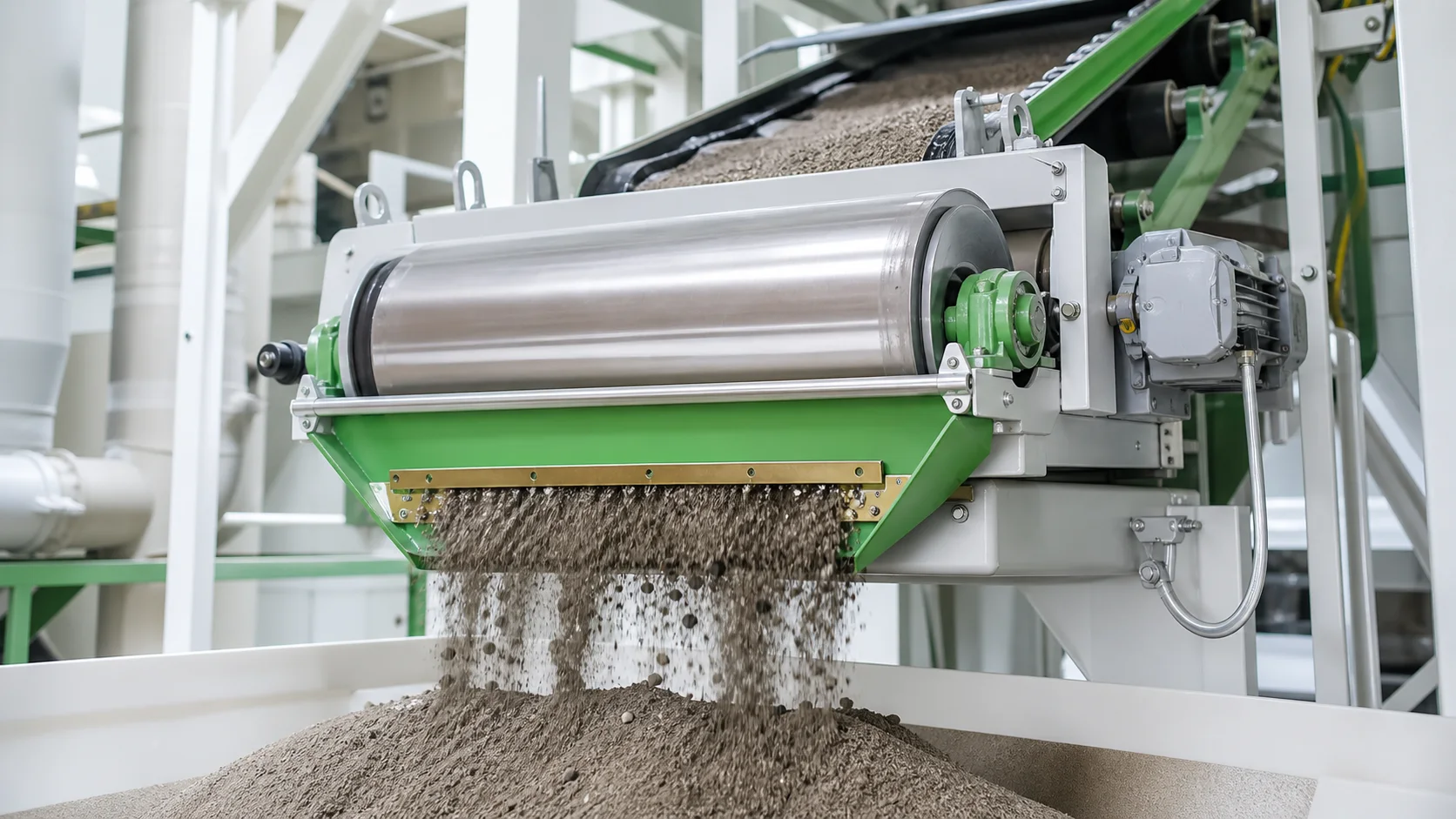
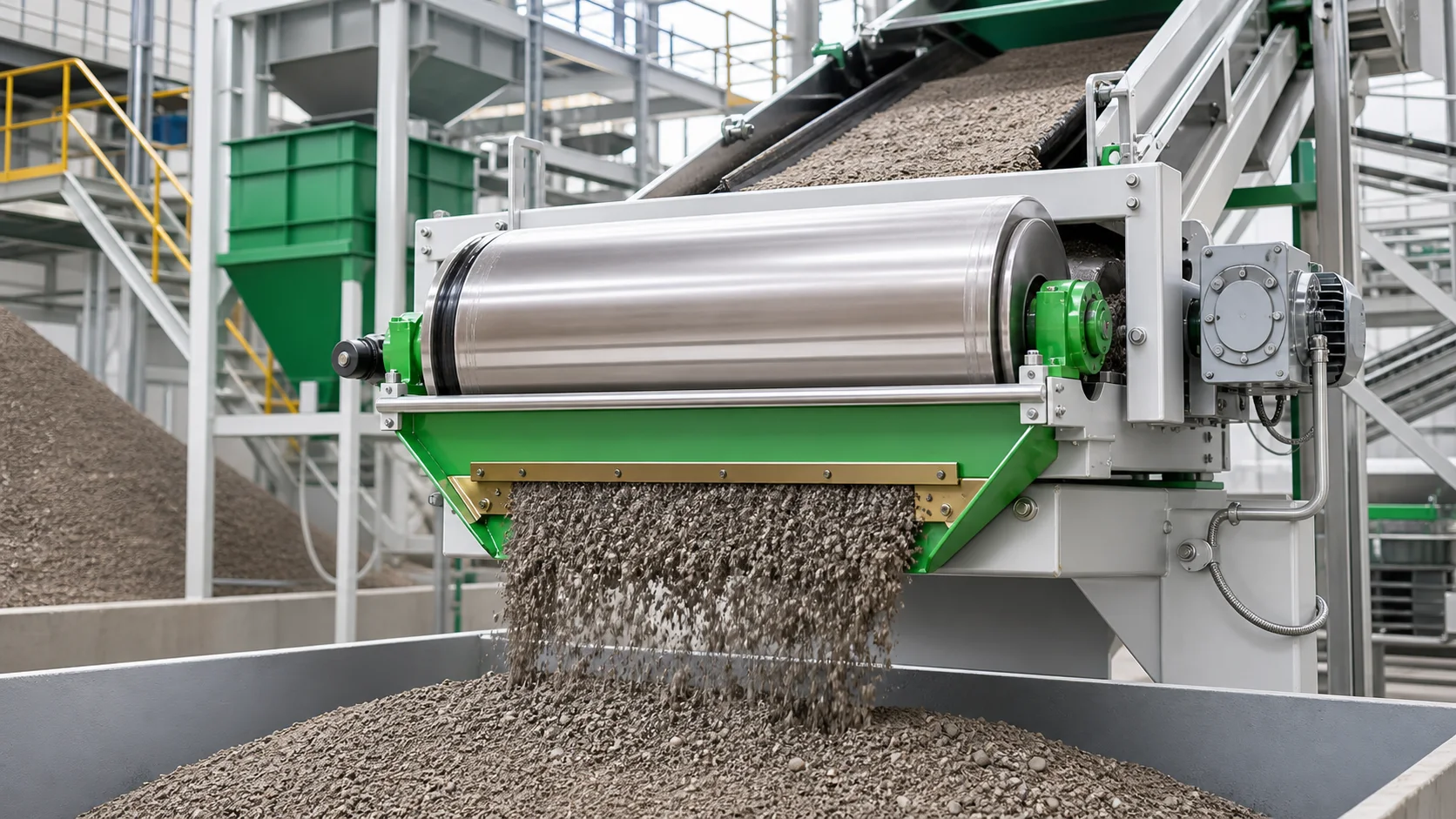
Dry bulk material usually separates best when it can spread across a working face or fall close to the magnetic surface. A magnetic drum is often used at a conveyor discharge, feeder outlet, chute outlet, or hopper discharge where clean material and captured iron can be split into different paths.
If material is still moving on a conveyor and the main concern is large tramp iron before a crusher, a suspended magnet may be more practical. If the material flows through a small hopper and particle size is fine, a grate or chute magnet may be reviewed instead.
Suitable and Not Suitable Materials
Usually Suitable
Dry, free-flowing material with a controlled feed width, manageable particle size, and a flow path that can pass close to a drum, grate, chute, or suspended magnet.
Needs Extra Review
Wet sticky material, highly bridged powder, very deep burden, unstable large lumps, or lines that require strict sanitary design without confirmed cleaning access.
Selection Points for Dry Bulk Material
| Material Name | Sand, aggregate, slag, mineral feed, plastic flakes, glass cullet, and crushed recycling material behave differently. |
|---|---|
| Hourly Capacity | Capacity affects drum width, drum diameter, feeding method, and whether the material layer becomes too deep. |
| Particle Size | Large lumps, fine powder, and mixed crushed material need different working gaps and separation paths. |
| Feed Width | The magnetic working width should cover the full material stream, not only the center of the flow. |
| Iron Size | Large tramp iron, wire, fine chips, and weak magnetic particles do not require the same magnetic circuit. |
| Installation Position | Photos or drawings help confirm whether a drum, suspended magnet, chute separator, or grate is practical. |
Recommended Equipment
For discharge points and feeder outlets, OSENC usually reviews a magnetic drum first because it gives continuous separation and a clean split between product and captured iron. For conveyor protection before crushers, a suspended magnet may be better. For small hopper flow, a magnetic grate can be considered when the material size and flowability allow it.
Before confirming a recommendation, we check whether the material can reach the magnetic field closely enough. A separator installed too far from the material stream may look correct on paper but perform poorly in production.
What To Send For a Quote
For dry bulk lines, send dimensions in mm or inch as shown on your drawing. OSENC will not confirm a drum width, belt width, or housing size from a product name alone.
Material Details
- Material name and industry
- Dry or wet condition, moisture, and dust level
- Capacity per hour and conveying method
- Particle size range and layer depth
- Estimated iron proportion if known
Installation Details
- Feed width or belt width in mm or inch
- Iron type, size, and photos
- Installation photos, drawing, or material video
- Goal: equipment protection, product purity, or recovery
- Need continuous iron discharge or manual cleaning
Dry/Wet Boundary and Site Risks
| Dry Material | Suitable when the material is free-flowing, can spread into a controlled layer, and does not coat the magnetic surface heavily. |
|---|---|
| Wet or Sticky Material | Needs extra review. Wet slurry, sticky clay, oily material, or material that cakes on the shell may need a different separator or feeding design. |
| High Temperature | Temperature can affect magnet selection. Send the normal and maximum material temperature before OSENC reviews ferrite or rare earth designs. |
| Corrosion, Dust, or Flammable Risk | Send site conditions before ordering. Corrosive gas, heavy dust, or possible flammable dust may require special material, sealing, or safety review. |
Dry Bulk Magnetic Separator FAQ
Is a magnetic drum always the best choice for dry bulk material?
No. It is strong for discharge points and continuous dry flow, but a suspended magnet may be better above a conveyor for large tramp iron before a crusher.
Why does material layer depth matter?
Magnetic force drops with distance. Iron buried under a thick material layer may not be captured reliably unless the feed is spread or the separator design changes.
Should I choose ferrite or rare earth?
Ferrite can work for larger tramp iron. Rare earth is considered for fine iron, smaller pieces, or higher cleaning requirements.
Request a Dry Bulk Magnetic Separator Recommendation
Send material name, capacity, particle size, feed width, material depth, iron type, installation position, and photos. OSENC will help confirm whether a magnetic drum, suspended magnet, or another dry bulk separator fits your line.