
OSENC Magnetic Separation
Ordinary permanent magnetic separators are most effective on ferromagnetic contaminants such as iron and many carbon steels. Aluminum, copper, brass, bronze and most other non-ferrous metals are not removed by an ordinary static magnet. Stainless steel behavior varies with alloy, microstructure, forming history, size and working distance.
If the contaminant is unknown, identify it or test a representative sample before selecting a separator.
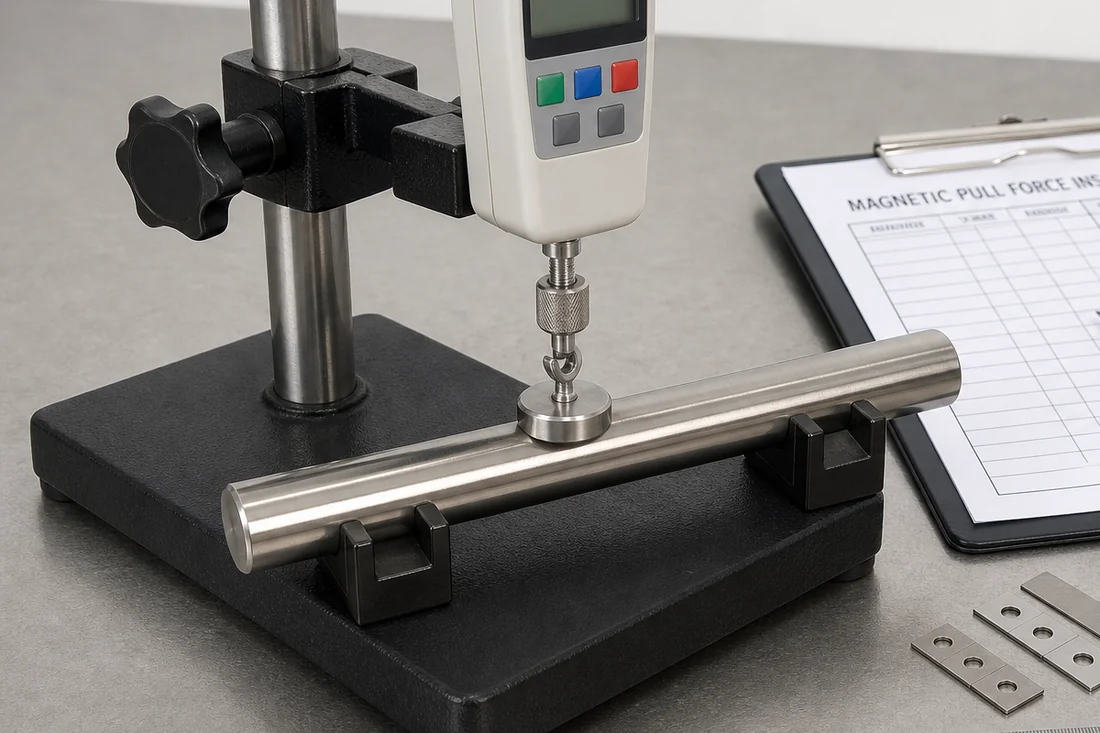
Quick Material Screening Table
| Material | Typical response to ordinary magnet | Selection note |
|---|---|---|
| Iron and mild/carbon steel | Usually strongly attracted | Still evaluate size, shape, burial depth and speed |
| Cast iron and many steel fragments | Usually attracted | Irregular shape and mass affect capture |
| Ferritic and martensitic stainless grades | Often magnetic | Test the actual grade and part condition |
| Austenitic stainless grades | Often weak or nearly non-magnetic in annealed state | Cold work can increase magnetic response |
| Aluminum, copper, brass and bronze | Not captured by an ordinary static magnet | Other separation technology may be required |
| Rust and iron oxide | Response varies by composition and particle condition | Representative fine-particle testing is important |
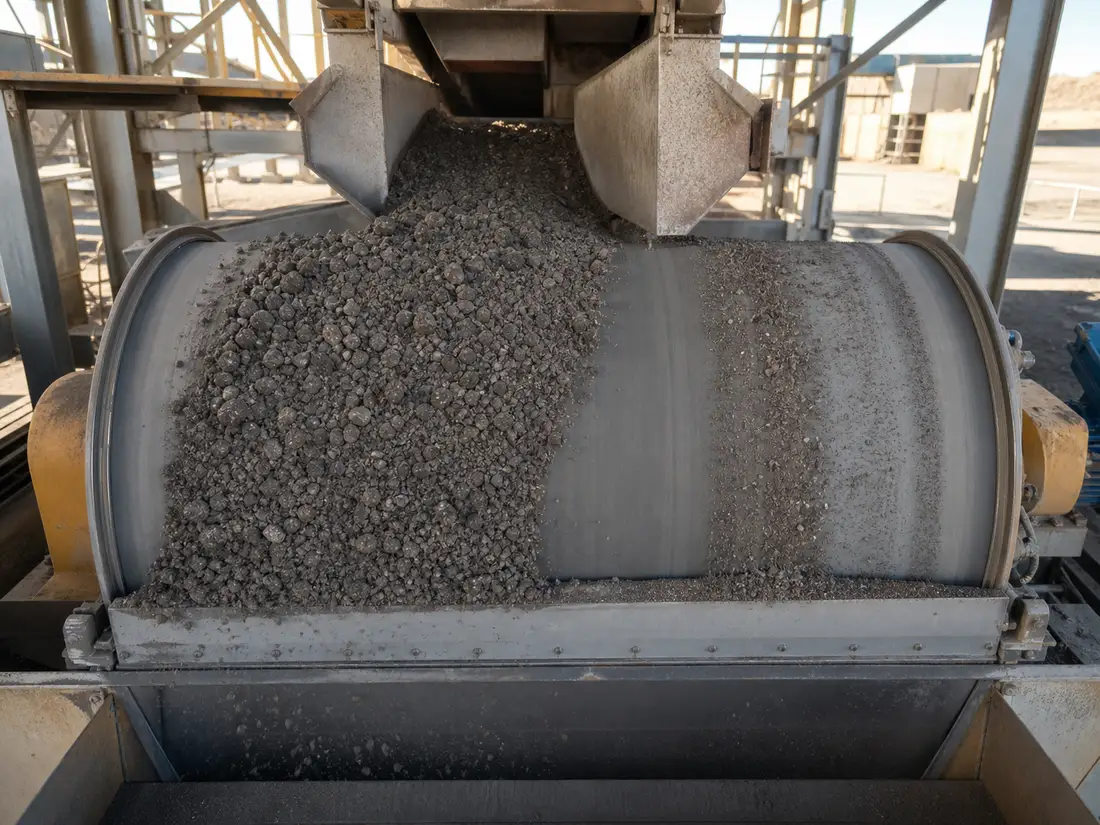
Magnetic Does Not Mean Easy to Separate
A small steel wire trapped inside rubber may be strongly magnetic but not liberated. A bolt at the bottom of a deep burden may be outside the effective capture zone. Fine iron in sticky powder may remain bound inside agglomerates. Separation requires a magnetic response plus sufficient presentation, force, time and a controlled discharge path.
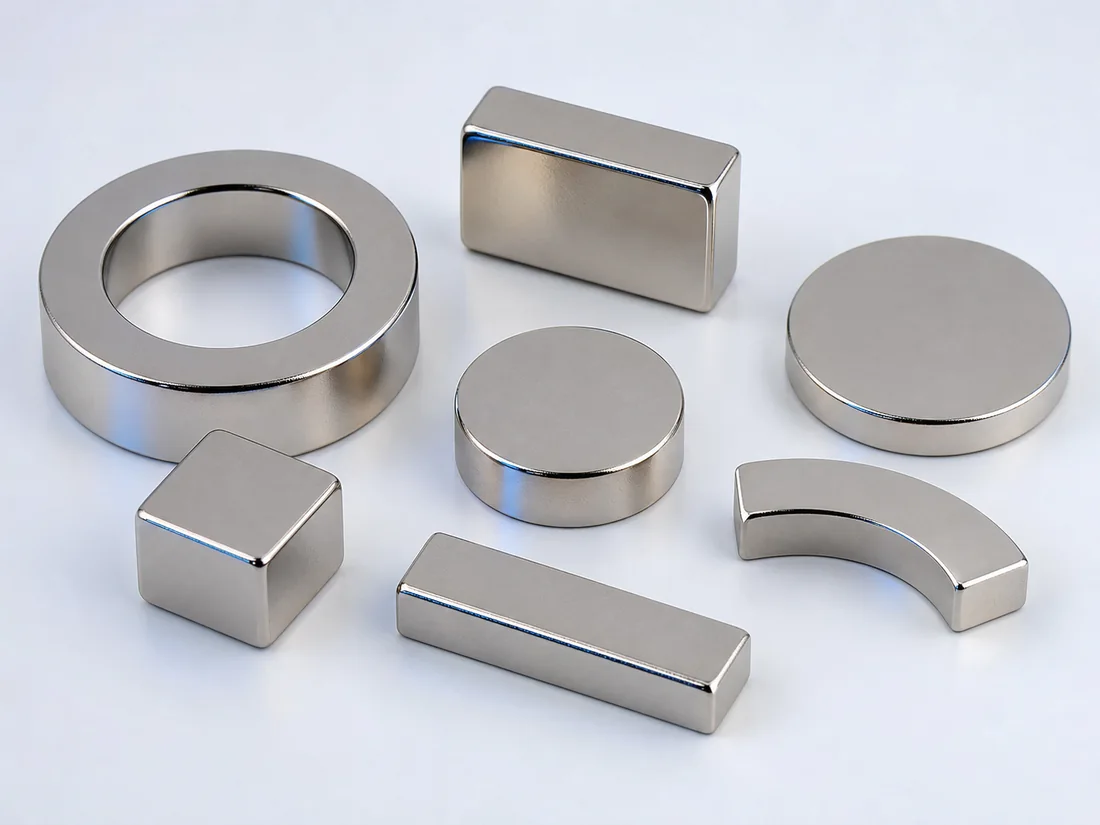
Why Stainless Steel Needs Its Own Review
“Stainless steel” describes a large alloy family, not one magnetic behavior. Grade, heat treatment, cold work, welding and deformation can change the response. A kitchen-grade label or handheld magnet check does not represent every fragment size or industrial working distance.
What About Non-Ferrous Metal?
Aluminum and copper are electrically conductive but are not captured by an ordinary permanent grate, drum or suspended magnet. Eddy-current separation can act on conductive non-ferrous pieces under suitable conditions, but that is a different operating principle and is not currently a confirmed OSENC product family.
Four Tests Before Equipment Selection
- Identify the contaminant by material, source and process history.
- Check response using the actual fragment, not only a bulk material label.
- Test across the expected size range and at the intended working gap.
- Run representative feed trials if capture rate affects the purchase decision.
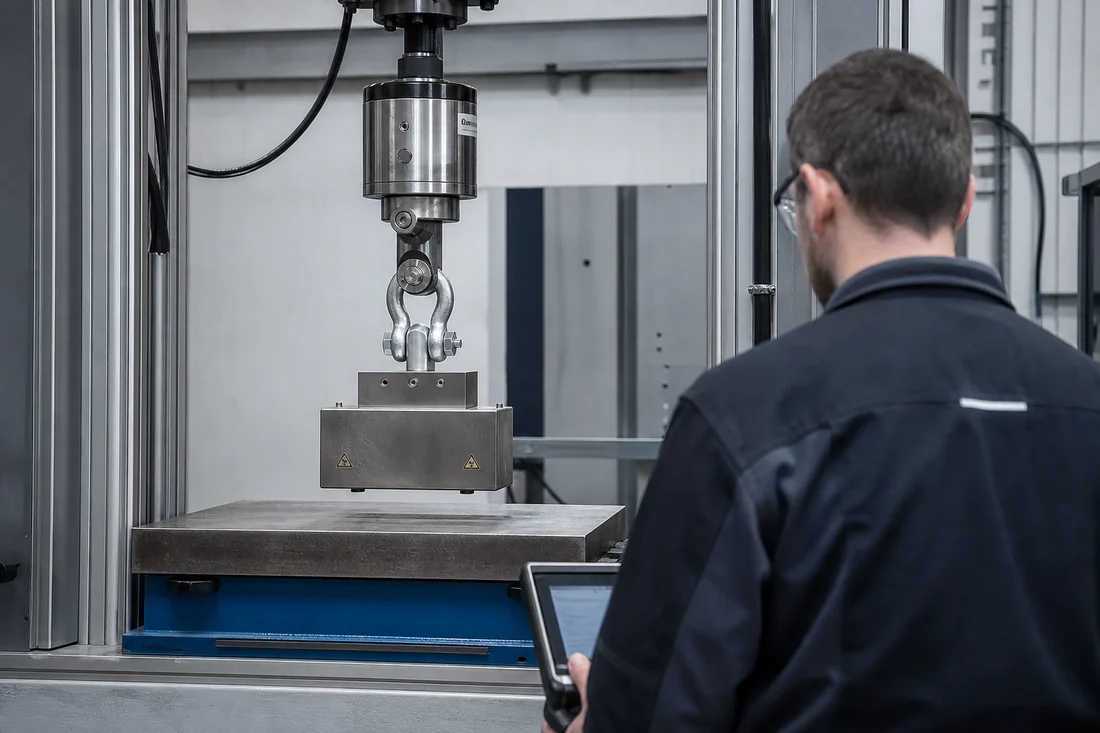
Information to Send OSENC
- Contaminant samples or clear close-up photographs
- Known alloy or source of the contamination
- Minimum, typical and maximum particle size
- How the target is mixed, embedded or liberated
- Material flow, capacity, moisture and temperature
- Required result and verification method
Discuss a sample submission Review material testing Compare separator types
Classify the Target Before Selecting Equipment
| Decision rule | Conventional magnetic separators primarily remove ferromagnetic iron and steel; stainless response varies, while aluminum, copper and most nonferrous metals require another separation method. |
|---|---|
| Inputs to confirm | Alloy or material identity, shape, size, work hardening, temperature, initial concentration, required residual and whether pieces are free or embedded. |
| Risk or limitation | Calling a target metal does not define its magnetic response; weakly magnetic stainless fines can behave very differently from a carbon-steel bolt. |
| Buyer action | Send representative target samples with the process material when response is uncertain and define how residual contamination will be measured. |
How We Use This Technical Point in Selection
What Metals Can Magnetic Separators Remove?: seller-side application review
- Your selection risk: A device name, surface Gauss value or static pull result can lead to the wrong purchase when material motion and working distance are ignored.
- What we review: We check your material, particle size, moisture, temperature, throughput, layer or flow geometry, target contamination, installation position and cleaning method.
- What we decide: We use the principle described above to compare magnetic circuit, exposure, retention and discharge conditions before we recommend or rule out a structure.
- Buyer value: This helps you reduce leakage risk, avoid an oversized or ineffective unit and connect the specification to a testable production objective.
- Boundary: We do not treat a simplified explanation as guaranteed separation performance; representative testing is needed when magnetic response or scale-up remains uncertain.
- Next step: Send the material and target, particle range, moisture, temperature, throughput, contamination, installation drawing, available space, cleaning preference and any sample or site video. Send the material and separation target
Project Support
Need help selecting the right magnetic solution?
Send us your material, flow condition, target metal, capacity, installation space and any drawings or site photos. We will review the application and recommend the next practical step.
Frequently Asked Questions
Why is “Magnetic Does Not Mean Easy to Separate” important for this decision?
A small steel wire trapped inside rubber may be strongly magnetic but not liberated. A bolt at the bottom of a deep burden may be outside the effective capture zone.
Why Stainless Steel Needs Its Own Review?
“Stainless steel” describes a large alloy family, not one magnetic behavior. Grade, heat treatment, cold work, welding and deformation can change the response.
What About Non-Ferrous Metal?
Aluminum and copper are electrically conductive but are not captured by an ordinary permanent grate, drum or suspended magnet.