
OSENC Magnetic Separation
Magnetic separation works when a magnetic force changes the motion of a susceptible particle enough to overcome competing effects such as gravity, material drag, belt motion, impact and adhesion. The separator must then hold or redirect the particle and release it into a controlled collection path.
This is why surface Gauss alone cannot predict industrial separation. The field at the particle, its gradient, particle properties, distance, exposure time and process trajectory work together.
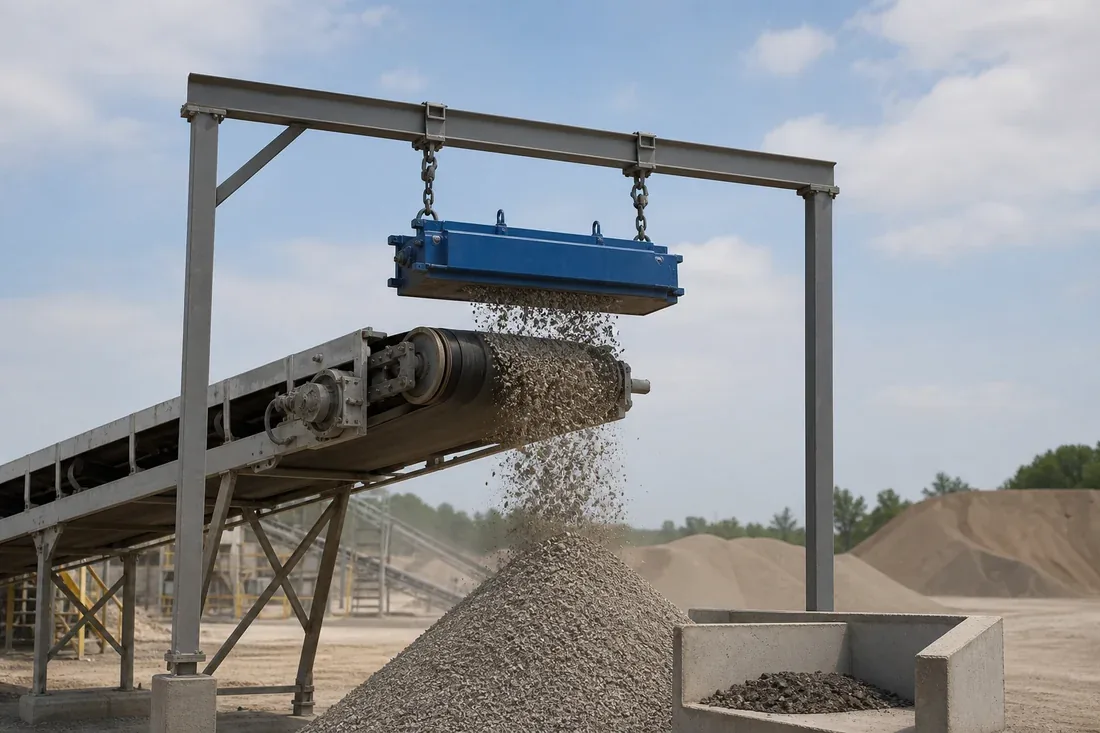
The Five Stages of a Successful Separation
- Presentation: the feed exposes the target instead of burying it inside a deep layer or clump.
- Attraction: the particle experiences sufficient magnetic force at its actual working position.
- Capture: attraction changes the particle’s motion before it leaves the active zone.
- Retention: the separator holds the particle against gravity, vibration, product drag or belt motion.
- Release: cleaning or trajectory design transfers captured metal to a separate collection point.
Failure at any one stage reduces the result even when the magnet itself is strong.
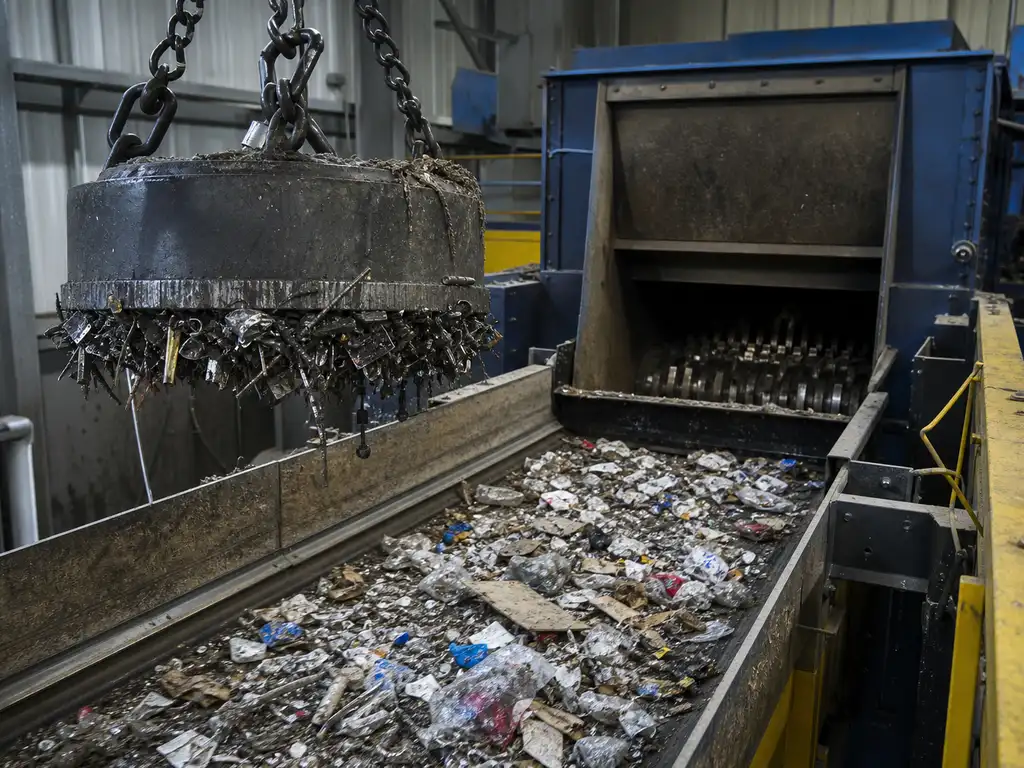
Why Distance Matters
Magnetic field and useful attraction decrease as the target moves away from the pole surface. A magnetic tube may show a high maximum value directly on its shell but a much lower field several millimetres away. A suspended magnet must reach through an air gap and burden depth to affect iron near the conveyor belt.
Always define the measurement location: surface, rated suspension height, centre of an opening or another agreed working point.
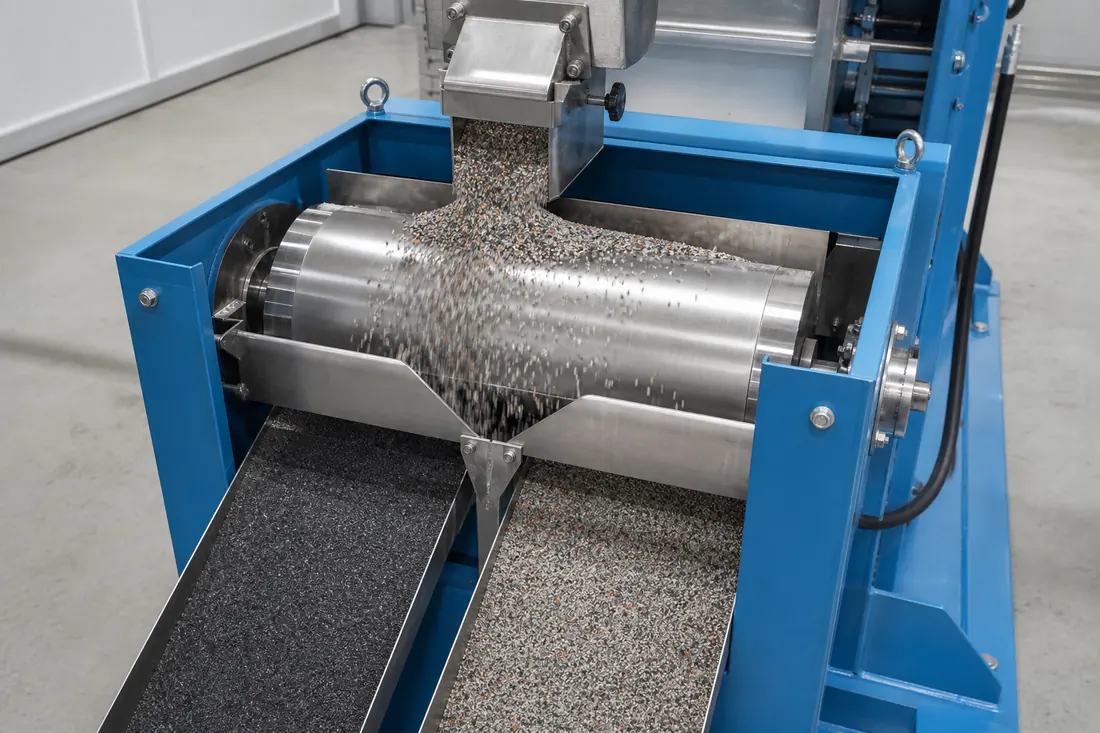
How Common Separators Change Particle Motion
Suspended and overband magnets
Iron is lifted from a moving burden. A manual-clean unit retains it on the face; an overband cleaning belt carries it outside the product stream before release.
Magnetic head pulleys
Ferrous particles remain attracted to the belt around the pulley and release later than the non-magnetic stream, creating different trajectories.
Housed magnetic drums
Material passes close to the rotating shell. Magnetic particles follow the drum farther before a splitter divides the fractions.
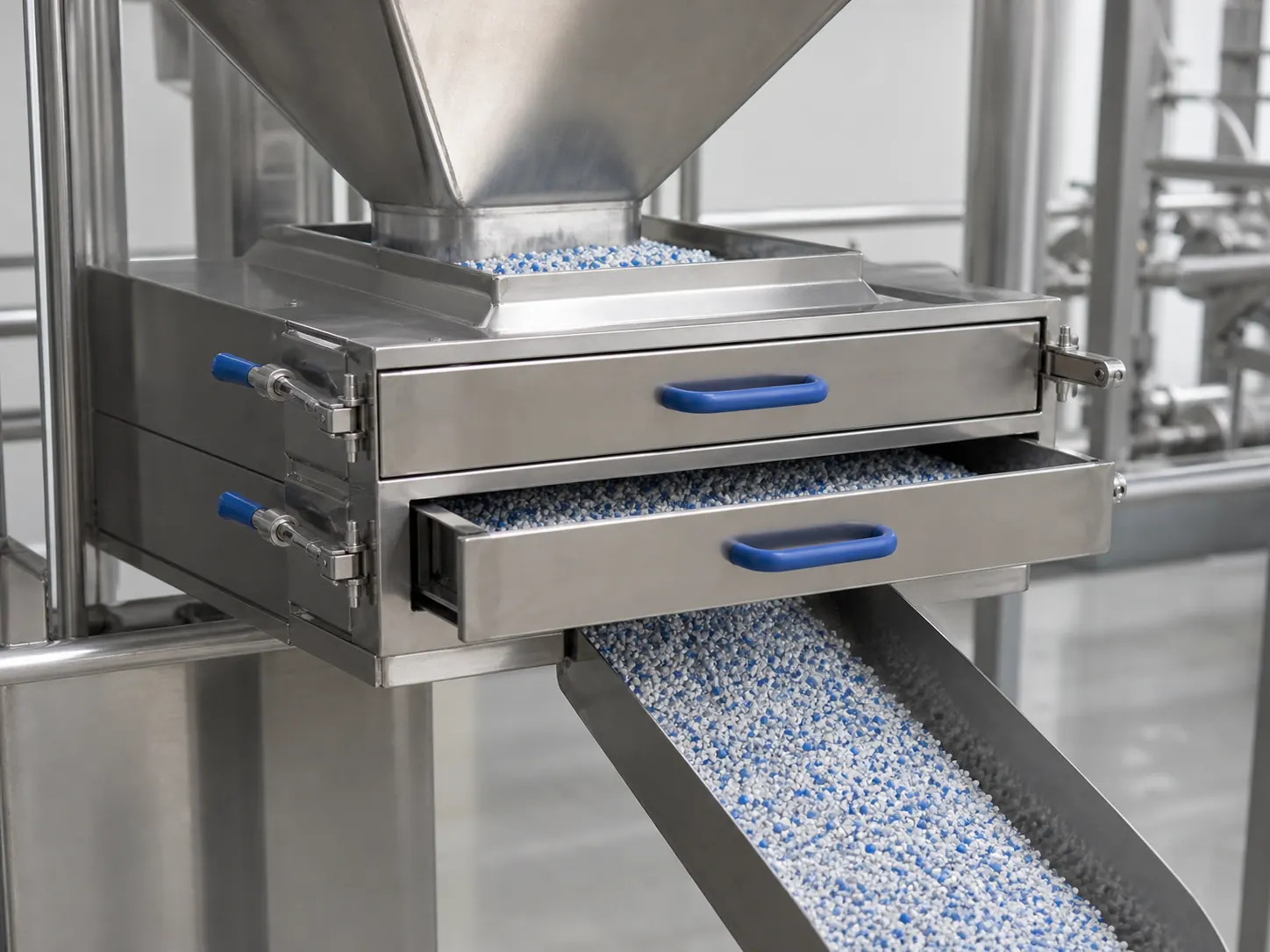
Tubes, grates and drawer magnets
Gravity-fed material passes through high-gradient zones near tube poles. Captured iron remains on the surface until the operator or easy-clean mechanism removes it.
Particle Properties Change the Result
Material identity is only the beginning. A large exposed steel bolt reacts differently from micron-scale iron wear, an iron particle locked inside plastic, a work-hardened stainless fragment or a rust scale. Shape, mass, magnetic susceptibility, orientation, liberation and surface condition all influence movement and retention.
Process Conditions That Compete with Magnetic Force
- High belt or material velocity reduces exposure time.
- Deep burden hides iron farther from the magnet.
- Moisture and stickiness bind particles into clumps.
- Abrasion can change clearances and separator surfaces.
- Product buildup increases the working gap.
- Unstable feed creates changing trajectories and overloaded zones.
- Incorrect splitter or discharge design recombines separated fractions.
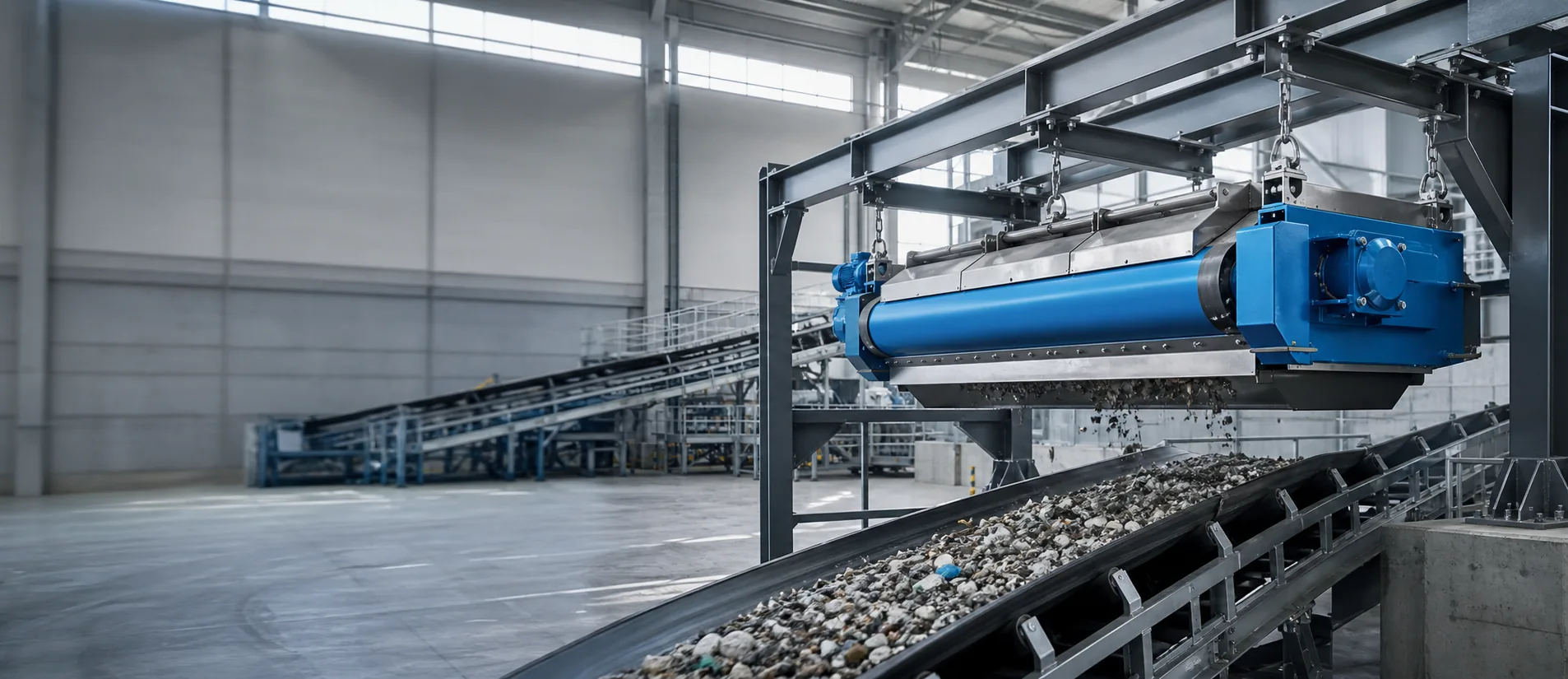
How to Turn the Principle into a Selection
- Identify and characterize the target particle.
- Map the material path and possible separator position.
- Measure the real working distance and layer depth.
- Define feed rate, speed, particle size, moisture and temperature.
- Select a structure that can capture and discharge the target.
- Agree a repeatable magnetic and process acceptance test.
Understand field strength and gradient Review efficiency factors Plan performance validation
How to Use the Separation Principle
| Decision rule | Judge the complete path from target liberation to attraction, retention and controlled discharge; attraction alone is not a complete separation result. |
|---|---|
| Inputs to confirm | Target material and size, magnetic response, distance to the pole, competing forces, material speed, layer depth, contact time and discharge trajectory. |
| Risk or limitation | More Gauss at one surface point cannot compensate for a large working gap, buried target, poor feed distribution or a splitter that recombines the fractions. |
| Buyer action | Define a representative target and material test that records both captured and missed material under the proposed process geometry. |
How We Use This Technical Point in Selection
How Magnetic Separation Works: seller-side application review
- Your selection risk: A device name, surface Gauss value or static pull result can lead to the wrong purchase when material motion and working distance are ignored.
- What we review: We check your material, particle size, moisture, temperature, throughput, layer or flow geometry, target contamination, installation position and cleaning method.
- What we decide: We use the principle described above to compare magnetic circuit, exposure, retention and discharge conditions before we recommend or rule out a structure.
- Buyer value: This helps you reduce leakage risk, avoid an oversized or ineffective unit and connect the specification to a testable production objective.
- Boundary: We do not treat a simplified explanation as guaranteed separation performance; representative testing is needed when magnetic response or scale-up remains uncertain.
- Next step: Send the material and target, particle range, moisture, temperature, throughput, contamination, installation drawing, available space, cleaning preference and any sample or site video. Send the material and separation target
Project Support
Need help selecting the right magnetic solution?
Send us your material, flow condition, target metal, capacity, installation space and any drawings or site photos. We will review the application and recommend the next practical step.
Frequently Asked Questions
Why is “The Five Stages of a Successful Separation” important for this decision?
Failure at any one stage reduces the result even when the magnet itself is strong.
Why Distance Matters?
Magnetic field and useful attraction decrease as the target moves away from the pole surface. A magnetic tube may show a high maximum value directly on its shell but a much lower field several millimetres away.
How Common Separators Change Particle Motion?
Iron is lifted from a moving burden. A manual-clean unit retains it on the face; an overband cleaning belt carries it outside the product stream before release.