
Ferrite vs Rare Earth Magnetic Separator
Ferrite and rare earth magnetic separators are both practical, but they are not selected for the same job.
Ferrite is often enough for larger tramp iron and cost-controlled equipment protection. Rare earth is usually considered when iron is fine, working distance is short, product cleanliness is stricter, or a compact separator needs stronger surface force. OSENC checks material depth, iron size, working gap, temperature, and cleaning method before recommending either option.
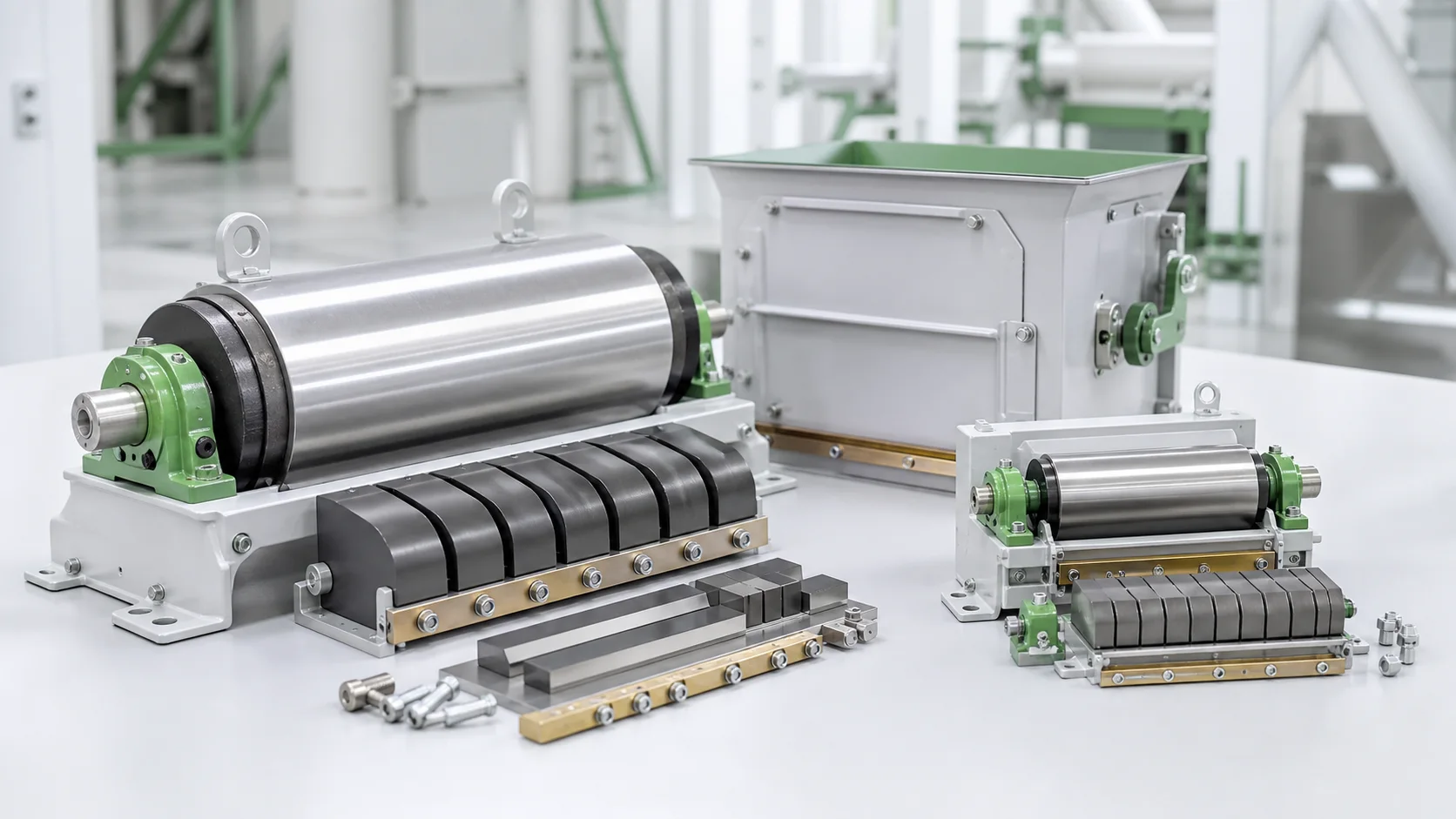
Iron pieces are larger, the goal is machine protection, the working gap is reasonable, and budget control matters.
Iron is fine, weakly magnetic, or hidden in a thin material layer, and the product requires stronger cleaning.
Magnet Selection Applications
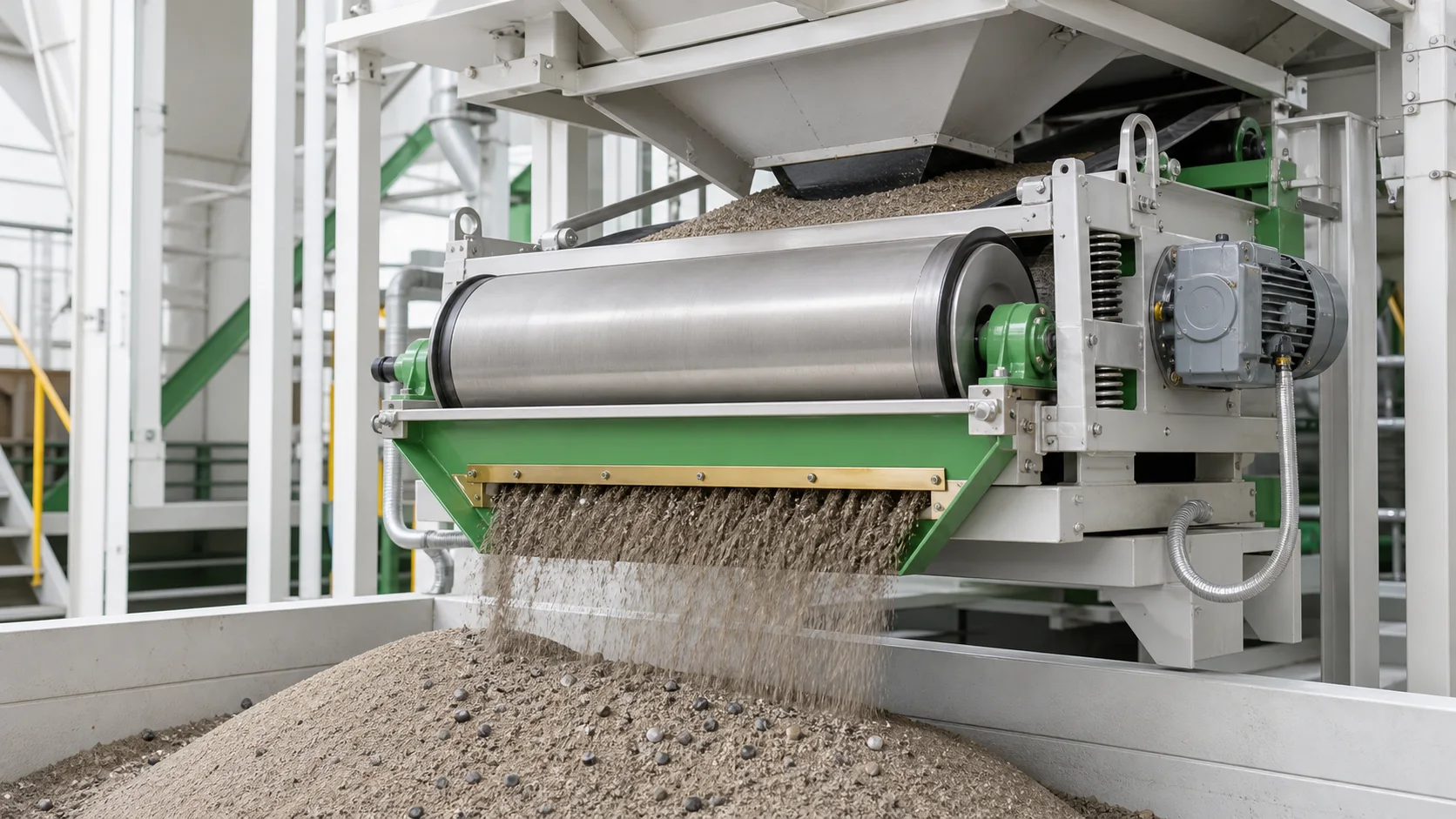
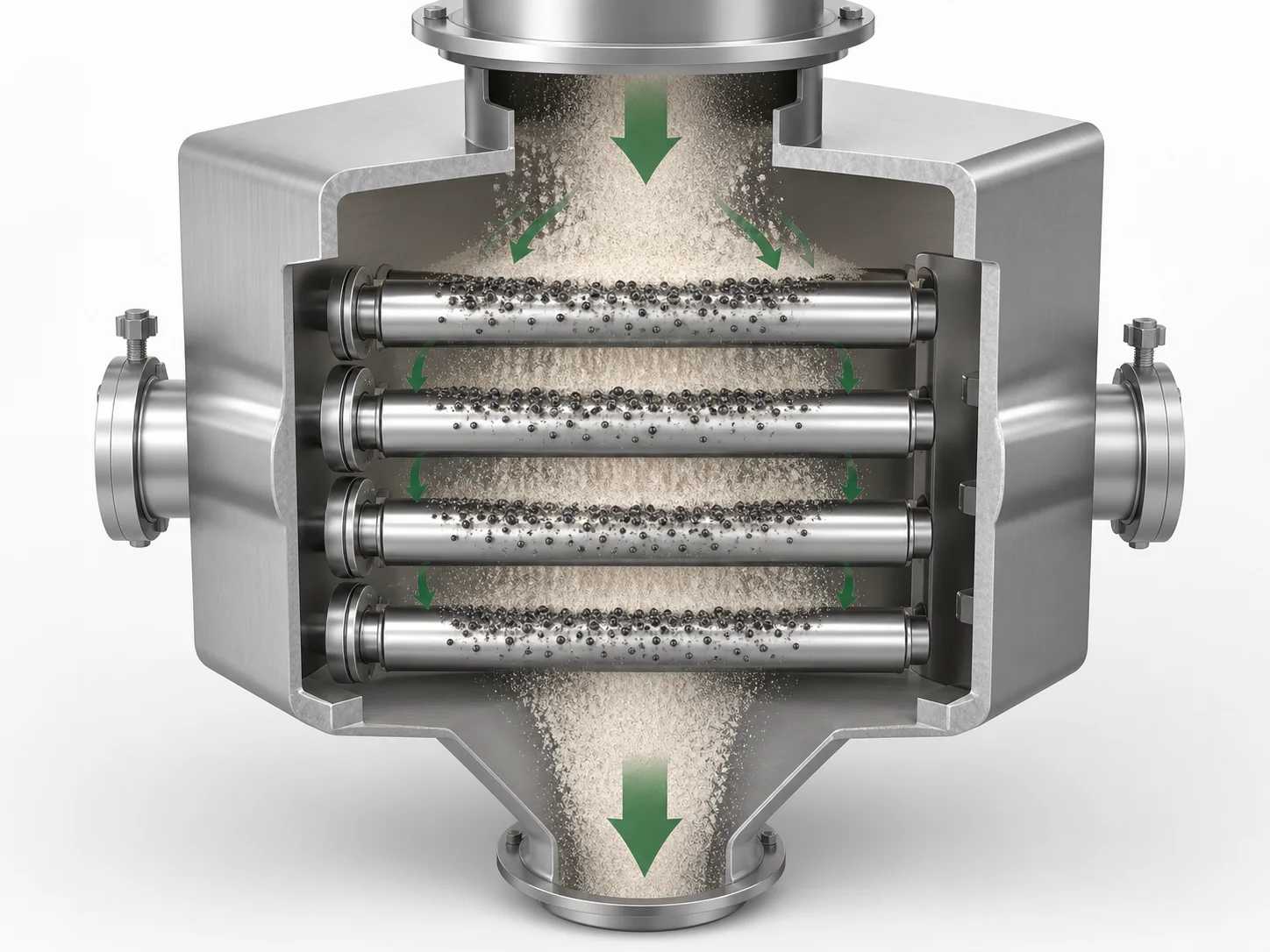
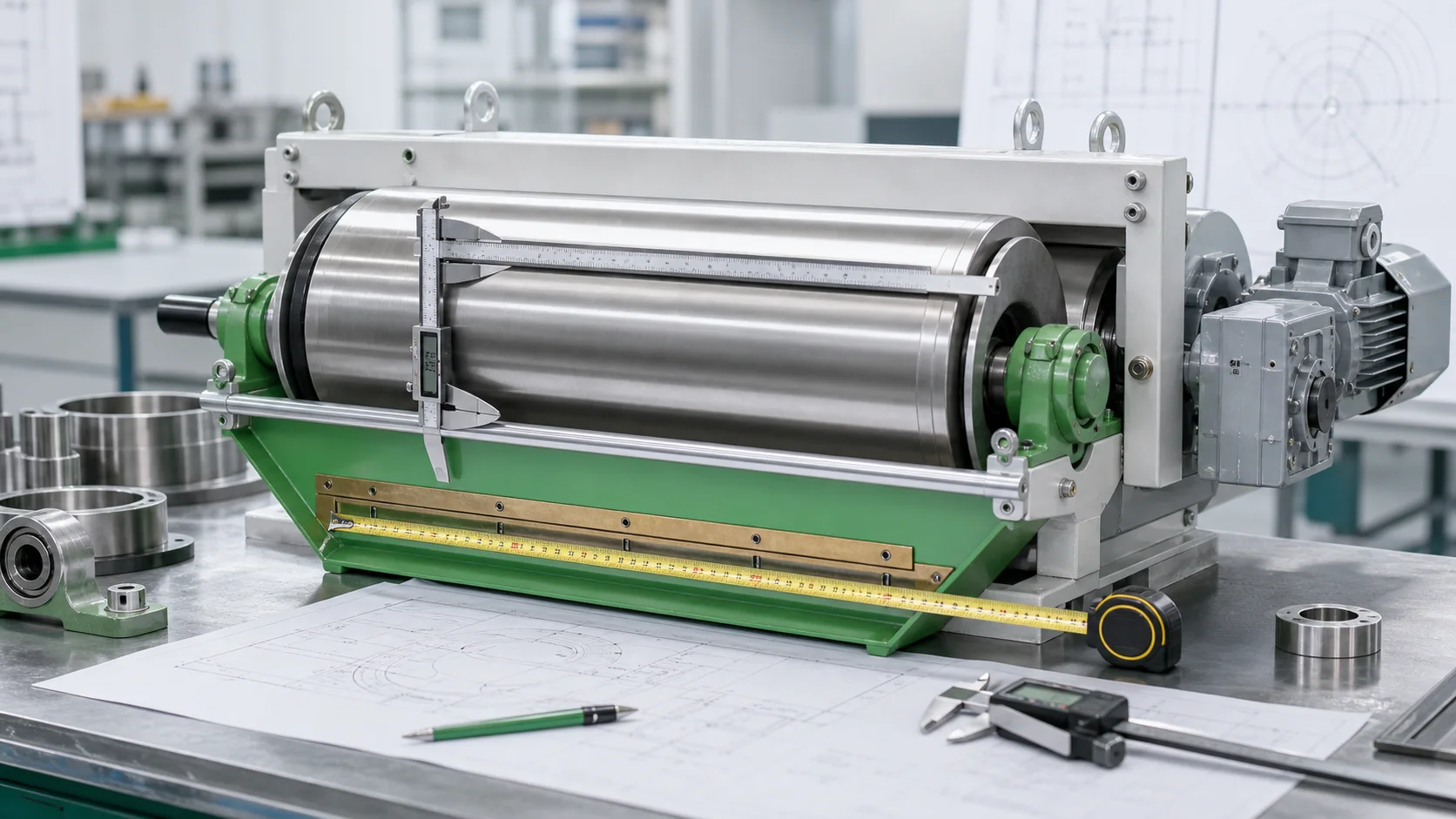
These images support the comparison between ferrite and rare earth choices by showing equipment style, working position, and specification review.
Quick Comparison
Ferrite magnets are stable, economical, and widely used in suspended magnets, drums, and general dry bulk separation. They are practical for visible tramp iron, larger ferrous pieces, and many protection applications.
Rare earth magnets provide stronger force in compact spaces. They are common in magnetic bars, grates, drawer magnets, chute separators, and drums used for fine iron or higher-purity applications.
Comparison Table
| Magnetic Force | Rare earth usually provides stronger surface force. Ferrite can still be effective when the iron is larger and close enough to the magnetic field. |
|---|---|
| Field Depth | Field depth depends on the full magnetic circuit, not only the magnet material. Separator geometry matters. |
| Fine Iron Capture | Rare earth is usually better for fine iron, powder, plastic pellets, ceramic material, and strict cleaning targets. |
| Cost | Ferrite is usually more economical. Rare earth costs more but may reduce quality risk in demanding applications. |
| Typical Use | Ferrite: tramp iron protection. Rare earth: fine iron removal, magnetic bars, grates, compact chutes, and higher-strength drums. |
How OSENC Selects Magnet Material
We first check the material, target iron size, layer depth, and working gap. Then we review temperature, corrosion risk, cleaning method, and whether the separator is for protection or product cleaning.
When the answer is uncertain, sample testing can be more useful than guessing from a catalog. This is especially true for fine powder, weak magnetic contamination, or high-value material where missed iron creates product complaints.
What To Send For a Recommendation
Material and Iron
- Material name and dry or wet state
- Particle size range and moisture
- Iron type, size, photos, and estimated proportion
- Material layer depth
- Protection, purity, or recovery target
- Material flow video if the iron is buried or intermittent
Working Conditions
- Installation position
- Working gap in mm or inch
- Temperature, corrosion, dust, or flammable risk
- Manual cleaning or continuous discharge requirement
- Budget priority if important
Gauss, Tesla, Surface Field, and Working Distance
Gauss and Tesla are magnetic field units. One Tesla equals 10,000 Gauss, but a high surface reading does not automatically mean strong capture at the real working distance. Surface gauss is normally measured near the magnet surface, while the iron in production may be separated from the magnet by air gap, material layer, belt thickness, chute wall, or product buildup.
For this reason, OSENC does not choose ferrite or rare earth by a single gauss number. The review should include pull force, magnetic circuit, working gap, particle size, feed speed, and whether the iron is exposed or buried under material.
Ferrite vs Rare Earth FAQ
Is rare earth always stronger than ferrite?
It often provides stronger surface force, but the final result depends on the magnetic circuit, material distance, separator shape, and feed condition.
Is ferrite still useful?
Yes. Ferrite is stable and cost-effective for many tramp iron protection jobs, especially when the iron is larger and close to the magnetic field.
Can OSENC test my material?
For uncertain or strict applications, sample testing can help confirm whether ferrite or rare earth is more practical.
Ask OSENC to Check Ferrite or Rare Earth Magnet Choice
Send material type, iron size, burden depth, working distance, temperature, cleaning method, and target result. OSENC will help compare ferrite and rare earth options without choosing only by surface gauss.