
OSENC Magnetic Separation
Select a magnetic grate by the hopper or chute opening, material flow, particle size, target iron, tube layout, working surface, cleaning frequency and contact-material requirements. The strongest grate on paper can fail if tight spacing causes bridging or if accumulated product prevents close contact.
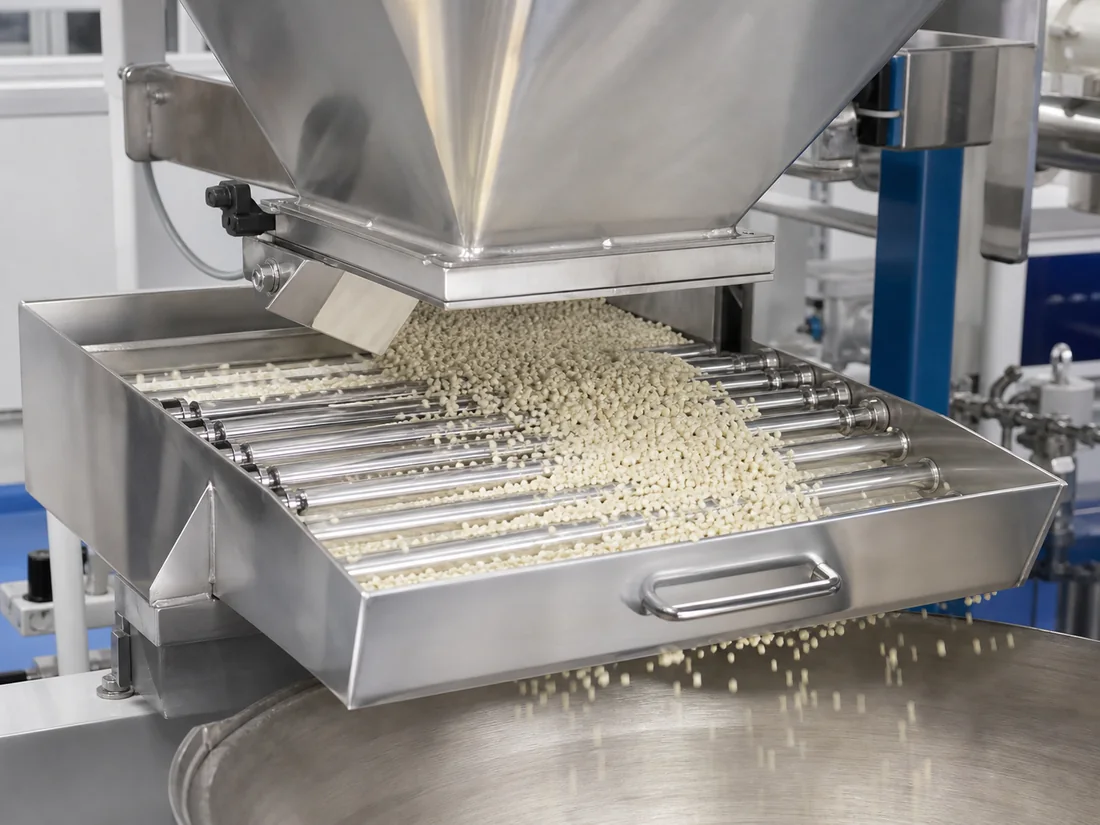
Confirm the Opening and Frame
- Round, square or rectangular opening
- Inside dimensions and flange or support details
- Available depth and extraction direction
- Maximum permitted restriction
- Sealing and dust-containment requirements
- Loads, vibration and impact from the feed
Provide a drawing. A nominal hopper size does not define the internal opening or installation supports.
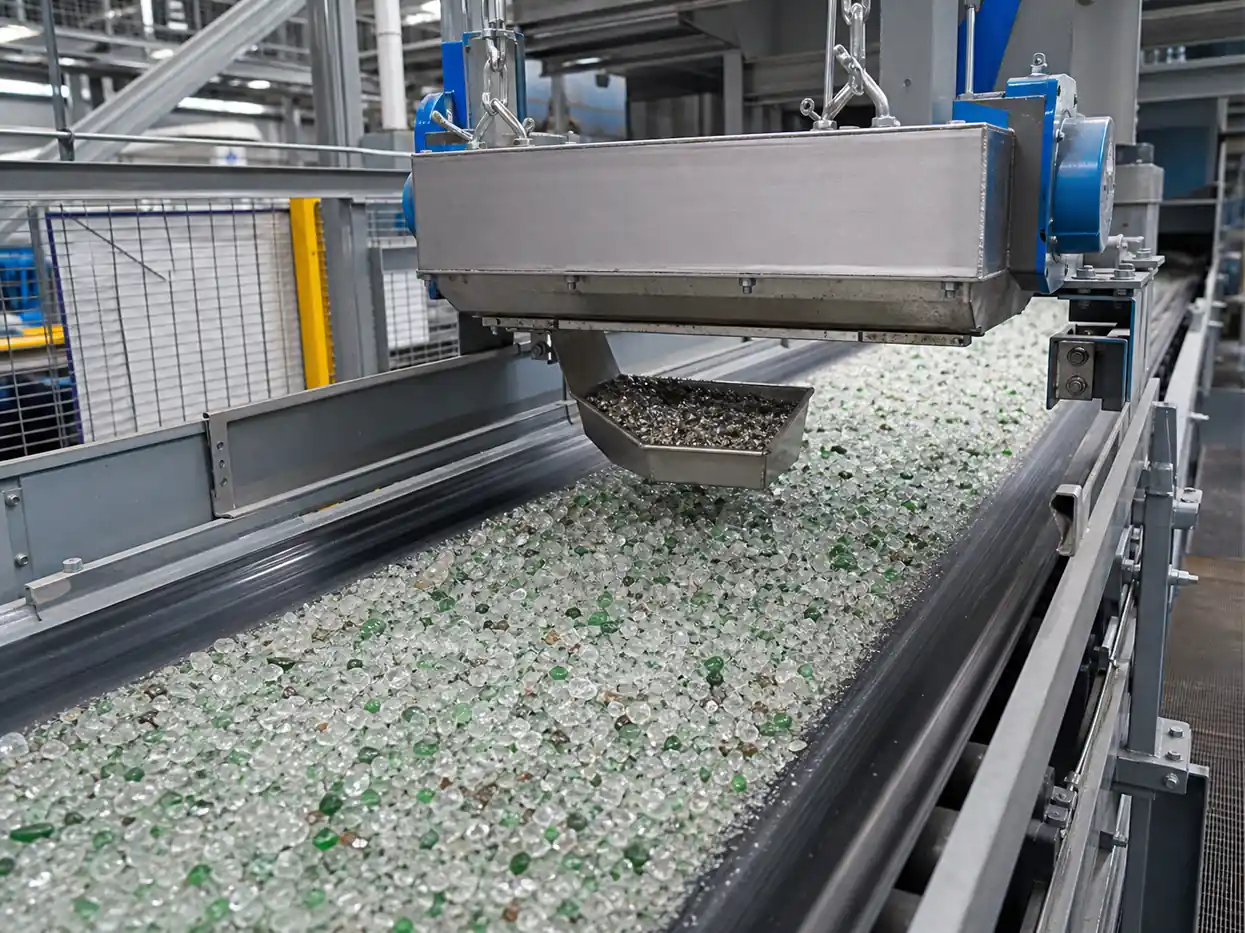
Single Row, Double Row or Multiple Rows?
Additional staggered rows can increase the chance that material passes near a tube, but they also increase restriction, product hold-up and cleaning time. Use actual particle size, flowability and capacity to decide. More rows are not automatically better.
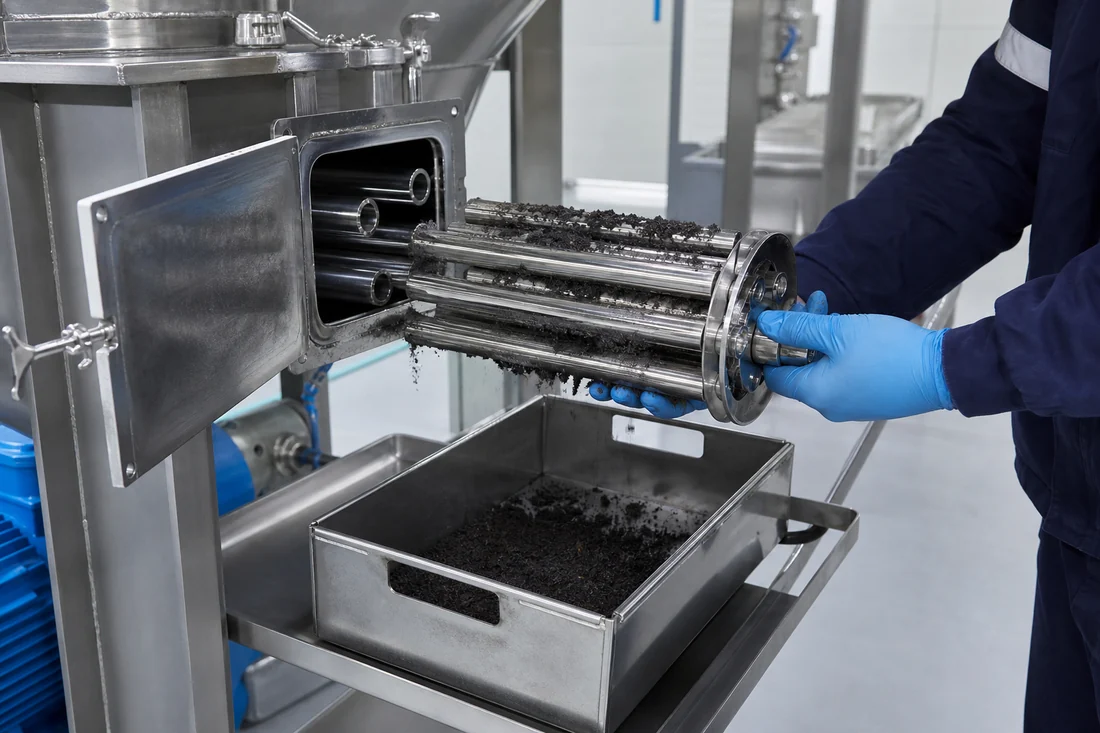
Tube Diameter and Centre Spacing
Spacing controls both magnetic coverage and open flow area. Fine free-flowing powder may benefit from closer presentation, while coarse, fibrous, damp or caking material may bridge. Record minimum opening between surfaces, not only tube centre distance.
Magnetic Circuit and Test Method
Choose magnet material and pole structure around target size, temperature and working distance. State how surface field or pull force will be measured. If a sleeve, coating or product buildup creates a gap, the surface peak on a bare internal core does not represent the operating surface.
Materials and Hygienic Requirements
Specify frame, tube shell, fasteners and contact-surface materials separately. For food-contact service, define surface finish, welds, crevice control, seals, cleaning chemicals and documentation. “SUS304 food grade” alone is incomplete.
Cleaning Decision
A standard grate requires the operator to remove and clean captured metal from tube surfaces. Define safe isolation, lifting, extraction space, cleaning tools, frequency and inspection record. If frequent cleaning creates excessive labour or recontamination risk, compare an easy-clean grate or enclosed drawer.
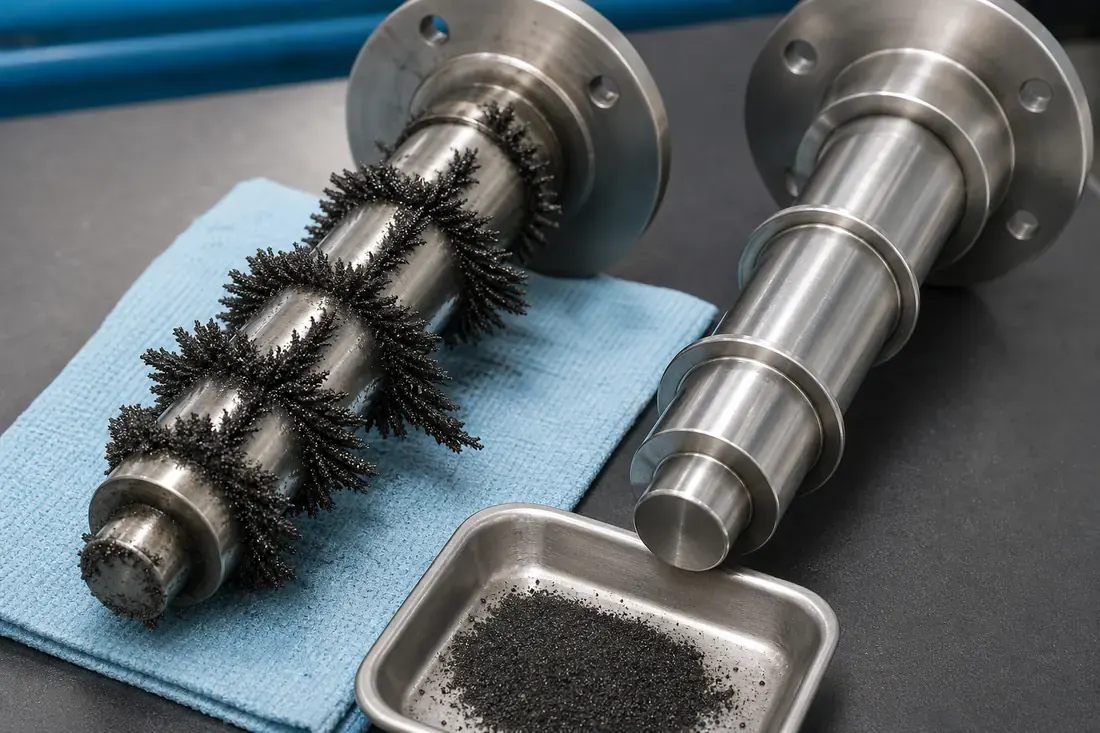
When a Grate Is Not Suitable
- Material does not flow freely under gravity.
- Large lumps can impact or block the tube array.
- The line is pressurized but the grate and housing are not designed for pressure.
- There is no safe removal and cleaning space.
- The target is non-magnetic or not exposed.
RFQ and Acceptance Data
Submit the opening drawing, material, capacity, particle size, bulk density, moisture, temperature, target contamination, required rows, contact materials, cleaning method and magnetic acceptance test. Confirm dimensions, materials, weld/finish requirements and field report before shipment.
Review magnetic grates Compare grate and drawer magnet Request a grate review
Minimum RFQ Data for a Magnetic Grate
| Decision rule | Select opening coverage, row count, tube spacing and cleaning method from flow behavior, target size and the permitted pressure or head loss. |
|---|---|
| Inputs to confirm | Material, size distribution, bulk density, moisture, cohesion, product head, normal and peak flow, target contamination and required cleaning interval. |
| Risk or limitation | More rows are not automatically better when they cause bridging, difficult withdrawal or excessive retained product. |
| Buyer action | Send opening dimensions and available extraction space and request a drawing-linked magnetic and dimensional inspection plan. |
What We Need to Configure This Project
Input set for How to Select a Magnetic Grate
- How we use your data: We compare your material, contamination risk, production target and line interface before we configure a proposal or rule out an unsuitable option.
- Material: name and composition; dry or wet; powder, granule, lump, fibre or slurry; minimum, maximum and typical particle distribution; moisture, stickiness, tendency to cake or bridge, abrasiveness, corrosiveness, bulk density, normal temperature and maximum temperature.
- Production and target: normal and peak throughput, continuous or batch feed, feed uniformity, contaminant or recovery target, magnetic response if known, typical and maximum target size, initial concentration, acceptable residual and whether product loss is permitted.
- Installation: hopper, chute or pipeline location, opening or flange dimensions and standard, flow direction, product head, extraction and cleaning space, upstream and downstream connections; cleaning method, permitted shutdown, contact-material, wear and corrosion requirements; indoor, outdoor, washdown, high-humidity, dusty or hazardous-area conditions.
- Supporting project files: power and control data for any actuator or automated cleaning option, plus available air supply and pressure where applicable; destination country; current drawings, site photographs, running video and a representative material/contaminant sample when testing is needed.
- What you receive next: We use the confirmed inputs to prepare a project-specific drawing and inspection plan. We do not treat performance as confirmed until the agreed design and any required representative test or site acceptance establish the result.
Project Support
Need help selecting the right magnetic solution?
Send us your material, flow condition, target metal, capacity, installation space and any drawings or site photos. We will review the application and recommend the next practical step.
Frequently Asked Questions
Why is “Confirm the Opening and Frame” important for this decision?
Provide a drawing. A nominal hopper size does not define the internal opening or installation supports.
Why is “Single Row, Double Row or Multiple Rows” important for this decision?
Additional staggered rows can increase the chance that material passes near a tube, but they also increase restriction, product hold-up and cleaning time.
Why is “Tube Diameter and Centre Spacing” important for this decision?
Spacing controls both magnetic coverage and open flow area. Fine free-flowing powder may benefit from closer presentation, while coarse, fibrous, damp or caking material may bridge.