
OSENC Magnetic Separation
Magnetic Product Selection Guides and Technical Resources
Use these resources to choose a product family, understand the specifications that affect performance, and prepare the information required for a useful quotation. Start with the application decision you need to make rather than reading every possible topic.
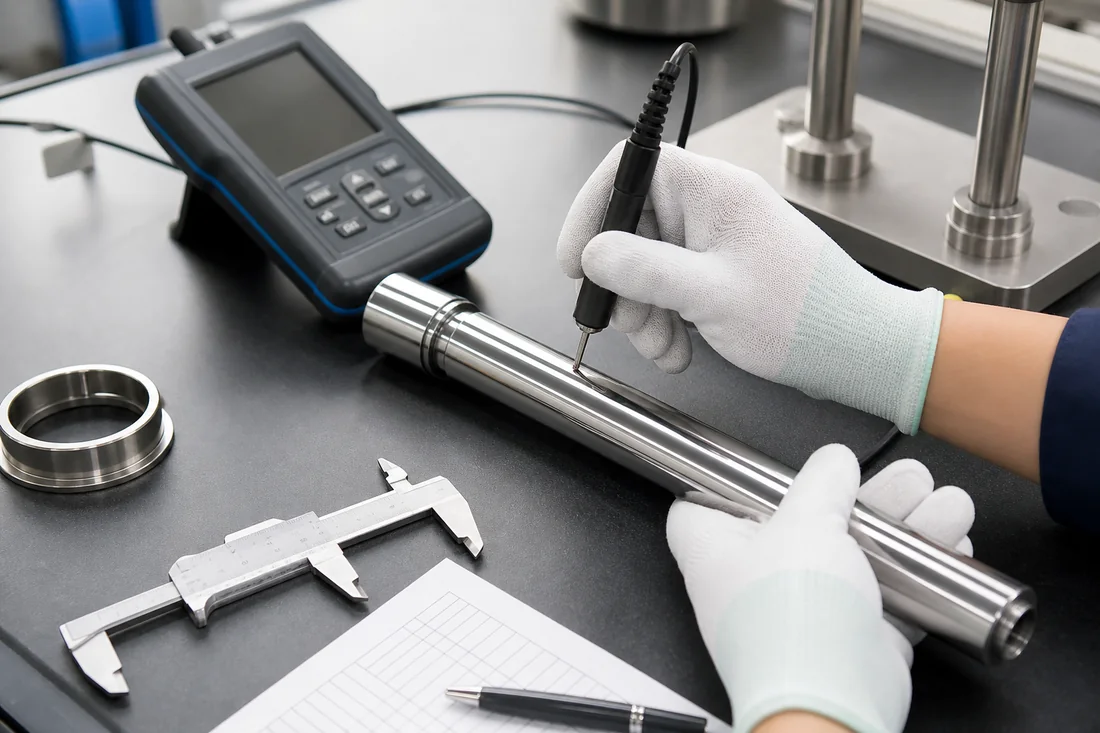

Choose a Product Family
- Custom Neodymium Magnets for grade, shape, coating, magnetization, tolerance, and quantity requirements.
- Custom Magnetic Assemblies for magnets integrated with steel parts or application-specific structures.
- Magnetic Drum for conveyor discharge, chute, or enclosed separation concepts.
- Magnetic Grate & Tube Components for gravity-fed powders and granules.
- Drawer Magnet when the powder line needs an enclosed housing and pull-out access.
- Easy-Clean Magnetic Grate when recorded cleaning frequency justifies a core-and-sleeve release structure.
- Suspended Magnet for removing tramp iron above a conveyor.
Comparison and Selection Guides
- Magnetic Drum vs Overband Magnet
- Manual vs Self-Cleaning Suspended Magnet
- Permanent vs Electromagnetic Suspended Separator
- Magnetic Grate vs Drawer Magnet
- Ferrite vs Rare Earth Magnet
A stronger material or higher surface field is not automatically the correct choice. Temperature, working distance, target iron, magnetic circuit, operating cost, and cleaning system must be reviewed together.
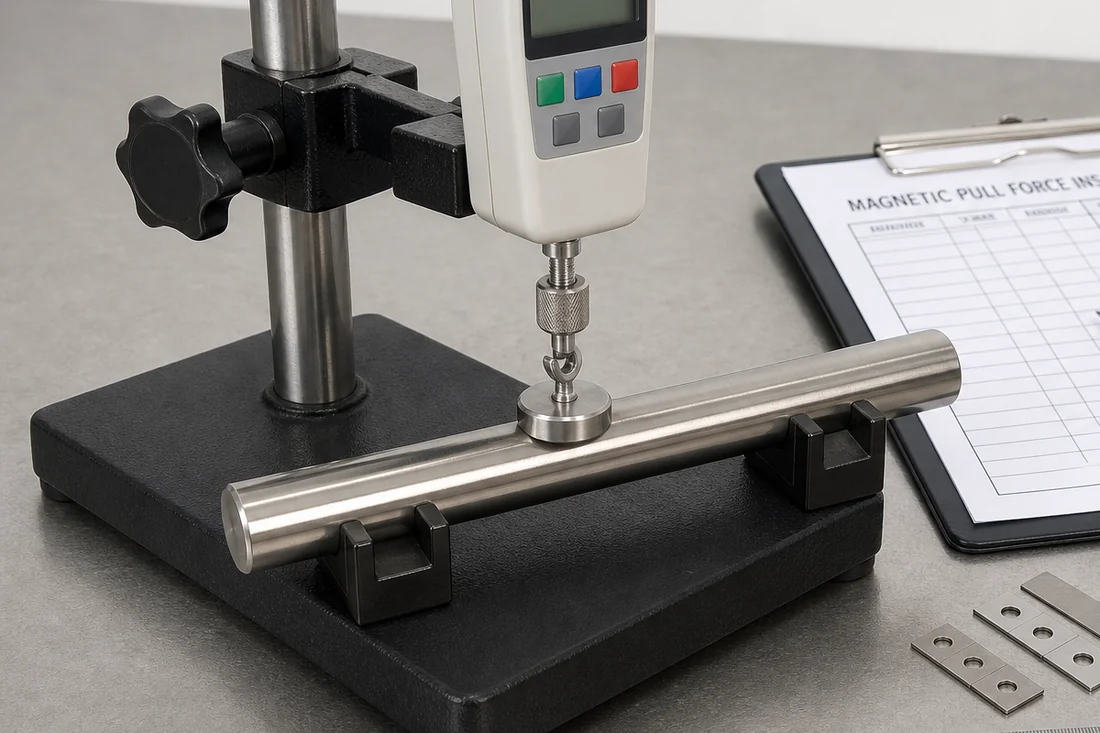
Prepare a Better Specification
- Magnetic separator application data
- Custom magnet drawing and specification checklist
- Custom magnetic assembly specification checklist
- Conveyor data checklist
- Hopper and chute drawing checklist
- Material sample and testing checklist
A useful specification defines the operating condition and acceptance method. “12,000 Gauss magnetic separator” is not enough to confirm a separator type, working width, capacity, or capture result.
Technical Fundamentals
- Types of Magnetic Separators
- How Magnetic Separation Works
- What Does Gauss Mean in Magnetic Separation?
- Magnetic Field Strength vs Gradient
- Gauss vs Pull Force
- What Metals Can Magnets Separate?
- Can Magnets Remove Stainless Steel?
- Magnetic Separator Efficiency Factors
- Magnetic Separator Performance Validation
- How Suspension Height Affects Iron Removal
- How Burden Depth Affects Magnet Selection
- Magnetic Drum Working Principle
- How to Select Magnetic Tube Spacing
- Magnetic Separator Installation Guide
Each guide explains a specific engineering decision and must be supported by reviewed diagrams, measurement methods, and product-specific documentation before numerical claims are added.
Product Selection Guides
- Suspended Magnet Selection Guide: belt, burden, target iron, height, position and cleaning duty.
- Magnetic Drum Selection Guide: material, feed, drum geometry, magnetic arc, speed and splitter.
- Magnetic Head Pulley Selection Guide: conveyor interface, loads, arc, lagging and discharge trajectory.
- Magnetic Tube Selection Guide: dimensions, ends, magnetic area, shell, temperature and test method.
- Magnetic Grate Selection Guide: opening, rows, spacing, flow, materials and cleaning.
- Drawer Magnet Selection Guide: housing, inlet/outlet, rows, seals and extraction space.
- Easy-Clean Magnetic Grate Selection: core, sleeve, working gap, stroke and cleaning frequency.
- Magnetic Separator Placement Guide: choose protection, liberation, discharge and final-control positions.
Custom Magnet and Assembly Guides
Installation, Commissioning and Maintenance
- Magnetic Separator Safety Guide: permanent field, guarding, hazardous energy, lifting and cleaning hazards.
- Suspended Magnet Installation: position, height datum, structure, clearance, discharge and commissioning.
- Overband Magnet Maintenance: cleaning-belt tracking, tension, rollers, bearings, drive and discharge.
- Magnetic Head Pulley Installation: conveyor interface, loads, magnetic arc, trajectory and splitter.
- Magnetic Drum Splitter Adjustment: stabilize feed, observe trajectories and sample both fractions.
- Magnetic Tube Inspection: visual, dimensional and repeatable magnetic checks.
- Magnetic Grate Cleaning: isolation, safe removal, contamination records and reinstallation.
- Magnetic Separator Troubleshooting: diagnose changed process, mechanical and discharge conditions.
- Preventive Maintenance Checklist: build product-specific tasks and documented maintenance intervals.
Advanced Comparison and Buying Decisions
- Inline vs Crossbelt Overband Magnet
- Suspended Magnet vs Magnetic Head Pulley
- Magnetic Head Pulley vs Housed Magnetic Drum
- Top-Feed vs Bottom-Feed Magnetic Drum
- Magnetic Tube vs Magnetic Grate
- Standard vs Easy-Clean Magnetic Grate
- Single-Row vs Multi-Row Magnetic Grate
- Magnetic Separator Price and Cost Factors
Testing, Acceptance and Procurement
- Magnetic Separation Material Testing: define representative samples, trials, analysis and scale-up limits.
- Magnetic Field Test Report Guide: require repeatable Gauss positions, instruments and conditions.
- Magnetic Pull Force Test Guide: control test steel, gap, direction, fixture and reporting.
- Packaging and Shipping Guide: define protection, restraints, marking, documents and receiving inspection.
- Magnetic Separator Spare Parts: plan wear, critical and insurance spares from the approved BOM.
Compliance and Documentation Guides
- CE Marking for Magnetic Separators: define the supplied machine, applicable EU rules, technical documentation and declaration before the mark is used.
- ISO Certificate Verification: check the certified legal entity, site, scope, dates, certification body and status.
- Food-Contact Magnetic Separators: specify contact parts, materials, finish, welds, seals and cleaning conditions.
- ATEX Magnetic Separators: prepare zone, substance, temperature, ambient and equipment-category inputs.
- Material Certificate Guide: trace stainless steel, magnets, coatings and components to the finished supply.
- Declaration vs Certificate vs Test Report: understand each document’s issuer, purpose and limitation.
Compliance is configuration- and market-specific. A component report, factory certificate or website badge cannot be extended automatically to the complete magnetic separator.
Start with These Eight Project Details
- Material
- Particle size
- Capacity and bulk density
- Moisture and temperature
- Target iron size and shape
- Process position
- Working gap or layer depth
- Cleaning requirement
How We Turn This Guidance into a Project Decision
Magnetic Product Selection Guides and Technical Resources: seller-side application review
- Your buying problem: General product information cannot show whether a magnetic solution will control contamination, prevent equipment damage or fit the available production space.
- What we review: We confirm your material, particle size, moisture, temperature, throughput, contaminant, installation position, interfaces, environment and cleaning requirement.
- What we do: We compare suitable structures, configure the practical option and coordinate the drawing, manufacturing route and inspection scope.
- Buyer value: This helps you reduce selection risk, avoid rework and connect the purchase to a clear operating and quality-control objective.
- Boundary: We do not present an unverified model, performance number or certification as a confirmed project fact.
- Next step: Send the material and target, particle range, moisture, temperature, throughput, contamination, installation drawing, available space, cleaning preference and any sample or site video. Send project data for our review
Project Support
Need help selecting the right magnetic solution?
Send us your material, flow condition, target metal, capacity, installation space and any drawings or site photos. We will review the application and recommend the next practical step.
Frequently Asked Questions
Why is “Comparison and Selection Guides” important for this decision?
A stronger material or higher surface field is not automatically the correct choice. Temperature, working distance, target iron, magnetic circuit, operating cost, and cleaning system must be reviewed together.
Why is “Prepare a Better Specification” important for this decision?
A useful specification defines the operating condition and acceptance method. “12,000 Gauss magnetic separator” is not enough to confirm a separator type, working width, capacity, or capture result.
Why is “Technical Fundamentals” important for this decision?
Each guide explains a specific engineering decision and must be supported by reviewed diagrams, measurement methods, and product-specific documentation before numerical claims are added.