
Mining Magnetic Separation for Dry Minerals, Sand, Slag, and Aggregate
Mining magnetic separation removes ferrous contamination from dry mineral feed for equipment protection, product cleaning, and ferrous recovery.
For quartz sand, feldspar, silica sand, slag, aggregate, crushed minerals, and dry mineral powder, OSENC checks mineral type, capacity, particle size, feed width, burden depth, abrasion, and iron target before recommending a magnetic drum, suspended magnet, or stronger rare earth design.
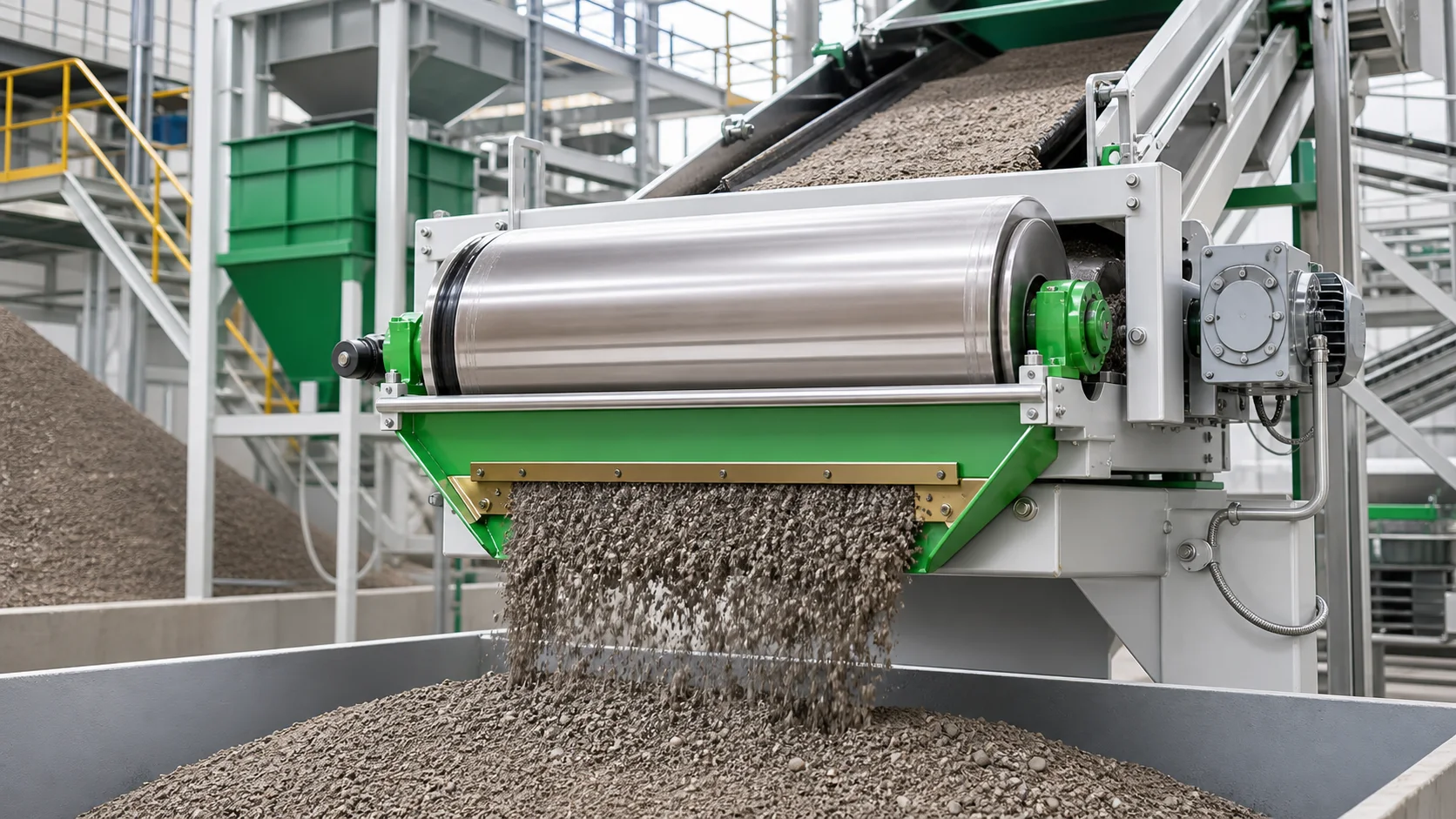
Remove tramp iron before crushers, mills, screens, and conveyors to reduce equipment damage.
Reduce iron contamination in non-metallic minerals, sand, slag, and aggregate products.
Separate exposed ferrous material when the line target includes magnetic particle recovery.
Mining and Mineral Line Applications
Dry mineral lines need equipment selected around particle size, abrasion, feed depth, and whether the goal is protection, cleaning, or recovery.
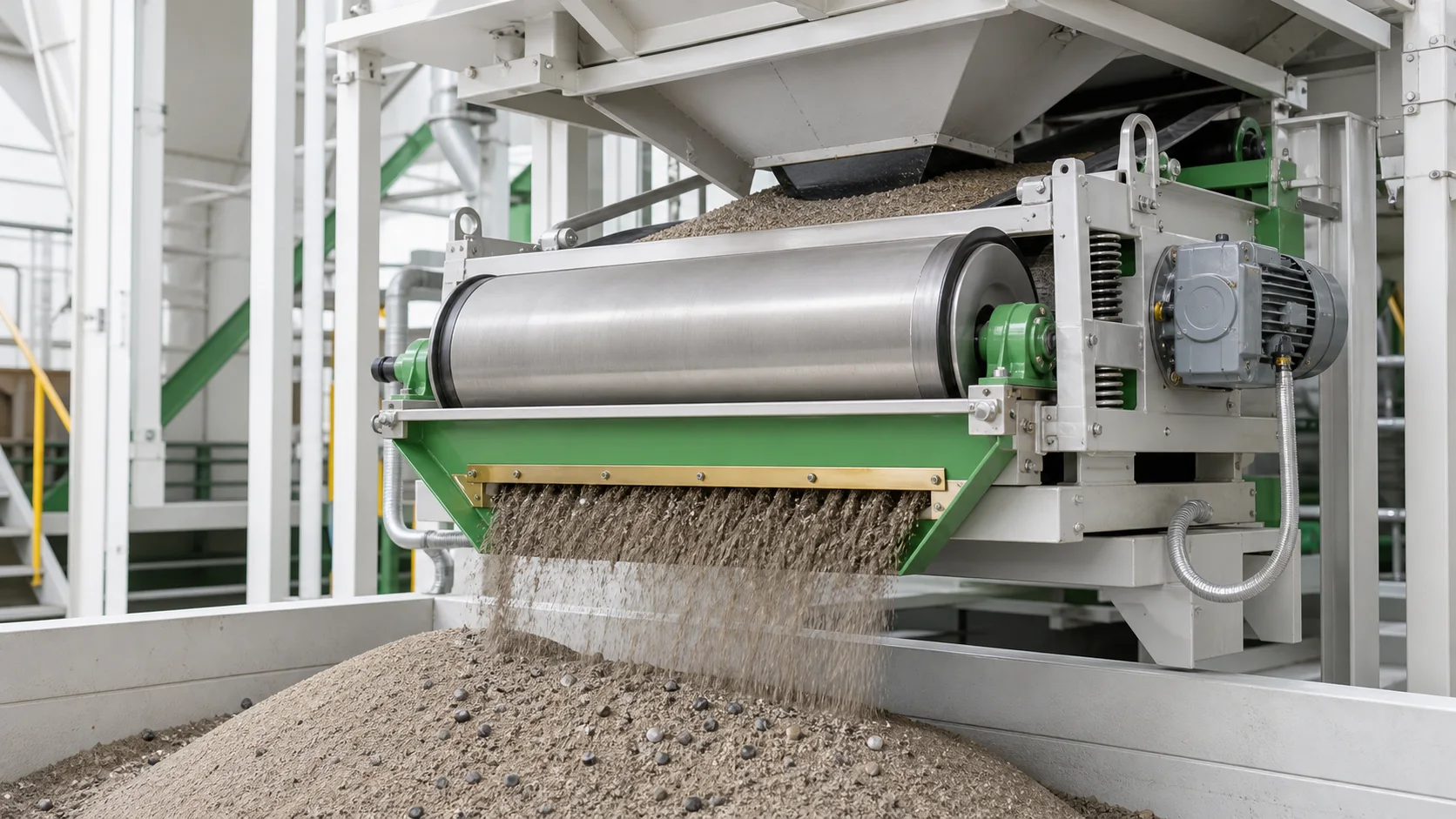
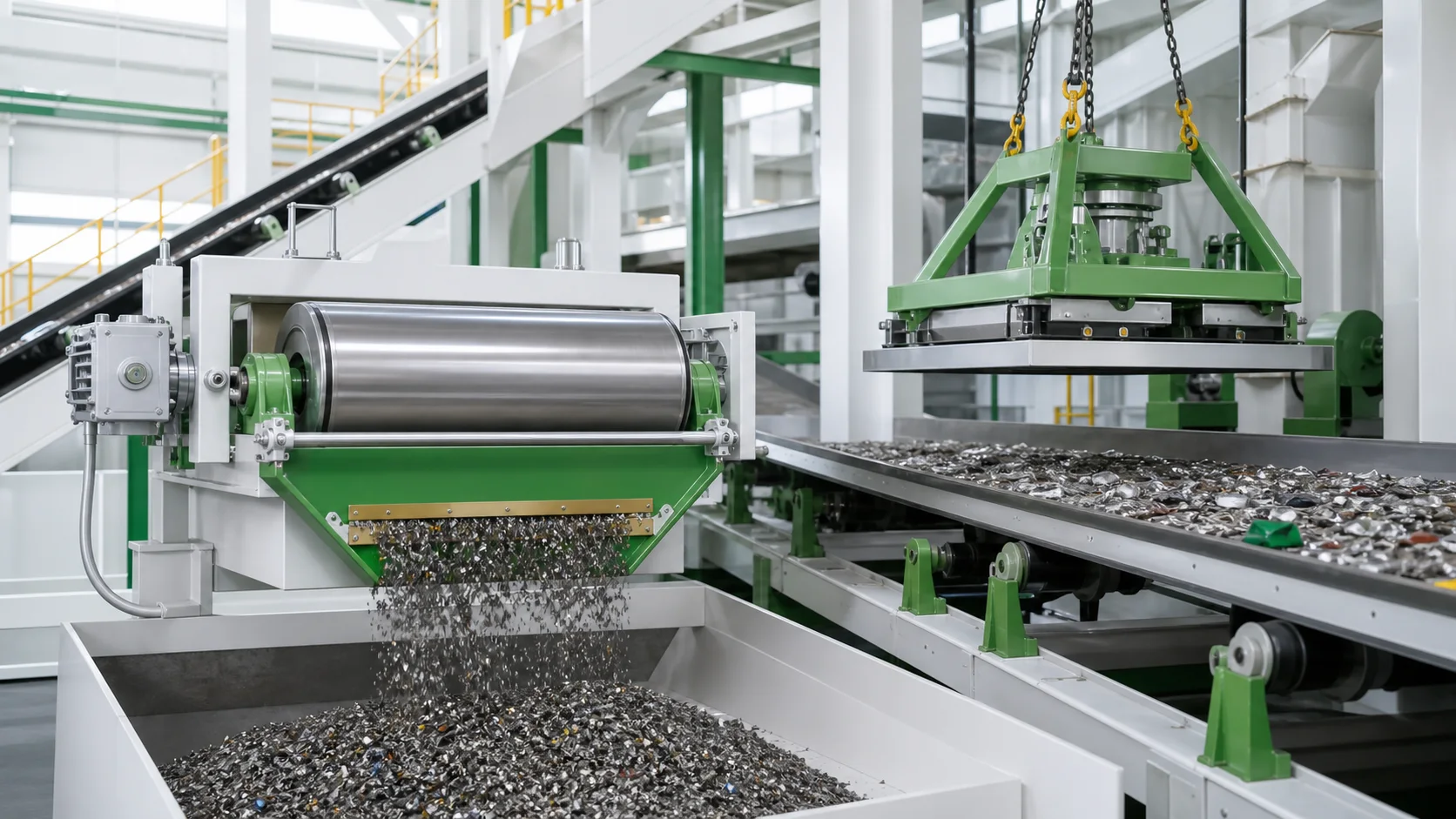
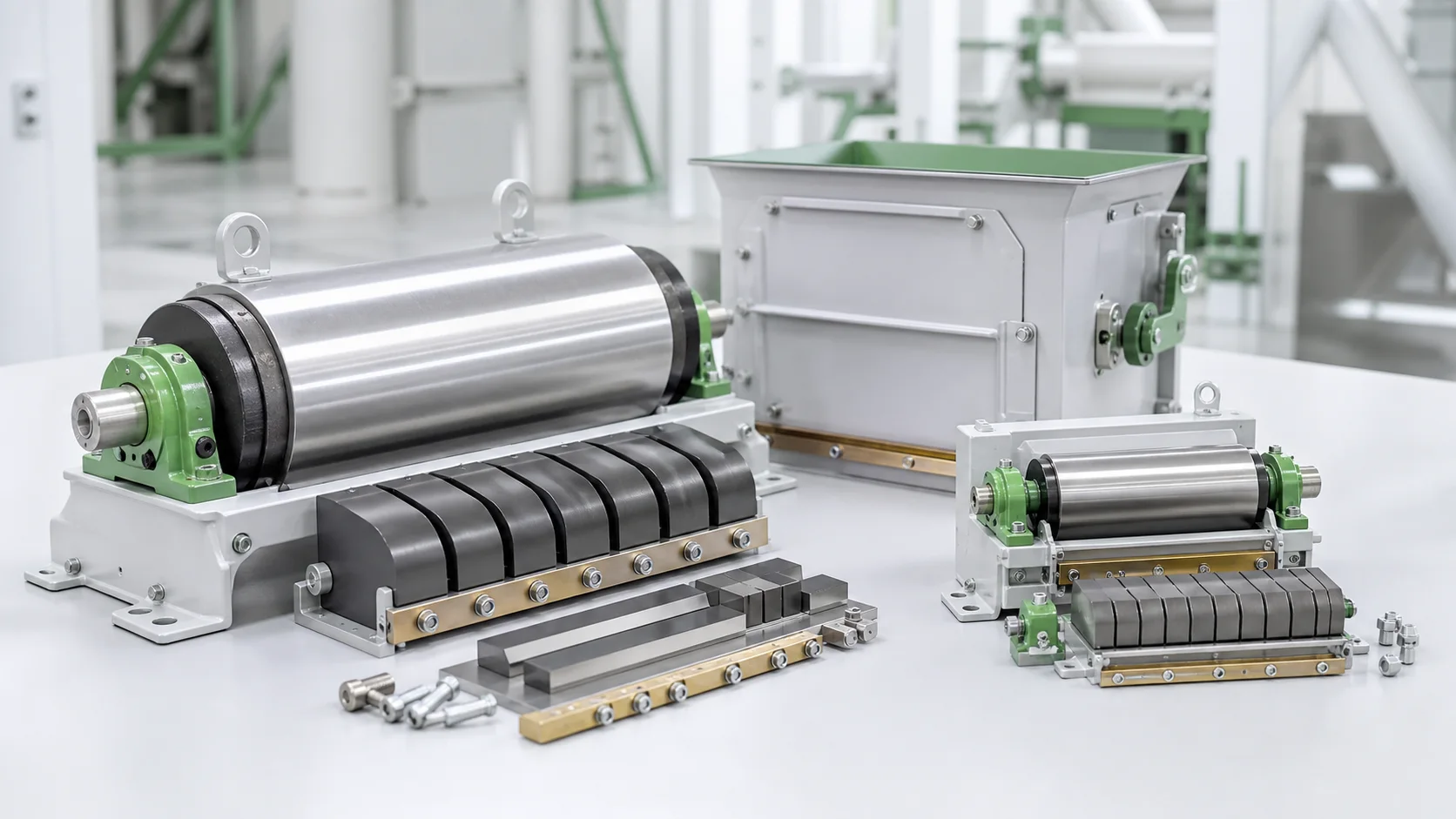
Where Magnetic Separation Fits in Mining Lines
At conveyor sections before a crusher, a suspended magnet is often used for larger tramp iron. At chute outlets, screen discharge, feeder outlets, or dry mineral discharge points, a magnetic drum can provide continuous separation when material passes close to the drum surface.
Fine mineral powder or weak magnetic contamination may need rare earth bars, chute separators, or testing before the final equipment is selected.
Selection Points for Mining and Minerals
| Mineral Type | Quartz, feldspar, silica sand, slag, aggregate, ore, and mineral powder have different density, abrasion, and iron targets. |
|---|---|
| Granulometría | Fine powder, crushed minerals, and large aggregate need different working gaps and feed control. |
| Capacity and Feed Width | These decide separator width, drum diameter, magnet size, and whether the layer becomes too deep. |
| Tipo de material ferroso | Tramp iron, wear metal, magnetite-bearing particles, and weak magnetic contamination are not the same problem. |
| Abrasion | Mining lines may need thicker shells, wear-resistant surfaces, sealed bearings, and stronger frames. |
| Target Result | Protection, cleaning, and recovery require different separator placement and magnetic strength. |
When Sample Testing Is Recommended
Testing is useful when iron is fine, contamination is weakly magnetic, the product purity requirement is high, or the buyer is unsure whether ferrite is enough. It can also help when the mineral value depends on cleaning result rather than simple equipment protection.
For abrasive mineral lines, OSENC also reviews mechanical durability, not only magnetic force. Shell thickness, stainless steel, wear-resistant treatment, sealed bearings, and heavy-duty frames may be recommended.
What To Send For a Mining Recommendation
Mineral Details
- Mineral name and dry or wet state
- Capacity per hour and conveying method
- Particle size range, moisture, and flow speed if known
- Tipo y tamaño del material ferroso, fotografías y proporción estimada
- Protection, cleaning, purity, or recovery goal
Datos de la línea
- Feed width and layer depth in mm or inch
- Installation photos, drawing, or material video
- Abrasion level and shell wear concern
- Necesidad de limpieza manual o descarga continua
- High temperature, corrosion, dust, or flammable risk
Dry Mineral Boundary and Technical Limits
| Dry Feed | This page is written for dry mineral, sand, slag, aggregate, and crushed mineral lines where material can pass near a magnetic field. |
|---|---|
| Wet Slurry | Wet slurry separation should not be treated as the same application. It may require a wet drum or another mineral processing review. |
| Fine or Weak Magnetic Contamination | Fine iron and weak magnetic particles may require rare earth designs, closer working distance, slower feed, or sample testing. |
| Abrasive Material | Abrasive minerals can affect shell material, wear surface, bearings, frame design, and maintenance interval. |
Mining Magnetic Separation FAQ
Is mining magnetic separation only for iron ore?
No. It is also used for dry mineral cleaning, tramp iron removal, slag, aggregate, and non-metallic mineral applications.
Which equipment is used for dry mineral feed?
Magnetic drum is common at discharge points. Suspended magnet is common above conveyor belts before crushers.
Do I need rare earth magnets?
It depends on iron size, working gap, field depth, and required purity. Fine or weak magnetic contamination may need rare earth designs or testing.
Request a Mining Magnetic Separation Recommendation
Send mineral type, capacity, particle size, feed width, material depth, iron type, target result, and photos. OSENC will recommend a practical dry magnetic separation layout.