
Magnetic Drum vs Suspended Magnet
Choose a magnetic drum when material falls at a discharge point. Choose a suspended magnet when material stays on a conveyor and large tramp iron must be lifted from the belt.
The right equipment depends on installation point, material layer depth, iron size, belt speed, and cleaning requirement. OSENC reviews line photos before recommending a drum magnet, suspended magnet, or a two-stage system.
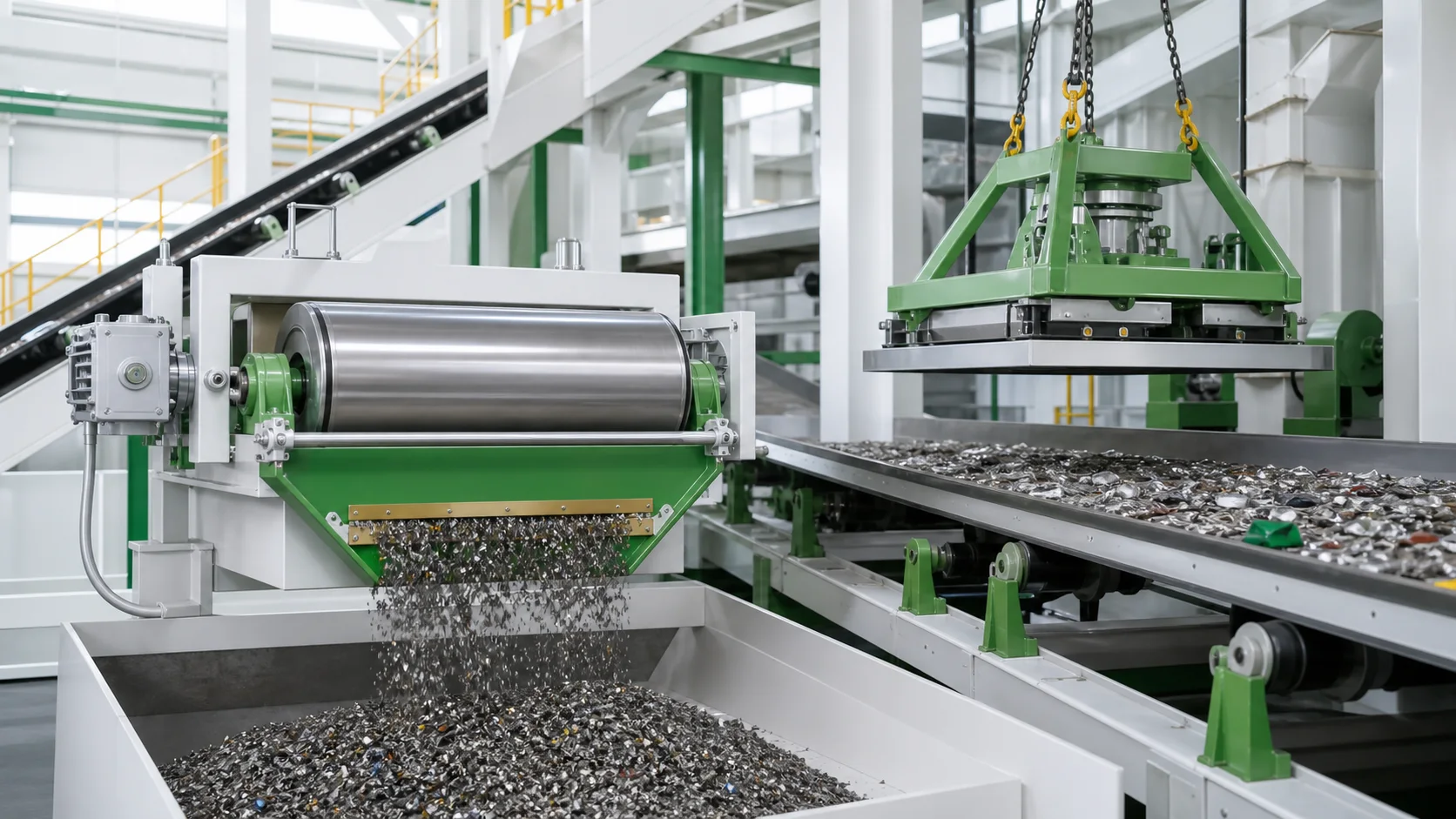
Material drops from a chute, feeder, or conveyor discharge, and clean material needs to separate from captured iron continuously.
Material is carried on a conveyor and the main goal is removing larger tramp iron before crushers, shredders, or screens.
Installation Position Examples
Use the images below to compare discharge-point separation, over-belt protection, staged separation, and specification review.
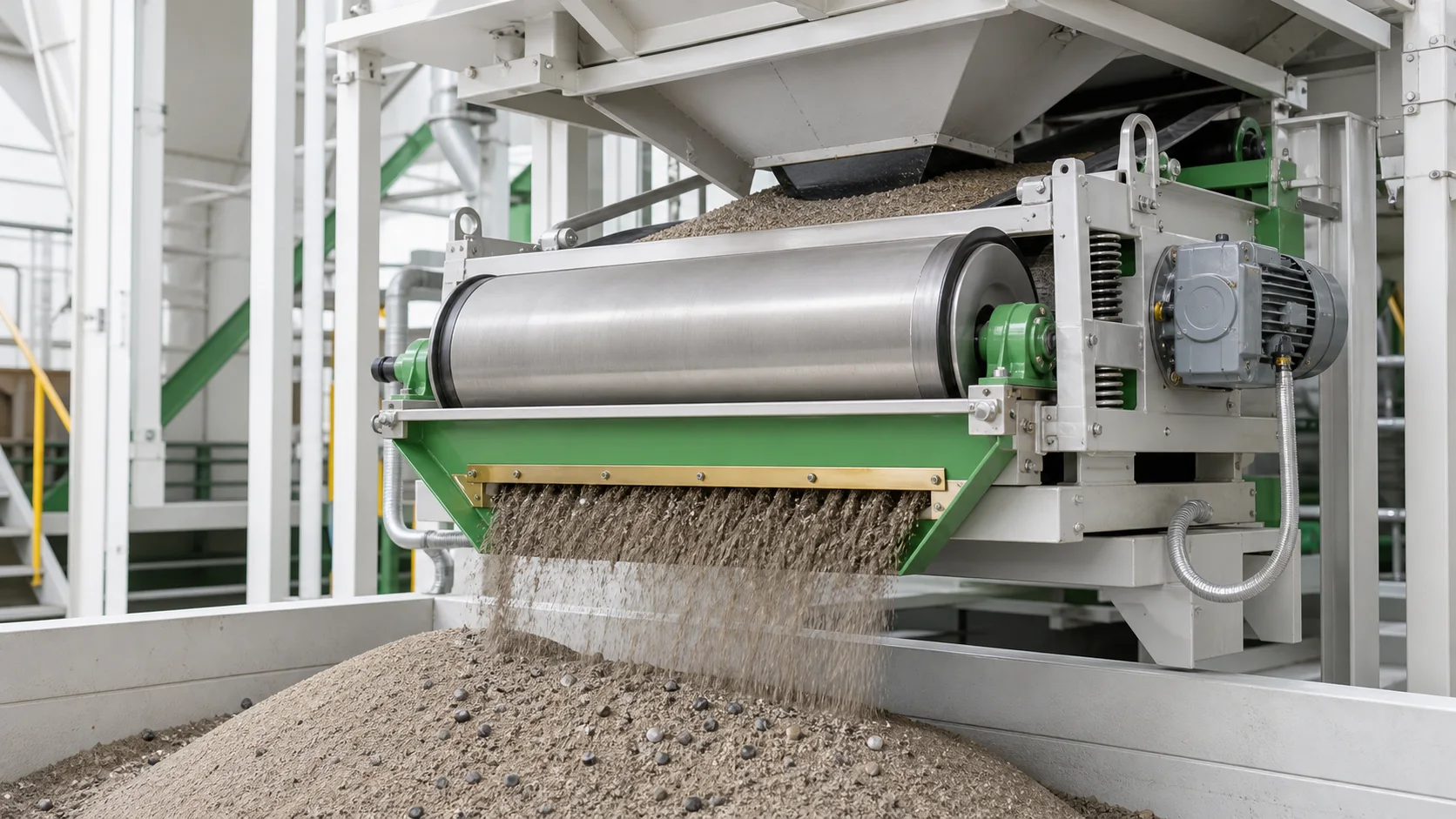
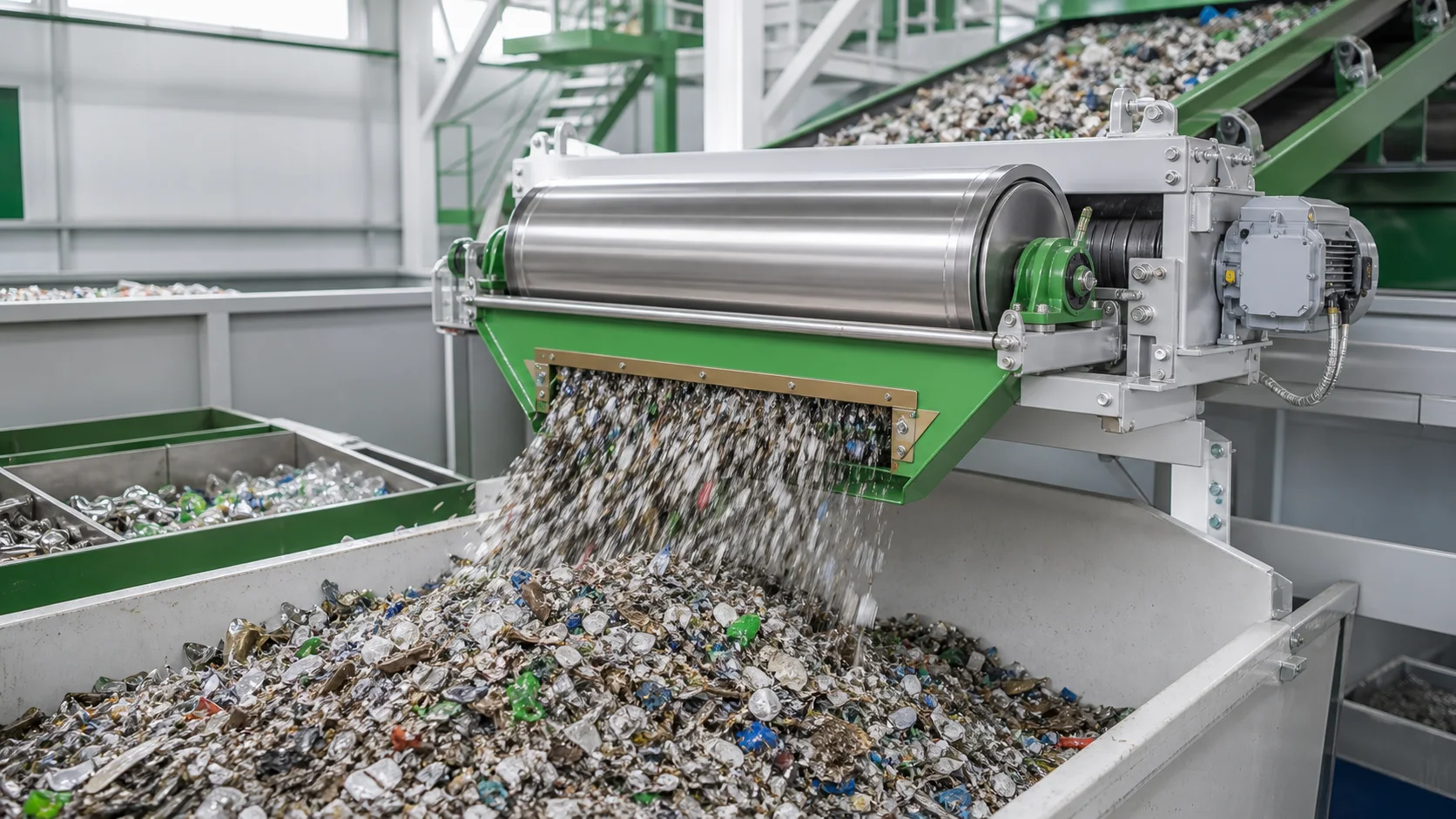
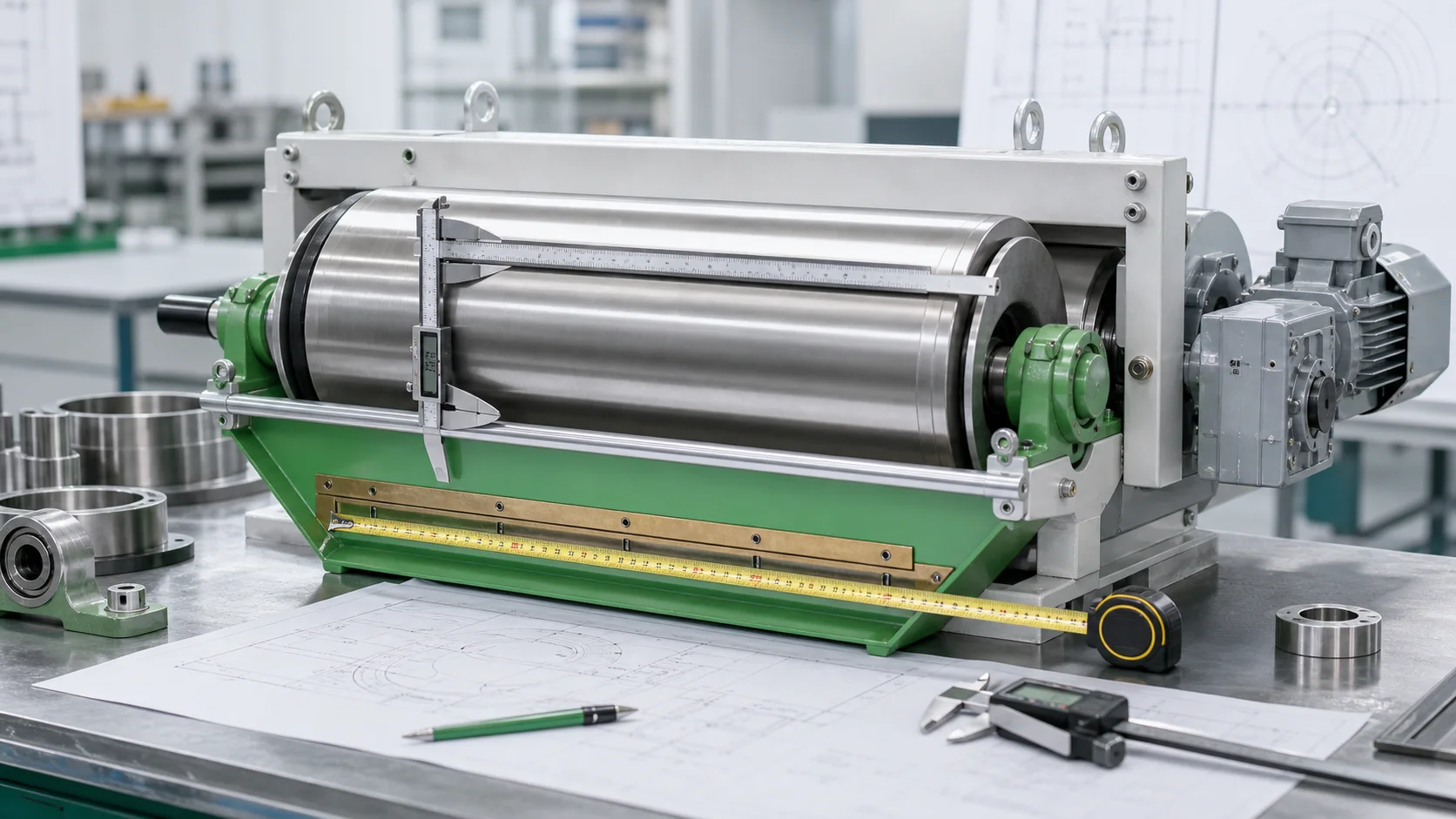
Main Difference
A magnetic drum separates iron as material passes directly over or near the rotating magnetic surface. It works best when the material stream is controlled and can discharge into separate clean and iron paths.
A suspended magnet pulls iron upward from material moving on a belt. It is easier to add above many existing conveyors, but performance can drop if the magnet is too high or the material burden is too deep.
Side-by-Side Comparison
| Installation Point | Magnetic drum: discharge point or feeder outlet. Suspended magnet: above conveyor belt. |
|---|---|
| Iron Type | Drum: continuous separation and exposed iron. Suspended magnet: larger tramp iron lifted from the belt. |
| Working Gap | Drum magnets usually work with closer contact. Suspended magnets must overcome suspension height and burden depth. |
| Cleaning | Drum magnets discharge iron continuously. Suspended magnets may be manual-clean or self-cleaning overband designs. |
| Best Industries | Both can be used in recycling, mining, aggregate, wood, waste, and dry bulk handling, but in different line positions. |
Can Both Be Used Together?
Yes. In recycling, mining, aggregate, and waste lines, a suspended magnet can remove large tramp iron before a crusher or shredder. A magnetic drum can then improve separation at a later discharge point after material has been opened up or reduced in size.
This two-stage approach is useful when the first priority is equipment protection and the second priority is product cleaning or ferrous recovery.
What To Send For a Recommendation
Line Details
- Conveyor or chute photos
- Belt width, discharge width, and drop height in mm or inch
- Belt speed and conveying method
- Available installation and cleaning space
- Need manual cleaning or self-cleaning discharge
Material Details
- Material type, dry or wet state, and capacity
- Particle size range and material layer depth
- Iron size, shape, photos, and estimated proportion
- Goal: crusher protection, product purity, or recovery
- Dust, corrosion, high temperature, or flammable risk
Dry/Wet Boundary and Magnet Type Notes
| Dry Belt Material | Usually easier to review for suspended magnets and drum magnets when material depth and working gap are known. |
|---|---|
| Wet, Sticky, or Slurry Material | Needs extra review. This page is not a wet drum separator selection page, and wet slurry should not be treated as the same problem as dry conveyor material. |
| Permanent or Electromagnetic | Suspended magnets can be permanent or electromagnetic depending on duty, iron size, suspension height, and power conditions. Do not select one without line details. |
| Working Gap | For suspended magnets, belt thickness, burden depth, and suspension height all increase the real working distance. For drums, contact path and discharge geometry matter. |
Magnetic Drum vs Suspended Magnet FAQ
Which is better for crusher protection?
A suspended magnet is often better above a conveyor before the crusher, especially when the risk is larger tramp iron.
Which is better for product cleaning?
A magnetic drum can be better at a discharge point when material can spread across the drum and clean material can discharge separately.
Can OSENC recommend from photos?
Yes. Photos and dimensions usually make the first recommendation much more accurate than a product name alone.
Compare Magnetic Drum and Suspended Magnet for Your Line
Send conveyor width, discharge height, material depth, capacity, iron size, and installation photos. OSENC will help judge whether a drum, suspended magnet, or two-stage layout is more suitable.