
OSENC Magnetic Separation
Magnetic Contamination Control for Battery-Material Powders
High-Sensitivity Powder Application
Battery-material contamination control must begin with laboratory characterization and a defined analytical target. Conventional magnetic tubes or grates may capture exposed strongly responsive particles that pass close to the surface, but they should not be assumed to remove weakly magnetic micron-scale contaminants or meet a parts-per-million specification without representative trials, validated sampling, and appropriate equipment.
Submit Material and Analytical Requirements Plan performance validation
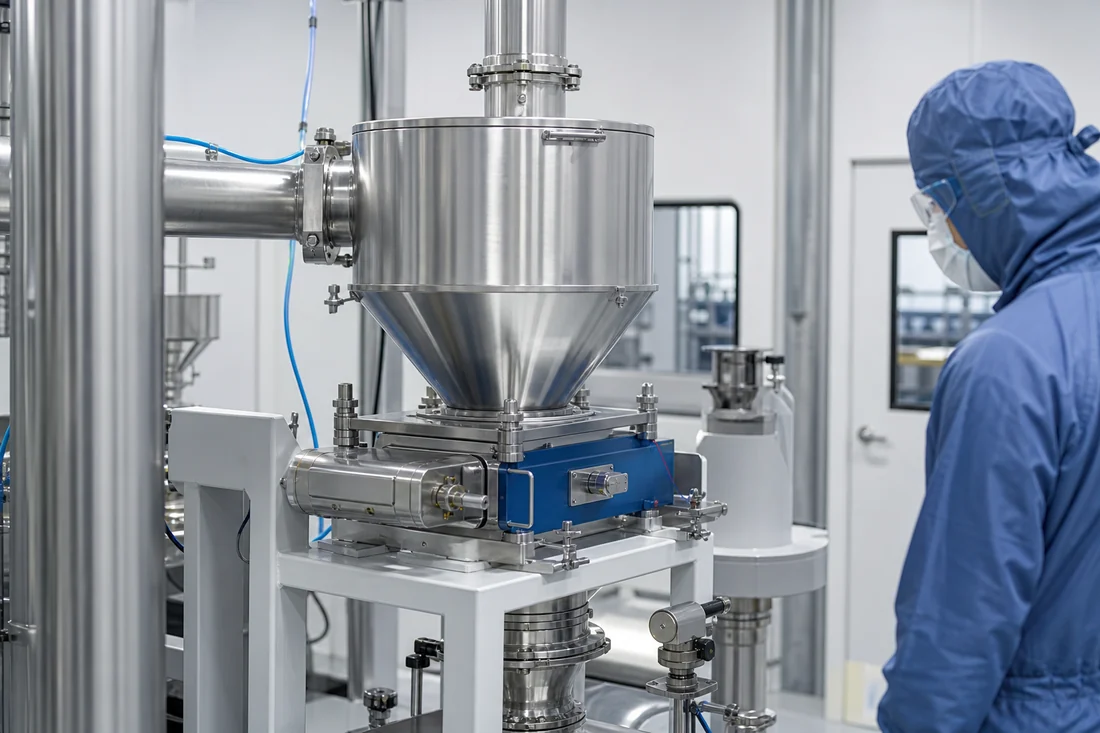
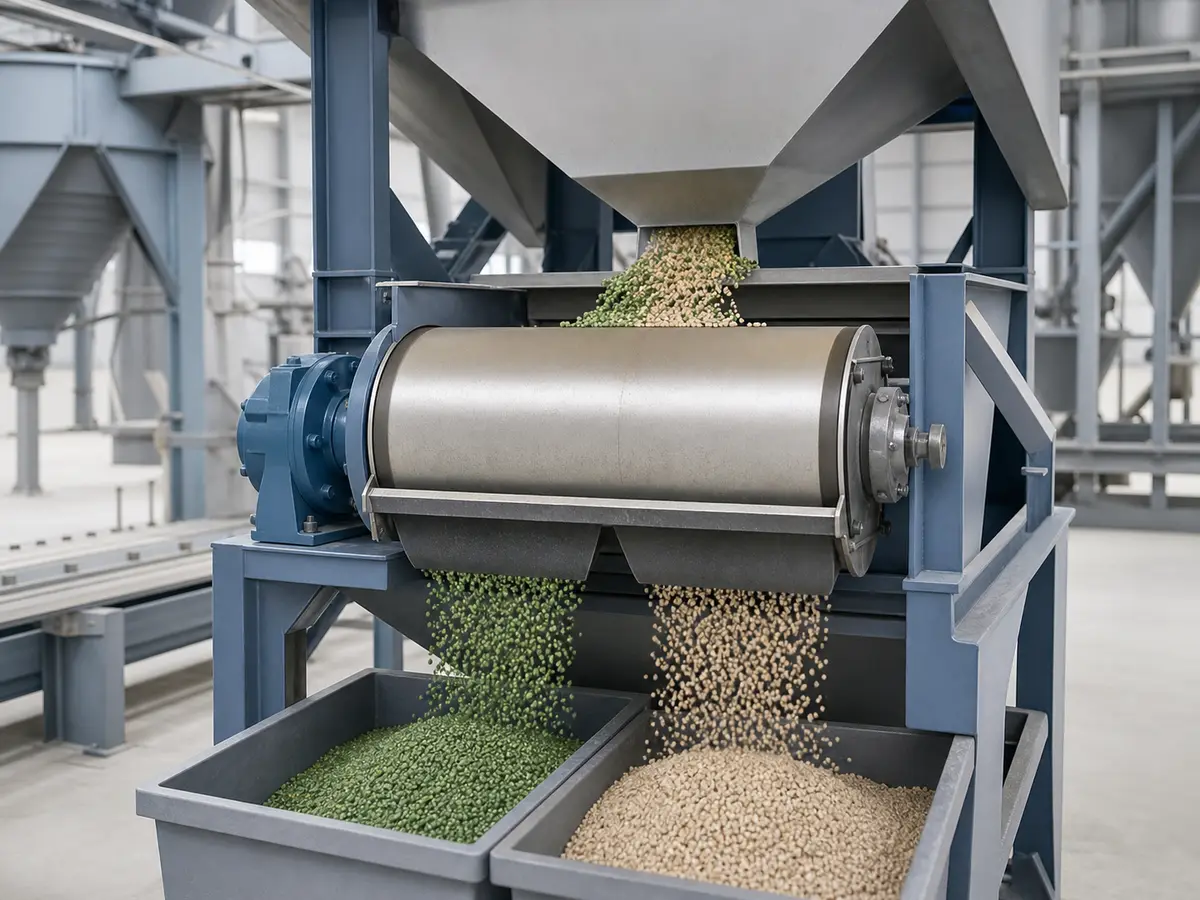
Define the Contaminant, Not Just “Iron”
Clarify whether the concern is free iron, steel wear, a specific alloy, magnetic mineral, process debris, or total elemental iron measured after digestion. These are not equivalent targets. Particle size, composition, oxidation, shape, coating, attachment to host powder, and magnetic susceptibility determine whether a conventional separator can respond.
Start with Source Control
Map wear and contact points in milling, mixing, conveying, screening, drying, packing, and maintenance. A magnet can be a control point, but recurring contamination may require changing upstream materials, clearances, wear parts, cleaning, or handling practices. Captured particles should be analyzed to identify their source.
Screening Questions Before Equipment Selection
- What material and process stage are involved?
- How is contamination measured, sampled, and reported?
- What is the baseline distribution and required limit?
- Is the target strongly magnetic at the actual particle size?
- Can the powder pass close to the magnetic surface without agglomeration or bridging?
- What atmosphere, moisture, temperature, cleanliness, and compatibility controls apply?
- How will equipment be cleaned without cross-contamination?
Potential Equipment Has Strict Boundaries
| Option | Potential role | Boundary |
|---|---|---|
| Magnetic tube | OEM test fixture or defined close-contact position | Coverage, retention, coating, cleanliness, and mounting |
| Magnetic grate | Gravity-fed multi-tube exposure | Fine powder flow, bridging, cleaning, and contact material |
| Drawer magnet | Enclosed, multi-row configuration | Pressure, seals, atmosphere, access, and cross-contamination |
| Specialized high-gradient equipment | Weak or very fine magnetic contamination | Outside the currently verified OSENC product scope unless specifically confirmed |
Material and Environment Review
Confirm product-contact material, surface finish, wear, coatings, seals, lubricants, particle shedding, grounding, static, dry-room or inert-atmosphere conditions, cleaning agents, and disassembly. A general stainless construction does not prove compatibility. Hazardous-area or explosion-protection claims require the exact offered equipment and documentation.
Design a Representative Trial
Use a traceable batch and agreed sampling plan. Record feed mass, rate, particle size, moisture, temperature, equipment geometry, magnetic measurement method, number of passes, cleaning state, collected fraction, and analytical method. Include blanks, repeats, upstream/downstream samples, and uncertainty where applicable. Avoid claiming removal efficiency when sampling variation exceeds the observed change.
Acceptance Must Be Written Before Testing
- Target analyte or particle definition
- Sampling points, sample mass, preparation, and number of replicates
- Laboratory method, detection limit, and reporting basis
- Baseline and acceptance criterion
- Equipment settings and maximum process conditions
- Handling of retained material, cleaning, and cross-contamination
- Responsibility for analysis and approval
What We Will Not Promise
Do not promise a ppm result, universal capture size, battery-grade suitability, dry-room compatibility, recovery percentage, or high-gradient performance from surface Gauss alone. If the target requires technology outside the confirmed product range, the application review should state that clearly.
Request a Feasibility Review
Send the material safety information available, process stage, contaminant definition, analytical reports, sampling method, baseline and target, particle data, flow and atmosphere, contact-material requirement, cleaning procedure, and representative sample availability.
Battery-Powder Inputs Required Before Any Equipment Proposal
Use these inputs to decide whether the proposed separator and process position fit the real operating duty.
| Equipment direction | Magnetic contamination control for battery powder requires a material-specific review of purity target, weakly magnetic wear particles, powder handling and cleanability; a standard high-Gauss claim is not enough. |
|---|---|
| Material condition | Identify cathode, anode or precursor chemistry, particle-size distribution, bulk density, moisture sensitivity, cohesion, electrostatic behavior, corrosion, atmosphere and temperature limits. |
| Target iron or magnetic fraction | Define iron and alloy wear particles by composition, size and initial level; state the analytical method and acceptable residual rather than using an undefined purity claim. |
| Throughput and presentation | Provide batch mass or normal and peak kg/h, transfer method, product head, residence time and whether flow aids or inert gas alter presentation to the magnetic surface. |
| Installation and access | Confirm enclosure and seal requirements, dry-room or inert-atmosphere interfaces, cleaning validation, cross-contamination control, withdrawal space and downstream sampling point. |
| Test or acceptance | Start with a representative controlled trial and analytical comparison of feed and discharge. Record product loss with the captured fraction and do not extrapolate beyond the tested material. |
Combustible Dust and Hazardous-Area Boundary
- For the powder or granular product, the plant owner must identify any combustible dust, vapour or gas and provide the site hazardous-area classification.
- No-coil permanent equipment is not automatically suitable: assess impact, friction, static, hot surfaces, bearings, drives, sensors and controls in the complete configuration.
- Confirm zone or division, substance and ignition data, dust layers, temperatures, earthing and bonding, cable entries, ingress protection, cleaning and destination-country rules.
- Do not claim explosion-proof or ATEX suitability until configuration-specific marking, declaration, instructions and evidence are verified.
What We Need to Configure This Project
Input set for Magnetic Contamination Control for Battery-Material Powders
- How we use your data: We compare your material, contamination risk, production target and line interface before we configure a proposal or rule out an unsuitable option.
- Material: name and composition; dry or wet; powder, granule, lump, fibre or slurry; minimum, maximum and typical particle distribution; moisture, stickiness, tendency to cake or bridge, abrasiveness, corrosiveness, bulk density, normal temperature and maximum temperature.
- Production and target: normal and peak throughput, continuous or batch feed, feed uniformity, contaminant or recovery target, magnetic response if known, typical and maximum target size, initial concentration, acceptable residual and whether product loss is permitted.
- Installation: hopper, chute or pipeline location, opening or flange dimensions and standard, flow direction, product head, extraction and cleaning space, upstream and downstream connections; cleaning method, permitted shutdown, contact-material, wear and corrosion requirements; indoor, outdoor, washdown, high-humidity, dusty or hazardous-area conditions.
- Supporting project files: power and control data for any actuator or automated cleaning option, plus available air supply and pressure where applicable; destination country; current drawings, site photographs, running video and a representative material/contaminant sample when testing is needed.
- What you receive next: We use the confirmed inputs to prepare a project-specific drawing and inspection plan. We do not treat performance as confirmed until the agreed design and any required representative test or site acceptance establish the result.
Project Support
Send your material and process conditions
We can review the process point, material shape, iron source, capacity, available space and cleaning method before recommending a magnetic separator layout.
Frequently Asked Questions
Why is “Define the Contaminant, Not Just “Iron”” important for this decision?
Clarify whether the concern is free iron, steel wear, a specific alloy, magnetic mineral, process debris, or total elemental iron measured after digestion.
Why is “Start with Source Control” important for this decision?
Map wear and contact points in milling, mixing, conveying, screening, drying, packing, and maintenance. A magnet can be a control point, but recurring contamination may require changing upstream materials, clearances, wear parts, cleaning, or handling practices.
Why is “Material and Environment Review” important for this decision?
Confirm product-contact material, surface finish, wear, coatings, seals, lubricants, particle shedding, grounding, static, dry-room or inert-atmosphere conditions, cleaning agents, and disassembly.