
OSENC Magnetic Separation
Select a magnetic drum by the feed material and trajectory first, then confirm drum diameter and length, magnetic arc, shell construction, speed, feed distribution and splitter. Capacity cannot be selected from tonnes per hour alone; bulk density, particle size, moisture and feed uniformity must accompany it.
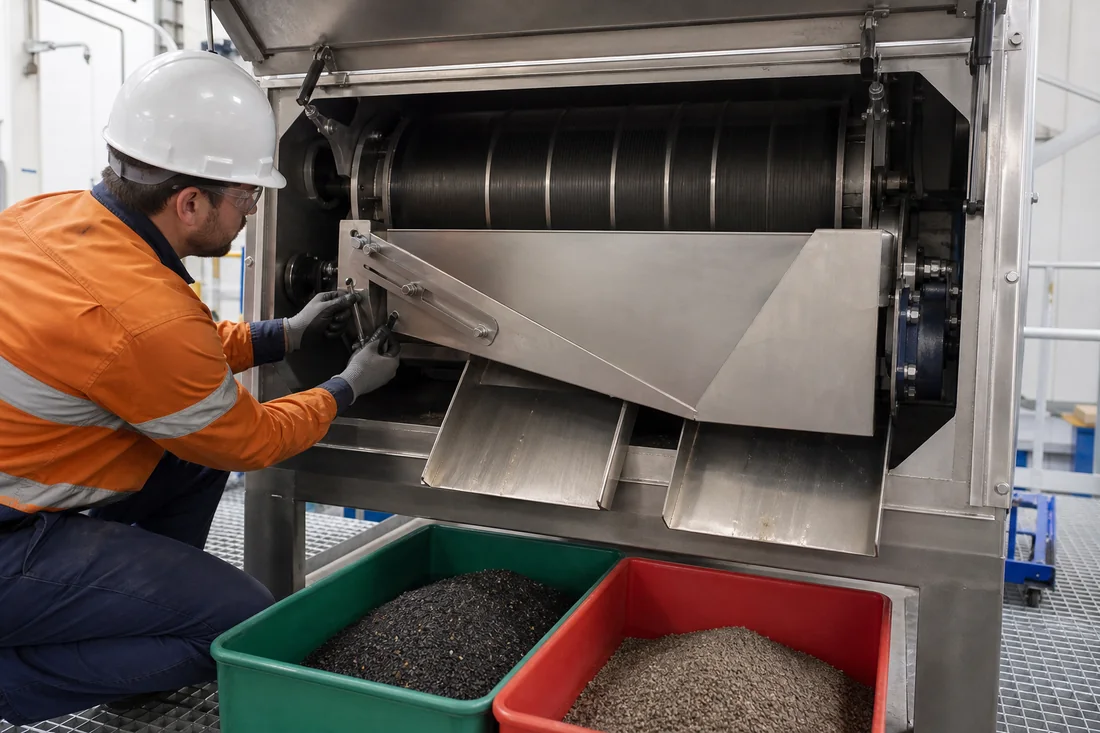
Material Data Required
- Material name and upstream process
- Minimum, typical and maximum particle size
- Bulk density and capacity range
- Moisture, stickiness and flowability
- Temperature and abrasion
- Target magnetic fraction and liberation
- Required clean and magnetic product results
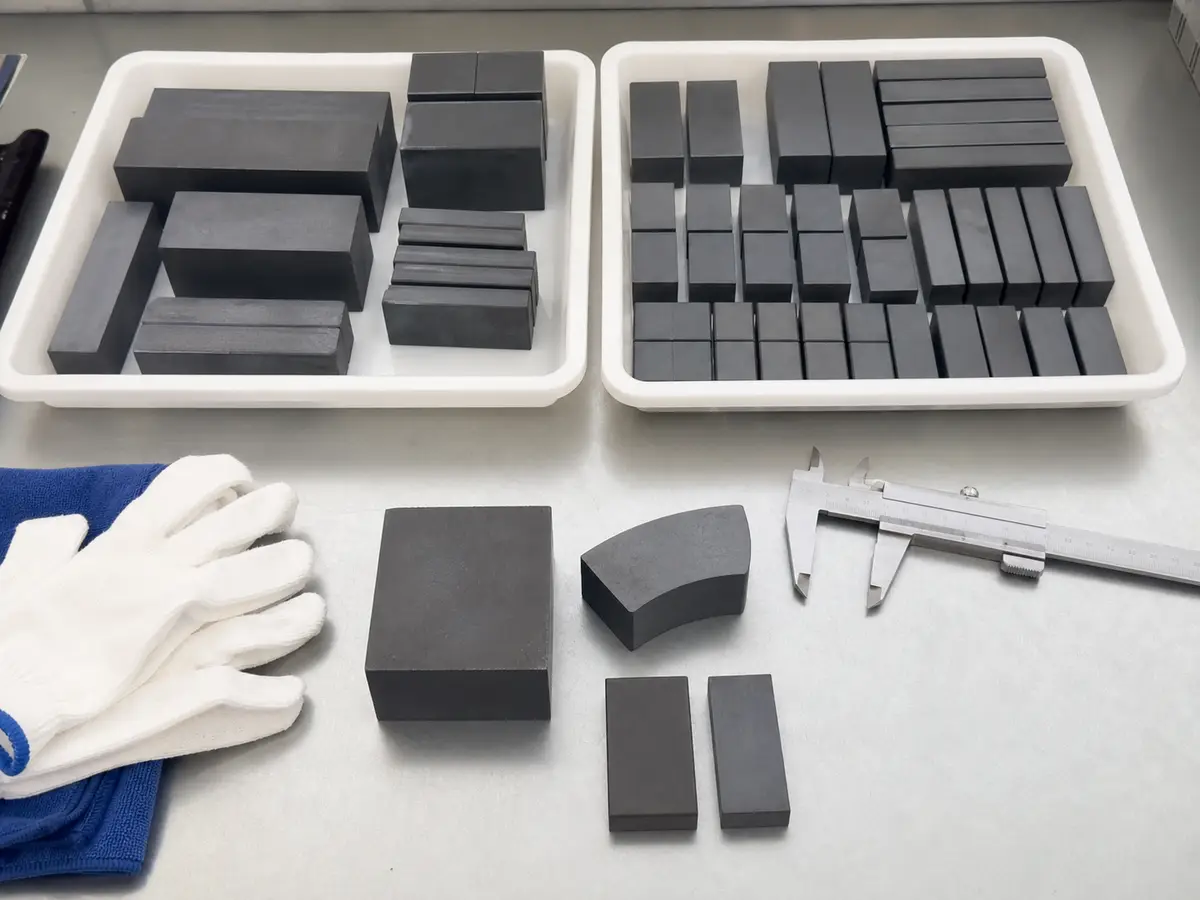
Choose the Feed Arrangement
Top-feed, bottom-feed and other drum arrangements present material to the magnetic zone differently. The choice affects contact, trajectory, retention and outlet layout. Do not copy a feed arrangement from another material without reviewing flow behavior and required separation.
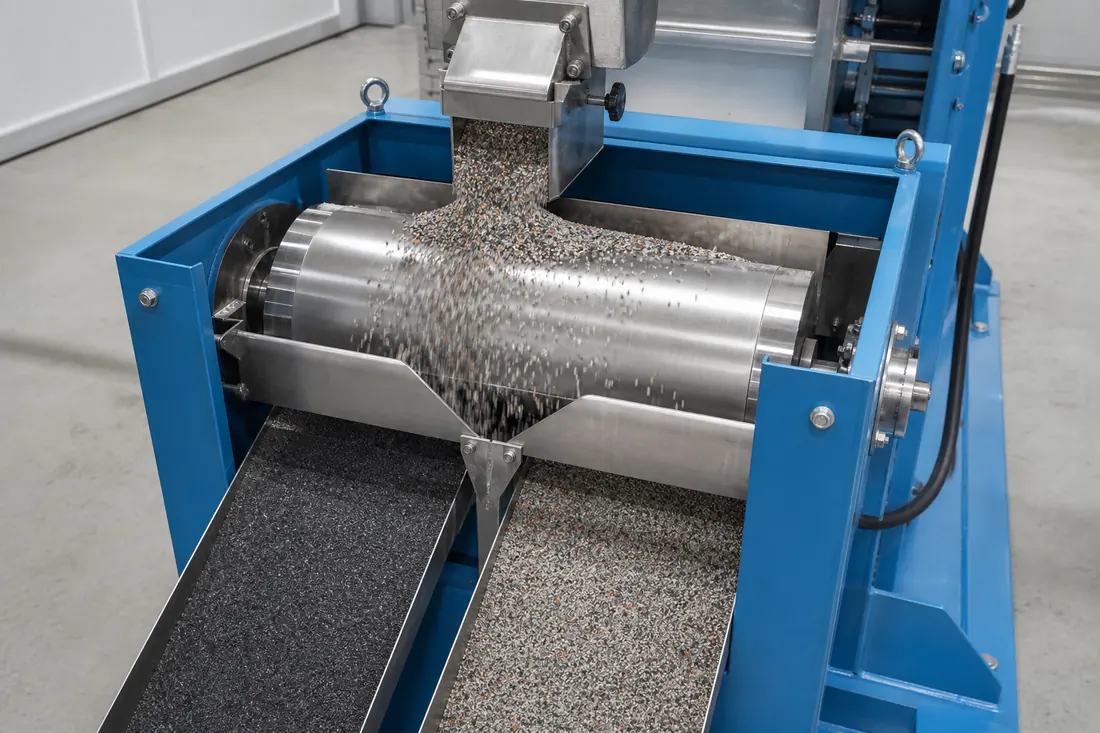
Drum Diameter and Working Length
Diameter affects exposure path, shell speed and space for the magnetic system. Working length must accept the distributed feed width without edge overload. Both dimensions also affect enclosure, shaft, bearings, drive and weight. A larger drum is not automatically more efficient if feed presentation and splitter geometry remain poor.
Magnetic Arc and Circuit
The magnetic arc determines where the target is attracted and retained before release. The selected magnet material and pole design should fit target response, working distance, temperature and field distribution. Require an agreed magnetic map or other acceptance test tied to the drawing.
Drum Speed and Feed Distribution
Speed changes exposure time, centrifugal effect and discharge trajectory. Feed should be spread across the working length at a controlled rate. A narrow, surging stream can overload part of the drum while leaving the rest unused. Confirm the feeder and transition chute as part of the system.
Splitter and Outlet Design
The splitter divides the magnetic and non-magnetic trajectories. It needs safe external adjustment, adequate range and access for sampling. Incorrect position can send clean product into concentrate or return magnetic material to the clean stream.
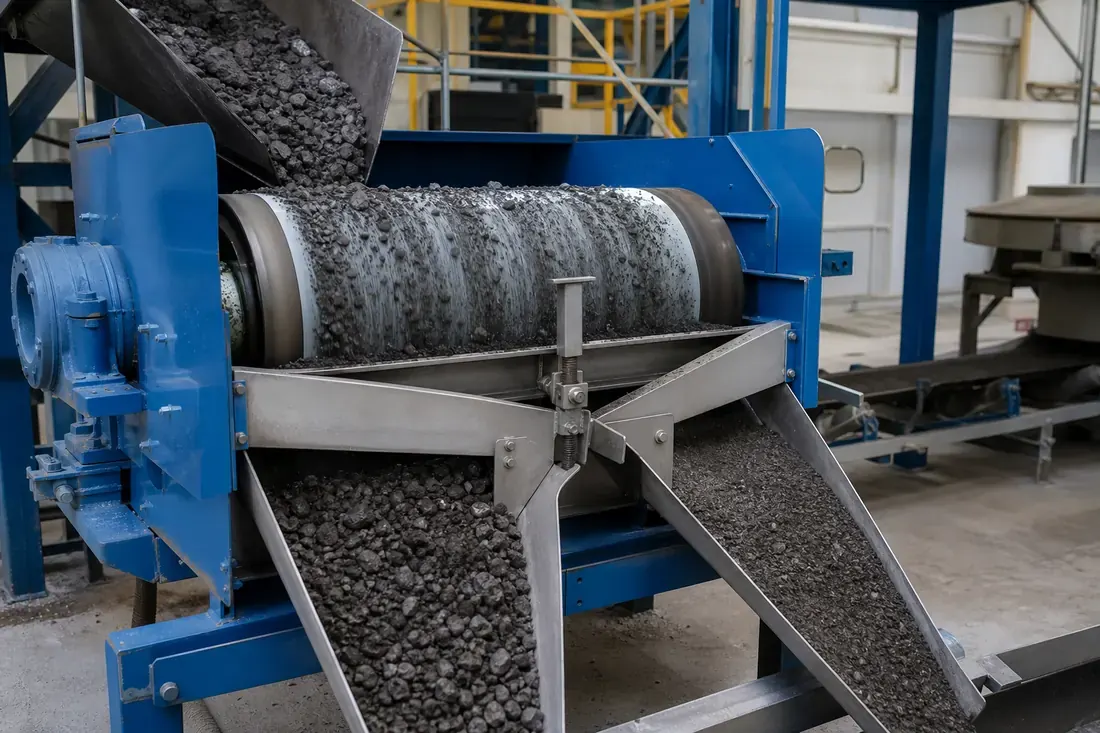
Mechanical and Environmental Inputs
- Shell material, thickness and wear protection
- Housing material, liner and access doors
- Shaft, bearings, seals and drive
- Dust control and inlet/outlet interfaces
- Indoor/outdoor and corrosion conditions
- Guards, isolation and maintenance space
Acceptance Plan
Agree dimensions, rotation, speed, field measurements, empty run, vibration or noise checks where applicable, guarding, documents and representative material trials. State test conditions beside every capacity or recovery expectation.
Minimum RFQ Data for a Housed Magnetic Drum
| Decision rule | Select feed arrangement, drum width, magnetic arc, speed and splitter from material trajectory and the required magnetic and nonmagnetic outlets. |
|---|---|
| Inputs to confirm | Material and target, particle distribution, bulk density, moisture, abrasion, normal and peak rate, feed uniformity and required fraction quality. |
| Risk or limitation | A nominal capacity without material and feed conditions is not transferable, and one splitter angle cannot suit every speed and particle distribution. |
| Buyer action | Provide inlet and outlet drawings and request a test or calculation tied to the proposed drum and feed configuration. |
What We Need to Configure This Project
Input set for How to Select a Housed Magnetic Drum Separator
- How we use your data: We compare your material, contamination risk, production target and line interface before we configure a proposal or rule out an unsuitable option.
- Material: name and composition; dry or wet; powder, granule, lump, fibre or slurry; minimum, maximum and typical particle distribution; moisture, stickiness, tendency to cake or bridge, abrasiveness, corrosiveness, bulk density, normal temperature and maximum temperature.
- Production and target: normal and peak throughput, continuous or batch feed, feed uniformity, contaminant or recovery target, magnetic response if known, typical and maximum target size, initial concentration, acceptable residual and whether product loss is permitted.
- Installation: feed chute and discharge geometry, drum or pulley diameter and working width, shaft/bearing interface, speed, splitter space, drive arrangement and maintenance access; cleaning method, permitted shutdown, contact-material, wear and corrosion requirements; indoor, outdoor, washdown, high-humidity, dusty or hazardous-area conditions.
- Supporting project files: drive voltage, frequency, phase and control interface; state whether any pneumatic actuator or air service is required; destination country; current drawings, site photographs, running video and a representative material/contaminant sample when testing is needed.
- What you receive next: We use the confirmed inputs to prepare a project-specific drawing and inspection plan. We do not treat performance as confirmed until the agreed design and any required representative test or site acceptance establish the result.

Project Support
Need help selecting the right magnetic solution?
Send us your material, flow condition, target metal, capacity, installation space and any drawings or site photos. We will review the application and recommend the next practical step.
Frequently Asked Questions
Why is “Choose the Feed Arrangement” important for this decision?
Top-feed, bottom-feed and other drum arrangements present material to the magnetic zone differently. The choice affects contact, trajectory, retention and outlet layout.
Why is “Drum Diameter and Working Length” important for this decision?
Diameter affects exposure path, shell speed and space for the magnetic system. Working length must accept the distributed feed width without edge overload.
Why is “Magnetic Arc and Circuit” important for this decision?
The magnetic arc determines where the target is attracted and retained before release. The selected magnet material and pole design should fit target response, working distance, temperature and field distribution.