
OSENC Magnetic Separation
Select a suspended magnet from the conveyor geometry, burden depth, belt speed, target iron, rated suspension height and cleaning duty. Belt width alone is not a sufficient sizing method. First decide whether manual cleaning is acceptable or continuous self-cleaning is required; then verify the magnetic circuit at the actual working distance.
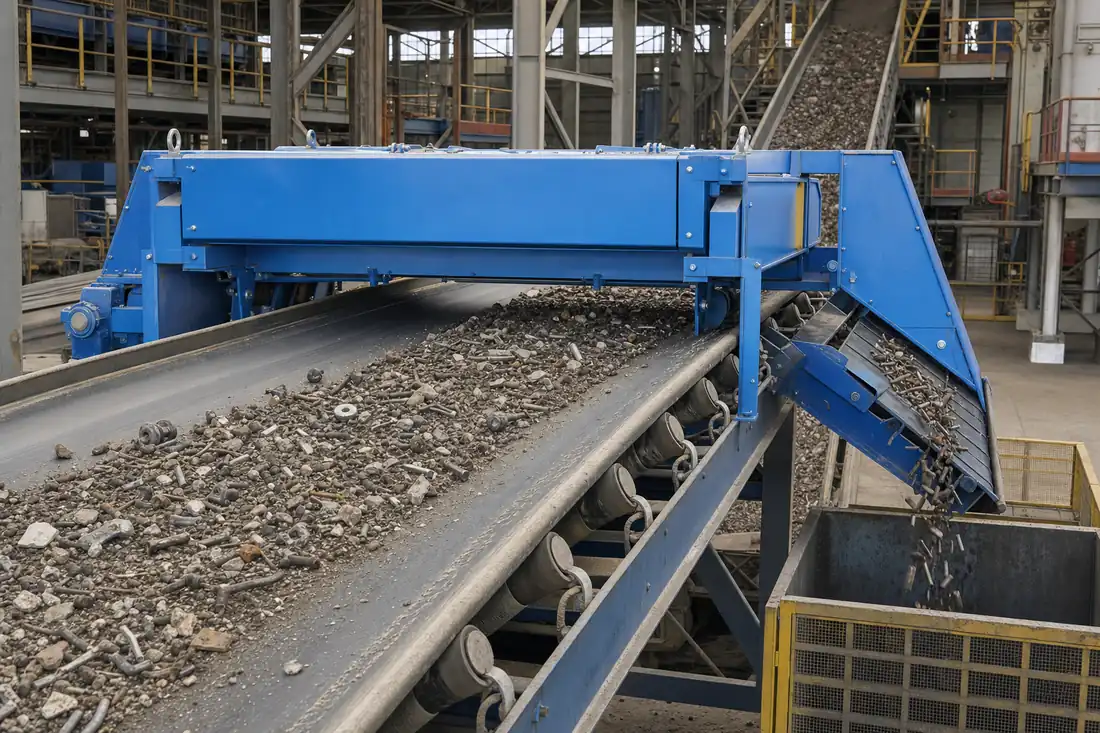
Eight Required Selection Inputs
- Belt width and usable material width
- Maximum and normal burden depth
- Belt speed and direction
- Bulk density, largest lump and material condition
- Target iron size, shape, mass and frequency
- Available magnet-face-to-belt and magnet-face-to-target distance
- Installation position and surrounding structure
- Manual or continuous cleaning requirement
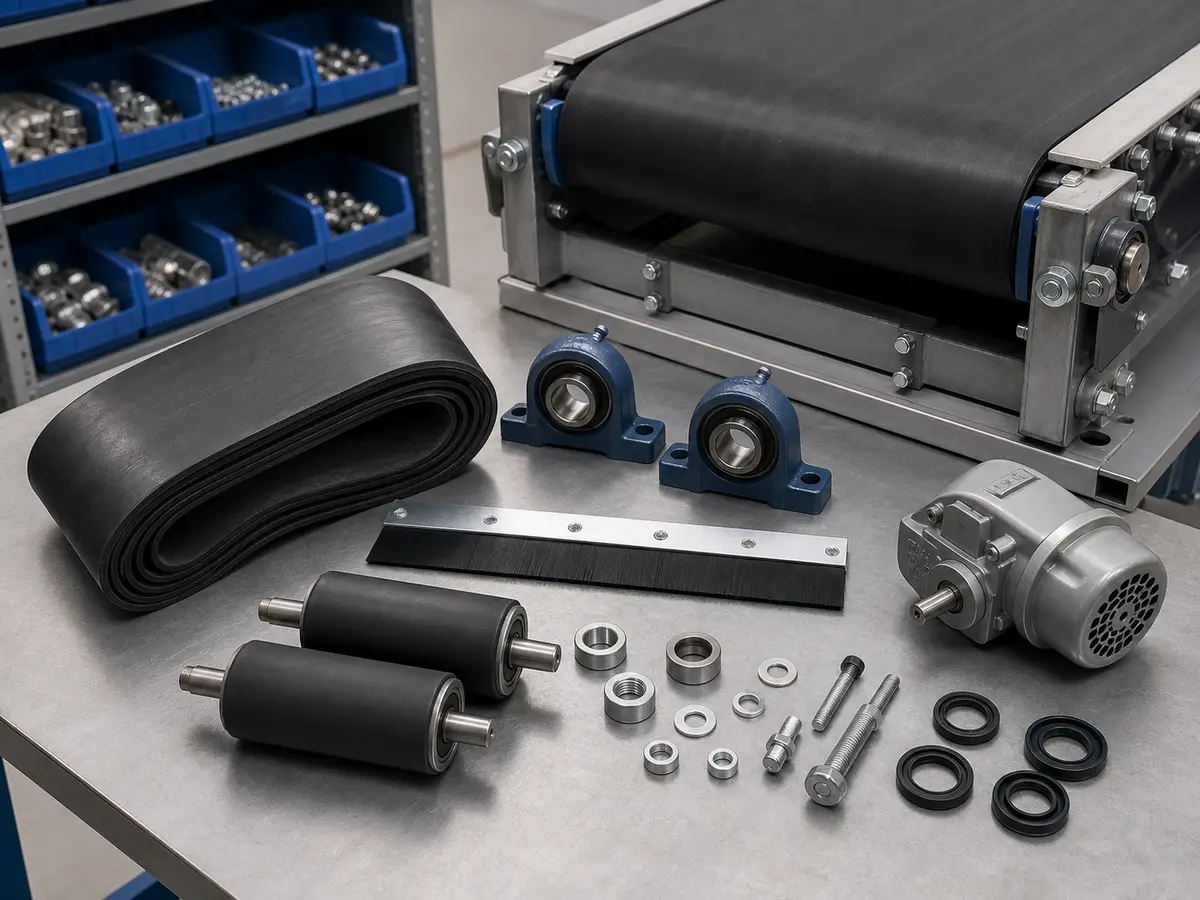
Manual-Clean or Self-Cleaning?
A permanent suspended magnet without a cleaning belt suits intermittent tramp iron only when production can be stopped or safe cleaning can be scheduled. A self-cleaning overband carries captured iron away from the product stream and is generally considered when contamination is frequent or production is continuous.
The self-cleaning choice also requires cleaning-belt material, drive, discharge direction, tracking, guards, clearance, maintenance access and environmental protection.
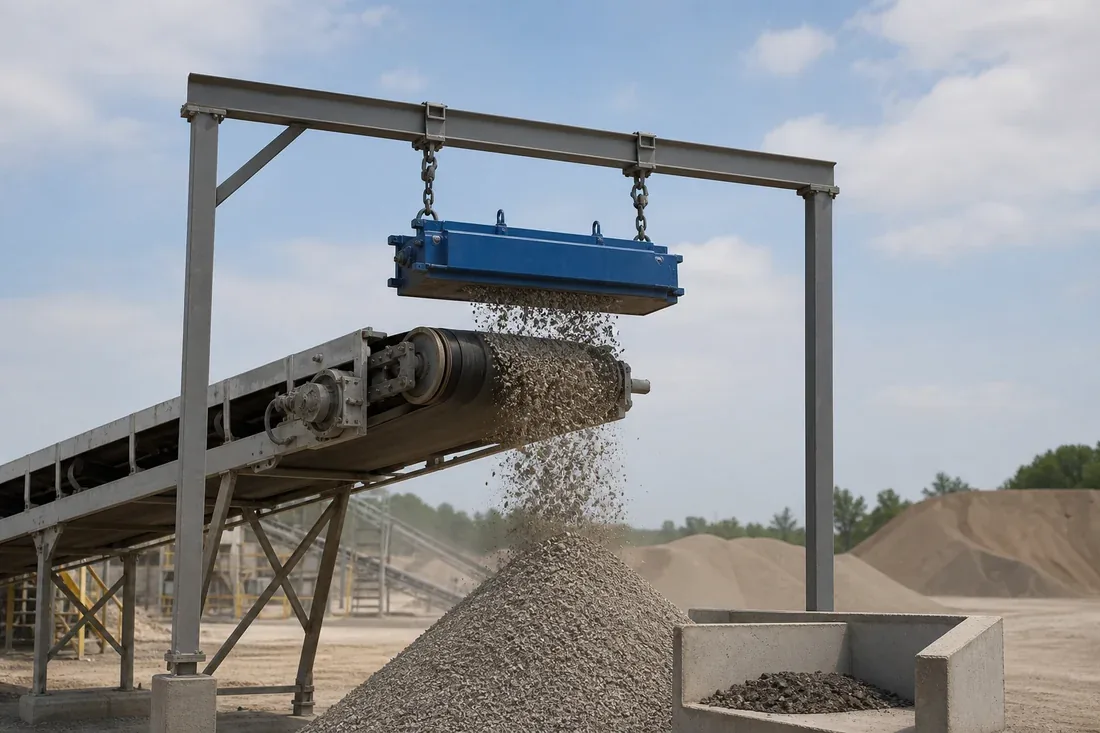
Inline or Crossbelt Position?
Inline installation places the magnet along the conveyor direction, often near the head discharge. Crossbelt installation runs the cleaning belt across the main conveyor. The decision depends on burden presentation, available structure, iron-discharge side, clearance and maintenance access—not only magnetic performance.
Define Suspension Height Correctly
Use a clear datum such as the magnetic face to the conveyor belt or to the top of the burden. State whether belt thickness, cleats, liner, sag and structural clearance are included. The target at the bottom of the burden may be much farther from the magnet than the advertised installation height suggests.
Require field or lifting evidence at the rated height and stated test conditions, not only maximum face Gauss.
Installation Conditions That Change the Design
- Outdoor rain, dust, corrosion or high ambient temperature
- Hot material or large impact pieces
- Hazardous-area classification
- Existing steel that affects clearance or magnetic behavior
- Limited lifting and service access
- Transfer-point dust enclosure
- Customer voltage, controls and monitoring
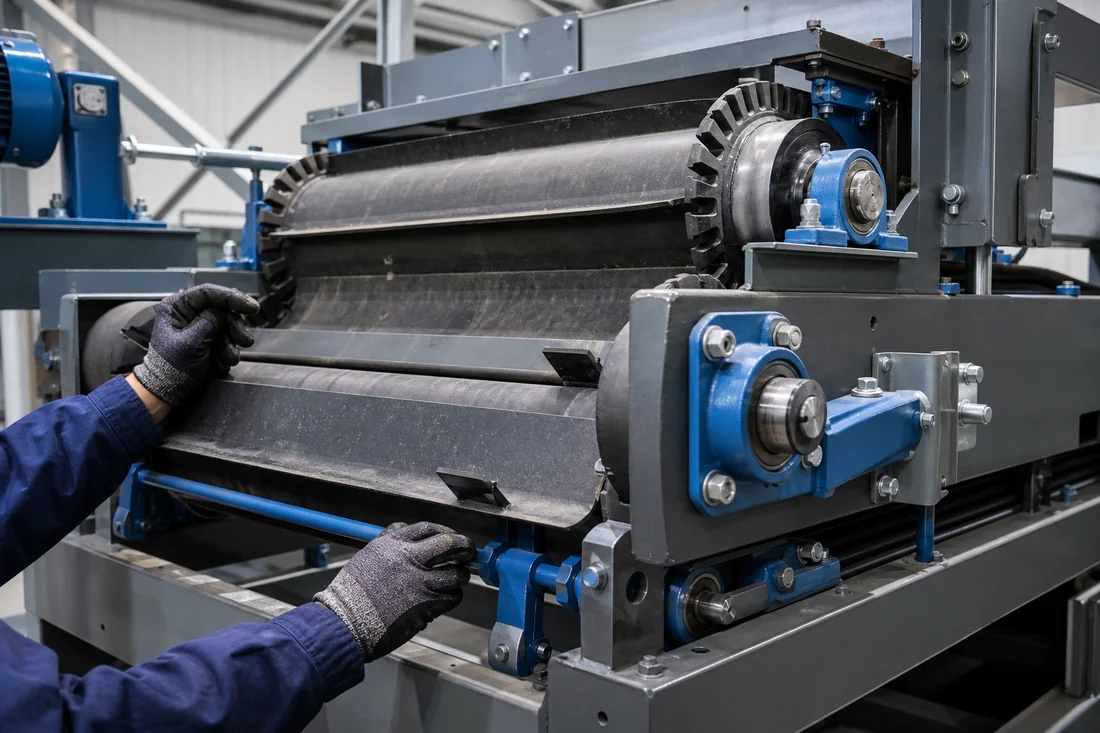
Do Not Approve a Model Until These Are Shown
- General arrangement and suspension points
- Rated height and magnetic test method
- Working width and discharge arrangement
- Weight and structural loads
- Drive, belt, bearing and guard configuration where applicable
- Installation, operation and maintenance instructions
- Agreed acceptance and factory test plan
When a Suspended Magnet Is Not the Best Choice
If the target is fine contamination in a shallow gravity-fed powder, a grate or drawer magnet may provide closer contact. If continuous separation can occur at the conveyor discharge, compare a head pulley. If the target is weakly magnetic or not liberated, representative testing and a different technology may be required.
Review the product family Compare with a head pulley Request project review
Minimum RFQ Data for Suspended-Magnet Selection
| Decision rule | Choose manual or self-cleaning configuration from iron loading, allowed stoppage and discharge access, then size the field for the deepest target distance. |
|---|---|
| Inputs to confirm | Material, lump size, bulk density, moisture, belt width and speed, trough profile, maximum burden, target steel and expected iron loading. |
| Risk or limitation | Belt width alone cannot define magnet size, and face Gauss cannot replace working-height capture at the specified burden. |
| Buyer action | Send a conveyor section drawing and representative target information and require a rated-height test method in the proposal. |
How We Apply This Comparison to Your Project
How to Select a Suspended Magnet for a Conveyor: seller-side application review
- Your decision risk: Two structures can both remove ferrous material yet behave differently with thick layers, fine particles, sticky flow, continuous production or limited cleaning space.
- What we review: We compare your material, particle size, moisture, temperature, throughput, target contamination, installation position, available space and permitted downtime.
- What we recommend: We use the these trade-offs to select, configure or rule out each option instead of choosing from one headline parameter.
- Buyer value: This helps you avoid an unnecessary upgrade, reduce contamination and downtime risk, and purchase a structure that your operators can actually clean and maintain.
- Boundary: We do not call one option universally better; the result depends on the confirmed material path and acceptance target.
- Next step: Send the material and target, particle range, moisture, temperature, throughput, contamination, installation drawing, available space, cleaning preference and any sample or site video. Send the inputs for option comparison
Project Support
Need help selecting the right magnetic solution?
Send us your material, flow condition, target metal, capacity, installation space and any drawings or site photos. We will review the application and recommend the next practical step.
Frequently Asked Questions
Why is “Manual-Clean or Self-Cleaning” important for this decision?
A permanent suspended magnet without a cleaning belt suits intermittent tramp iron only when production can be stopped or safe cleaning can be scheduled.
Why is “Inline or Crossbelt Position” important for this decision?
Inline installation places the magnet along the conveyor direction, often near the head discharge. Crossbelt installation runs the cleaning belt across the main conveyor.
Why is “Define Suspension Height Correctly” important for this decision?
Use a clear datum such as the magnetic face to the conveyor belt or to the top of the burden.