
OSENC Magnetic Separation
How to Choose a Magnetic Separator for Powder and Granules
Use magnetic tubes or grates when dry material can flow close to magnetic surfaces; choose a drawer magnet when the line needs an enclosed inlet and outlet; consider an easy-clean grate when frequent buildup makes manual scraping inefficient. Final selection depends on flowability, particle size, capacity, opening, temperature, target iron, cleaning access, and documentation.
Send Powder and Opening Details Review Grate and Tube Components
Start with Material Flow, Not Maximum Gauss
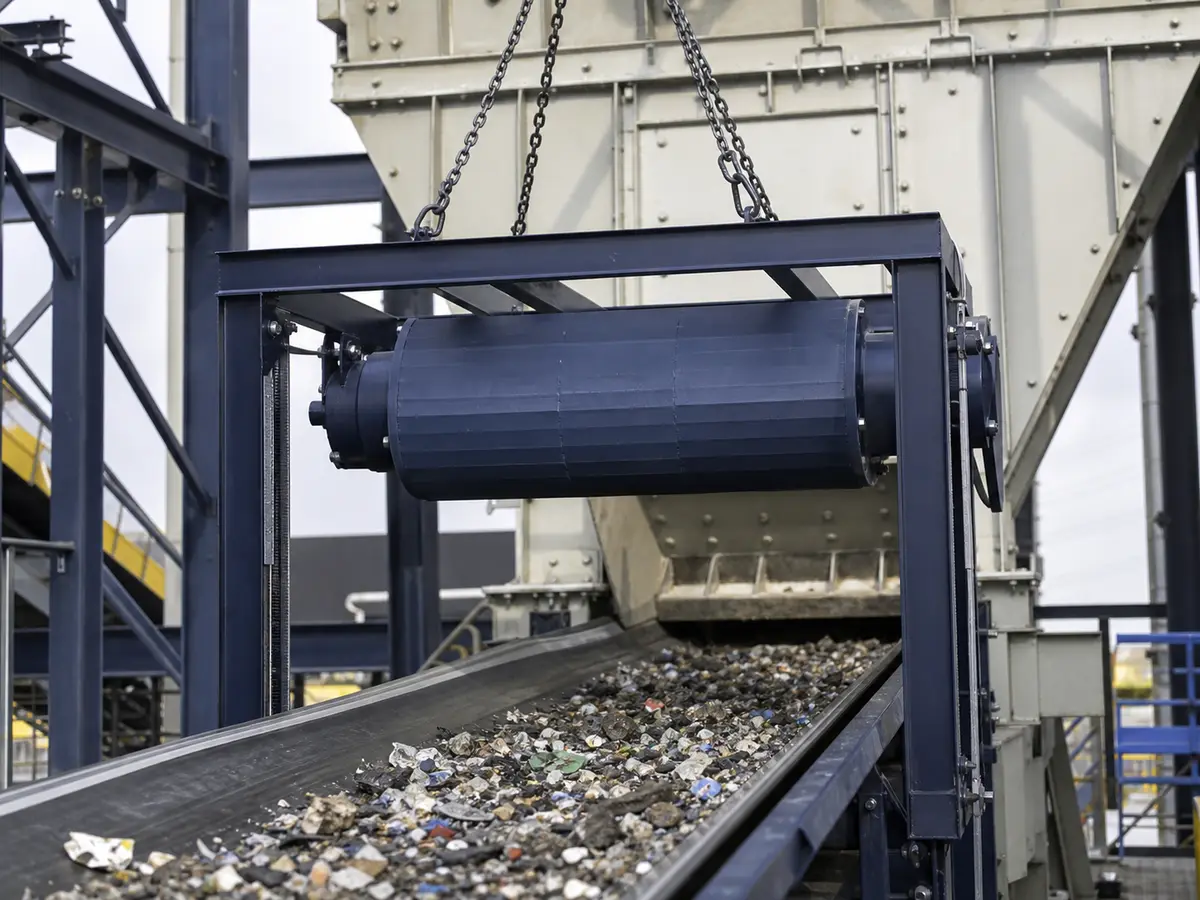
Fine ferrous particles must pass close enough to an effective pole area to be captured. A high surface value cannot help material that bridges above the tubes, bypasses the active area, or travels through a thick uncontrolled stream. Describe whether the powder is free-flowing, dusty, cohesive, oily, hygroscopic, abrasive, or prone to static buildup.
Choose the Product Structure
| Product | Choose when | Main trade-off |
|---|---|---|
| Magnetic tube | An OEM frame or small opening needs an individual magnetic element | Buyer must control mounting, flow distribution, and cleaning |
| Magnetic grate | A hopper or chute can accept an open multi-tube frame | Complete grate must be removed and cleaned |
| Drawer magnet | The line needs an enclosed housing with defined inlet/outlet and pull-out access | Higher flow resistance, sealing and side-clearance requirements |
| Easy-clean magnetic grate | Recorded contamination requires frequent cleaning | Core/sleeve mechanism needs more space and inspection |
Tube Spacing Is a Capture-and-Flow Decision
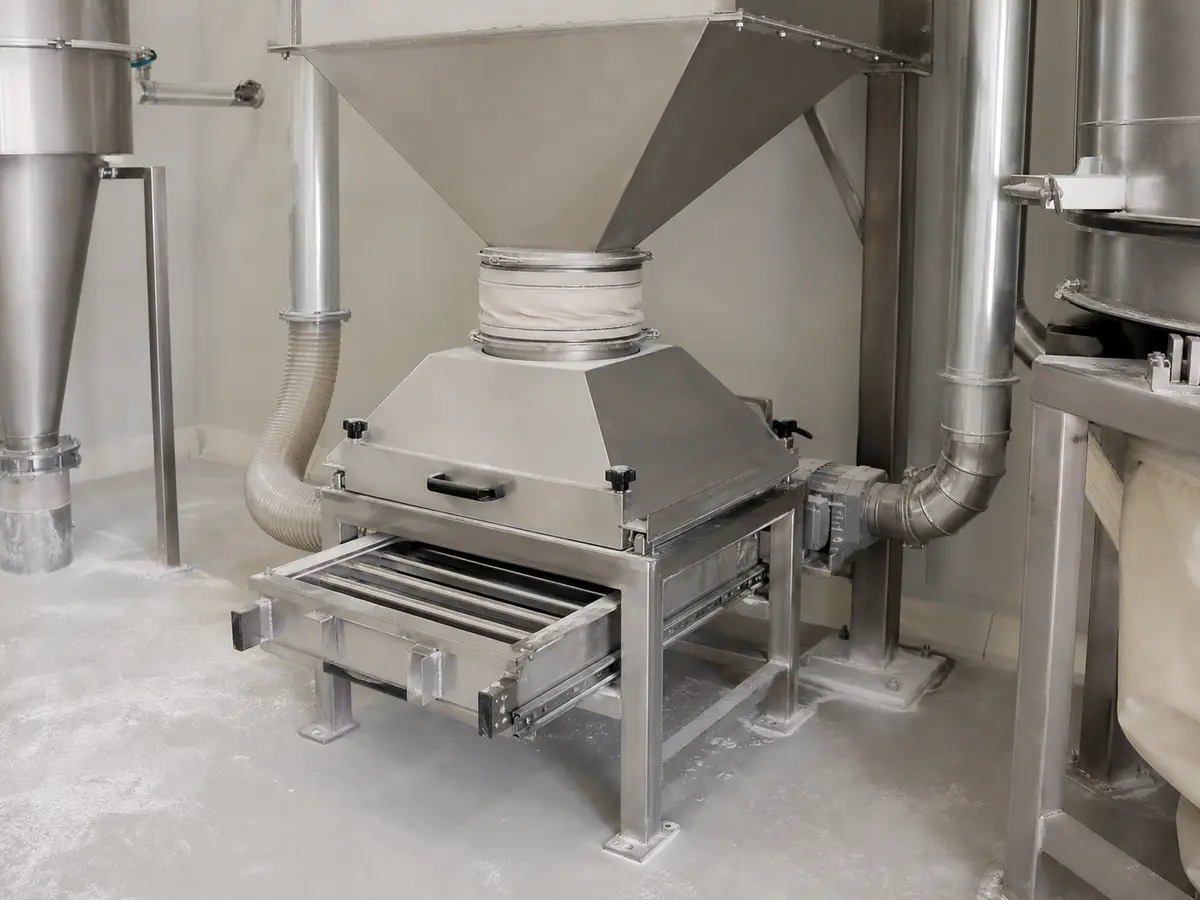
Closer spacing can redirect more material near a magnetic surface but reduces open area. More rows can add contact opportunities but increase pressure drop and bridging risk. Large granules require sufficient passage; cohesive fines may need a different feeding or agitation strategy. “More tubes” and “more rows” are not universal improvements.
How to Specify Magnetic Performance
State the measurement point, distance, pole location, instrument, temperature, and tolerance. For example, distinguish a maximum value measured directly at the magnetic tube surface from a minimum requirement across selected outer-sleeve points. Easy-clean sleeves increase the distance from the magnetic core and must be tested as the assembled product.
Cleaning Frequency Affects Real Performance
Captured iron and product buildup can shield the active surface and restrict flow. Inspect more frequently during commissioning, record accumulated contamination, and set the cleaning interval before the layer becomes excessive. If operators cannot safely reach and remove the assembly, the nominal magnetic strength is irrelevant.
Food, Pharmaceutical, and Sanitary Boundaries
Confirm stainless grade, surface roughness, weld treatment, seals, dead spaces, cleaning method, and product-contact documentation. A magnetic grate is not “FDA approved” merely because one component uses stainless steel. Pressure, vacuum, combustible dust, and clean-in-place conditions require separate engineering review.
When Testing Is Necessary
- The target is fine, weakly responsive, or difficult to identify.
- The powder is sticky, fatty, wet, or prone to bridging.
- The buyer requires a numerical residual-iron or purity result.
- The material may abrade or dent the collection surfaces.
- Capacity is high relative to the available opening.
Use representative feed and document mass, flow rate, moisture, particle size, configuration, cleaning condition, and analysis method.
Common Mistakes
- Buying from a single maximum Gauss number
- Ignoring the exact measurement position
- Reducing spacing until the powder blocks
- Assuming a gravity housing is pressure-rated
- Using a manual grate where there is no removal space
- Waiting until buildup covers the collection surface
Information OSENC Needs
Send material name, particle-size range, bulk density, capacity and peak flow, moisture, temperature, target contamination, opening and flange drawing, feeding method, cleaning frequency, available removal space, stainless/finish requirements, and acceptance method.
Powder Data Needed to Select the Contact Zone
Use these inputs to decide whether the proposed separator and process position fit the real operating duty.
| Equipment direction | Use a tube or grate when powder can pass close to the magnetic surface; use a drawer housing when the process needs a controlled enclosed contact zone and repeatable removal for cleaning. |
|---|---|
| Material condition | Define powder chemistry, minimum and agglomerated particle size, bulk density, moisture, flowability, cohesion, bridging, dust, corrosion and normal and maximum temperature. |
| Target iron or magnetic fraction | Identify iron powder, machining fines, rust, wire fragments or wear particles; state typical size, expected concentration, acceptable residual level and whether weakly magnetic stainless wear is relevant. |
| Throughput and presentation | Provide normal and peak kg/h, batch size or continuous rate, inlet dimensions, head pressure and whether flow is gravity-fed, screw-fed, vacuum conveyed or pressure conveyed. |
| Installation and access | Confirm chute or pipe geometry, flange standard, seal requirement, extraction distance for the magnetic element, collection method, dust containment and safe cleaning space. |
| Test or acceptance | Test the real powder because cohesion and distance from the tubes affect capture. Compare feed and cleaned samples with a defined sampling and analysis method. |
How We Configure a Solution for Your Process
How to Choose a Magnetic Separator for Powder and Granules: seller-side application review
- Your process problem: Ferrous contamination can damage downstream equipment, reduce product consistency, create rejects or force unplanned cleaning and downtime.
- What we review: We confirm your material form, particle size, moisture, temperature, bulk density, normal and peak throughput, contaminant type and size, required residual and process position.
- What we configure: We compare capture point, magnetic structure, working distance, material presentation, cleaning method and line interface before we prepare a proposal.
- Buyer value: This helps you intercept contamination before a critical machine or quality stage, reduce repeat purchases and avoid a separator that restricts normal production flow.
- Boundary: We do not recommend the application when the target is non-magnetic, the material path prevents exposure or the required result cannot be supported without testing.
- Next step: Send the material and target, particle range, moisture, temperature, throughput, contamination, installation drawing, available space, cleaning preference and any sample or site video. Send your process and contamination data
Project Support
Send your material and process conditions
We can review the process point, material shape, iron source, capacity, available space and cleaning method before recommending a magnetic separator layout.
Frequently Asked Questions
Why is “Start with Material Flow, Not Maximum Gauss” important for this decision?
Fine ferrous particles must pass close enough to an effective pole area to be captured. A high surface value cannot help material that bridges above the tubes, bypasses the active area, or travels through a thick uncontrolled stream.
Why is “Tube Spacing Is a Capture-and-Flow Decision” important for this decision?
Closer spacing can redirect more material near a magnetic surface but reduces open area. More rows can add contact opportunities but increase pressure drop and bridging risk.
How to Specify Magnetic Performance?
State the measurement point, distance, pole location, instrument, temperature, and tolerance. For example, distinguish a maximum value measured directly at the magnetic tube surface from a minimum requirement across selected outer-sleeve points.