
OSENC Magnetic Separation
Tramp Iron Removal from Coal Conveyors
Protect Crushers, Screens and Conveyor Systems
Coal-handling magnets remove responsive steel such as bolts, tools, rail fragments, wire, and broken wear parts before they damage crushers, screens, belts, or downstream equipment. The key decision is whether the magnet can reach iron at the real burden depth and remove it continuously under the site’s dust, environmental, and operating requirements.
Send Coal Conveyor Conditions Review Self-Cleaning Overbands
First Define the Protected Risk
A separator positioned before a high-consequence crusher may be selected differently from one used for general cleanup. Record what iron is causing damage, where it enters, how often it appears, and whether it travels on top of or buried within the coal. This defines the required location, working distance, and cleaning duty.
Choose the Cleaning Arrangement
- Manual-clean suspended magnet: consider only when captured iron is infrequent and a safe isolated cleaning stop is realistic.
- Self-cleaning overband magnet: preferred when iron is frequent, the line runs continuously, or manual access would be impractical.
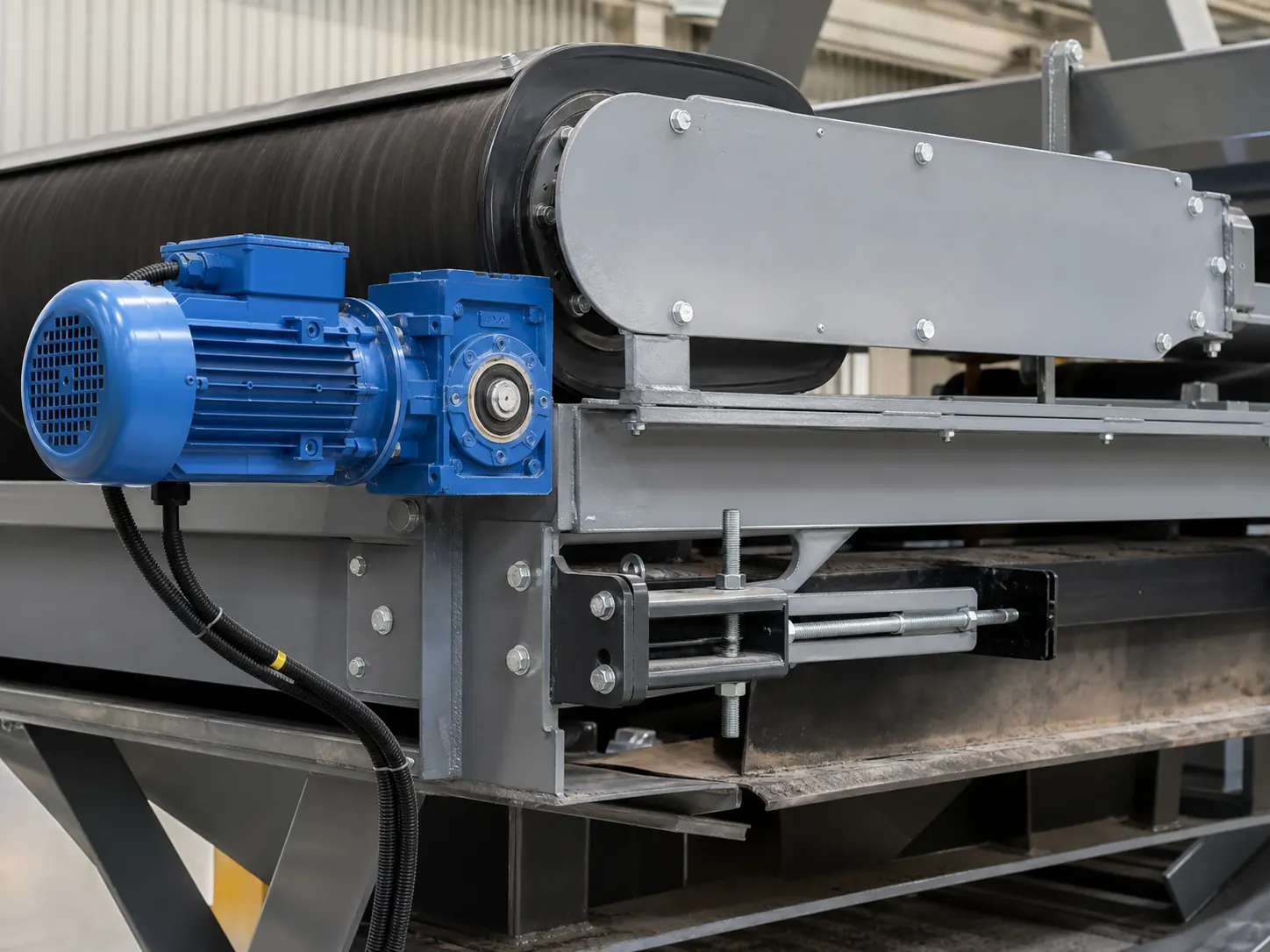
- Magnetic head pulley: integrates separation at discharge but requires pulley, shaft, bearing, belt, trajectory, and splitter review.
Crossbelt or Inline?
A crossbelt unit discharges to the side and must lift iron across the moving coal stream. An inline unit near the head pulley may benefit from the burden opening at discharge, but must fit the material trajectory and conveyor structure. Compare actual height, steel interference, headroom, iron trajectory, and maintenance access rather than treating one arrangement as universally stronger.
Required Operating Data
| Input | Why it matters |
|---|---|
| Belt width, trough and speed | Coverage, exposure time, structure and belt configuration |
| Normal and peak burden | Real distance and resistance between magnet and iron |
| Coal size, moisture and density | Flow, burial, adhesion and surge behavior |
| Iron type and frequency | Magnetic response, cleaning load and discharge design |
| Dust and area classification | Drive, belt, bearings, sensors, grounding and documentation |
| Indoor/outdoor conditions | Rain, corrosion, temperature and enclosure requirements |
Hazardous-Area Claims Must Be Product Specific
Permanent magnetization does not make a complete overband automatically explosion-proof. The moving cleaning belt, bearings, drive, electrical components, surface temperatures, static electricity, impact, friction, and maintenance practice all need review against the actual classified area. ATEX, IECEx, flame-retardant, or antistatic claims require matching documents for the offered configuration and installation scope.
Prevent Iron from Returning to Coal
The discharge point needs a clear trajectory, collection area, guarding, and enough separation from the product stream. Check wind, vibration, chute walls, nearby steelwork, oversize iron, and collection-bin capacity. A magnet that attracts iron but drops it back into the coal has not solved the process problem.
Performance Verification
Define a safe representative test by iron target, placement, burden, speed, height, orientation, and pass/fail result. Record the height datum and actual peak load. Surface Gauss at the magnet face does not represent lifting capability through a deep coal burden.
Request a Coal-Handling Review
Send conveyor drawings, belt data, coal size and moisture, normal/peak burden, target iron samples or photographs, protected equipment, proposed position, area classification, ambient conditions, operating hours, voltage, and required monitoring or controls.
Coal-Conveyor Data Required Before Magnet Selection
Use these inputs to decide whether the proposed separator and process position fit the real operating duty.
| Equipment direction | Use a suspended or self-cleaning overband magnet to remove tramp steel before crushers and transfer equipment, but review the complete machine against the site’s dust and hazardous-area requirements. |
|---|---|
| Material condition | Identify coal size range, fines, bulk density, moisture, stickiness, dust explosibility information, temperature and the deepest burden during feeder surges. |
| Target iron or magnetic fraction | Describe roof bolts, wire, picks, plates and maintenance debris by maximum size, frequency and whether they are likely to be buried. |
| Throughput and presentation | Provide normal and peak t/h, belt width, speed, trough angle, load profile and required continuous discharge rate for collected steel. |
| Installation and access | Confirm classified-area information, flame-retardant or antistatic requirements, electrical supply, support structure, discharge path, guarding and safe maintenance access. |
| Test or acceptance | Test working-height capture separately from documentation review. A successful steel test does not by itself establish hazardous-area suitability. |
What We Need to Configure This Project
Input set for Tramp Iron Removal from Coal Conveyors
- How we use your data: We compare your material, contamination risk, production target and line interface before we configure a proposal or rule out an unsuitable option.
- Material: name and composition; dry or wet; powder, granule, lump, fibre or slurry; minimum, maximum and typical particle distribution; moisture, stickiness, tendency to cake or bridge, abrasiveness, corrosiveness, bulk density, normal temperature and maximum temperature.
- Production and target: normal and peak throughput, continuous or batch feed, feed uniformity, contaminant or recovery target, magnetic response if known, typical and maximum target size, initial concentration, acceptable residual and whether product loss is permitted.
- Installation: belt width and speed, normal and maximum burden depth, magnet position and rated working distance, available suspension and maintenance space, support and lifting arrangement; cleaning method, permitted shutdown, contact-material, wear and corrosion requirements; indoor, outdoor, washdown, high-humidity, dusty or hazardous-area conditions.
- Supporting project files: drive voltage, frequency and phase where a self-cleaning unit is considered; control interface and any site air requirement; destination country; current drawings, site photographs, running video and a representative material/contaminant sample when testing is needed.
- What you receive next: We use the confirmed inputs to prepare a project-specific drawing and inspection plan. We do not treat performance as confirmed until the agreed design and any required representative test or site acceptance establish the result.
Project Support
Send your material and process conditions
We can review the process point, material shape, iron source, capacity, available space and cleaning method before recommending a magnetic separator layout.
Frequently Asked Questions
Why is “First Define the Protected Risk” important for this decision?
A separator positioned before a high-consequence crusher may be selected differently from one used for general cleanup.
Why is “Crossbelt or Inline” important for this decision?
A crossbelt unit discharges to the side and must lift iron across the moving coal stream.
Why is “Hazardous-Area Claims Must Be Product Specific” important for this decision?
Permanent magnetization does not make a complete overband automatically explosion-proof. The moving cleaning belt, bearings, drive, electrical components, surface temperatures, static electricity, impact, friction, and maintenance practice all need review against the actual classified area.