
OSENC Magnetic Separation
Magnetic separator efficiency is determined by the entire separation system: target properties, liberation, working distance, feed presentation, speed, magnetic circuit, retention, cleaning and discharge. Increasing one surface-Gauss number cannot correct a buried target, unstable feed or a splitter that recombines the fractions.
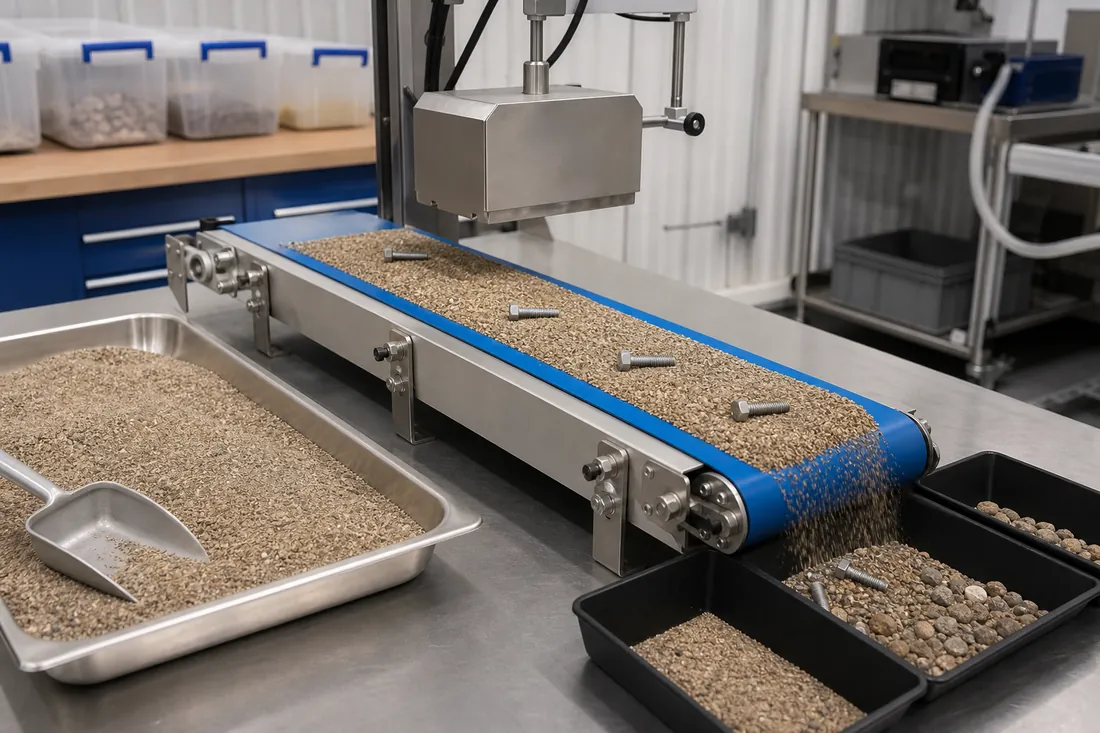
Twelve Factors to Review
- Target material: alloy, magnetic response and contamination source.
- Target size and shape: wire, sheet, bolt, sphere and fine wear particles move differently.
- Liberation: iron inside a clump or composite may not be exposed.
- Burden or layer depth: deeper material increases the distance to hidden particles.
- Working gap: air, sleeves, liners and buildup all add distance.
- Feed rate: overload can deepen the layer and reduce exposure.
- Feed distribution: concentrated flow leaves parts of the magnetic area unused.
- Velocity: faster movement reduces time in the active zone.
- Moisture and flowability: sticky material coats surfaces and forms clumps.
- Magnetic field distribution: pole geometry and field depth must fit the task.
- Cleaning and retention: accumulated iron can shield the surface or be swept back into product.
- Discharge geometry: splitter, chute and collection bin must keep fractions separate.
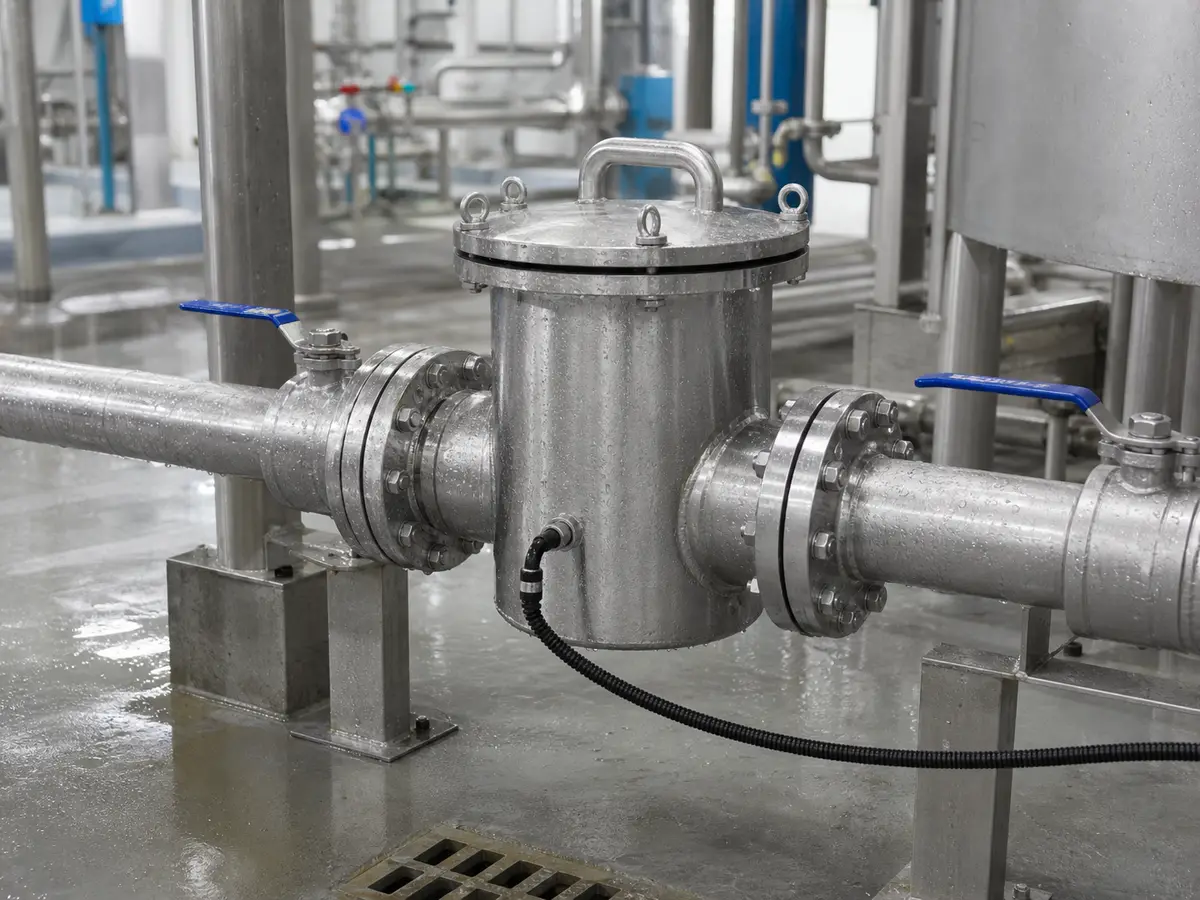
Efficiency Must Have a Defined Denominator
“99% efficiency” is meaningless unless the test defines what was fed, what counted as a target, the size distribution, number of passes, feed rate, sample method and how captured and missed material were measured. Removal by count, mass and concentration can produce different percentages.
Define the business outcome too: crusher protection from large tramp iron is different from reducing fine iron concentration in a food powder.
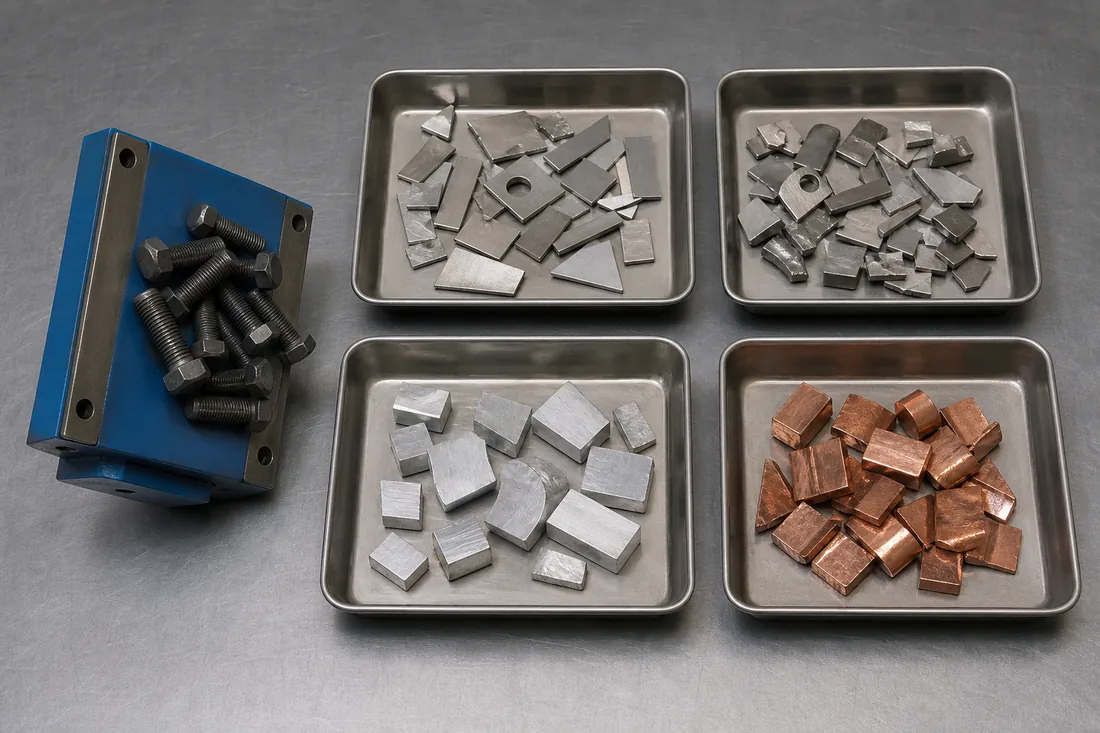
Conveyor Applications
For suspended magnets, measure belt width, speed, burden profile, bulk density, largest lump, target iron and installation height. Position above the head pulley may improve material presentation in some layouts; a crossbelt position may simplify side discharge. Structure, clearance and surrounding steel also matter.
Powder and Granule Applications
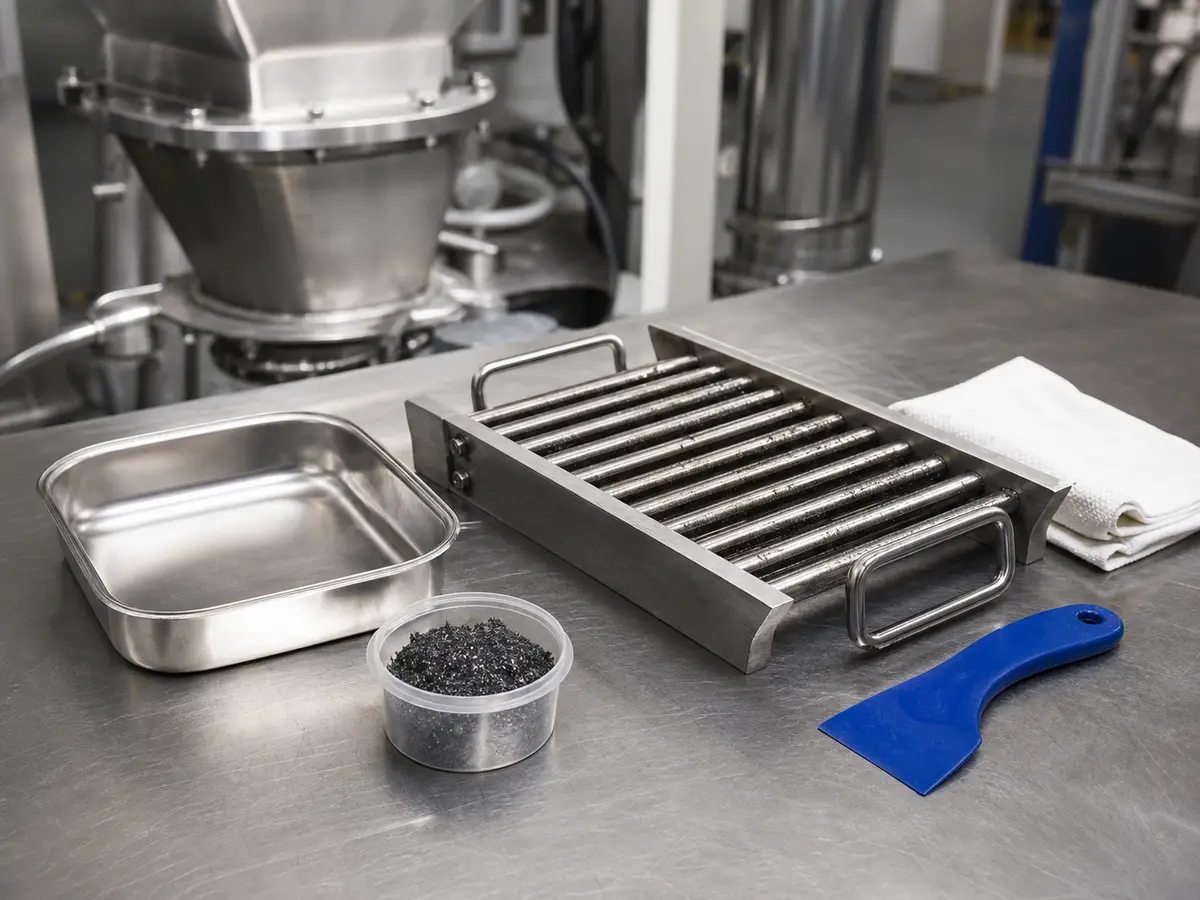
Close contact favors fine-particle capture, but reducing tube spacing also reduces open flow area. Bridging, buildup and cleaning frequency can reverse the expected benefit. Measure the actual opening, particle distribution, bulk density, moisture, temperature and pressure condition.
How to Improve a Weak Result
- Confirm the contaminant is magnetically responsive and liberated.
- Stabilize feed before changing the magnet.
- Reduce layer depth or divide the flow where practical.
- Reduce unnecessary gap and remove buildup.
- Review speed, exposure and pole orientation.
- Correct cleaning and discharge before adding another stage.
- Retest using the same sampling method.

From Estimate to Verified Performance
Selection calculations and supplier experience can narrow the design, but acceptance should use agreed magnetic checks and representative material trials. Record settings so results can be reproduced after installation.
Build a validation plan Troubleshoot changed performance Submit test conditions
Define Efficiency Before Comparing Results
| Decision rule | State whether efficiency means capture by count, mass, concentration reduction, recovery or equipment protection; each metric can lead to a different conclusion. |
|---|---|
| Inputs to confirm | Feed sample, target definition, size distribution, initial amount, throughput, layer depth, speed, number of passes, sampling method and product-loss calculation. |
| Risk or limitation | A percentage without denominator, sampling uncertainty and operating conditions can hide missed small particles or unacceptable saleable-material carryover. |
| Buyer action | Write the result equation and test conditions before the trial, then report captured, missed and misplaced material separately. |
How We Use This Technical Point in Selection
What Determines Magnetic Separator Efficiency?: seller-side application review
- Your selection risk: A device name, surface Gauss value or static pull result can lead to the wrong purchase when material motion and working distance are ignored.
- What we review: We check your material, particle size, moisture, temperature, throughput, layer or flow geometry, target contamination, installation position and cleaning method.
- What we decide: We use the principle described above to compare magnetic circuit, exposure, retention and discharge conditions before we recommend or rule out a structure.
- Buyer value: This helps you reduce leakage risk, avoid an oversized or ineffective unit and connect the specification to a testable production objective.
- Boundary: We do not treat a simplified explanation as guaranteed separation performance; representative testing is needed when magnetic response or scale-up remains uncertain.
- Next step: Send the material and target, particle range, moisture, temperature, throughput, contamination, installation drawing, available space, cleaning preference and any sample or site video. Send the material and separation target
Project Support
Need help selecting the right magnetic solution?
Send us your material, flow condition, target metal, capacity, installation space and any drawings or site photos. We will review the application and recommend the next practical step.
Frequently Asked Questions
Why is “Efficiency Must Have a Defined Denominator” important for this decision?
“99% efficiency” is meaningless unless the test defines what was fed, what counted as a target, the size distribution, number of passes, feed rate, sample method and how captured and missed material were measured.
Why is “Conveyor Applications” important for this decision?
For suspended magnets, measure belt width, speed, burden profile, bulk density, largest lump, target iron and installation height.
Why is “Powder and Granule Applications” important for this decision?
Close contact favors fine-particle capture, but reducing tube spacing also reduces open flow area. Bridging, buildup and cleaning frequency can reverse the expected benefit.