
OSENC Magnetic Separation
Validate performance by defining the target and acceptance metric, using representative material, controlling the separator and feed settings, measuring feed and output fractions, repeating the trial and documenting limitations. A Gauss reading or empty-machine run confirms only part of the system.
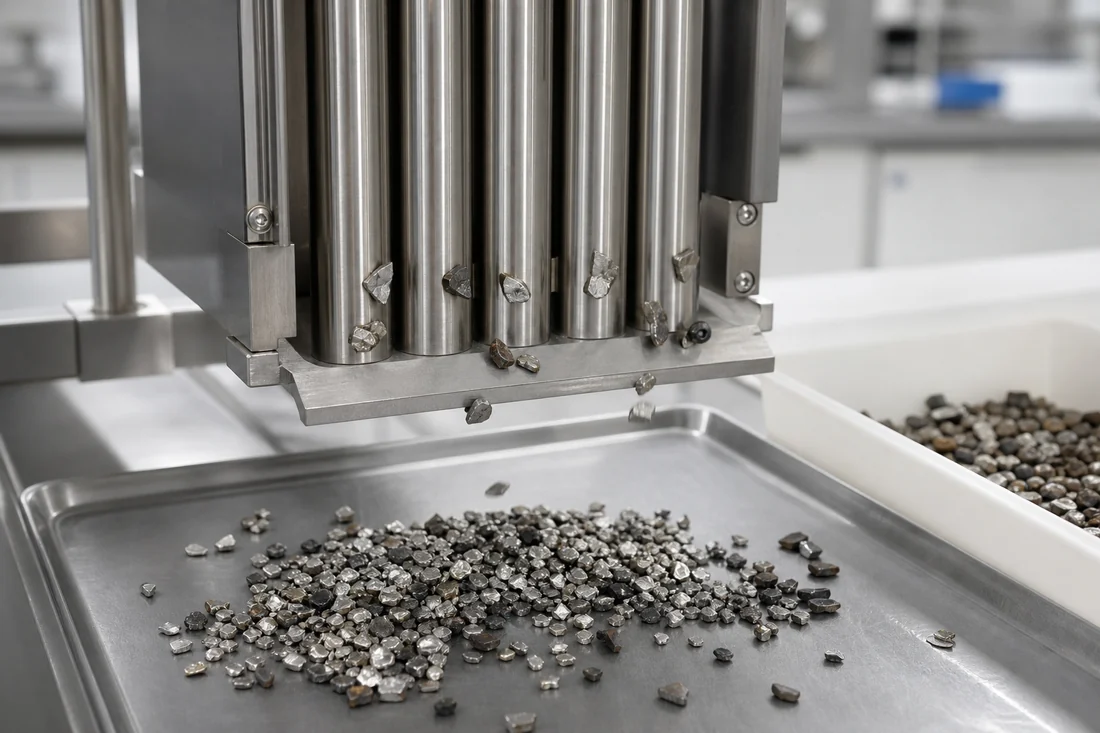
Step 1: Define the Decision
State what the test must prove. Examples include capturing specified tramp-iron pieces before a crusher, reducing ferrous contamination in a powder, comparing two separator settings or establishing a maintenance baseline. Do not use “works well” as an acceptance criterion.
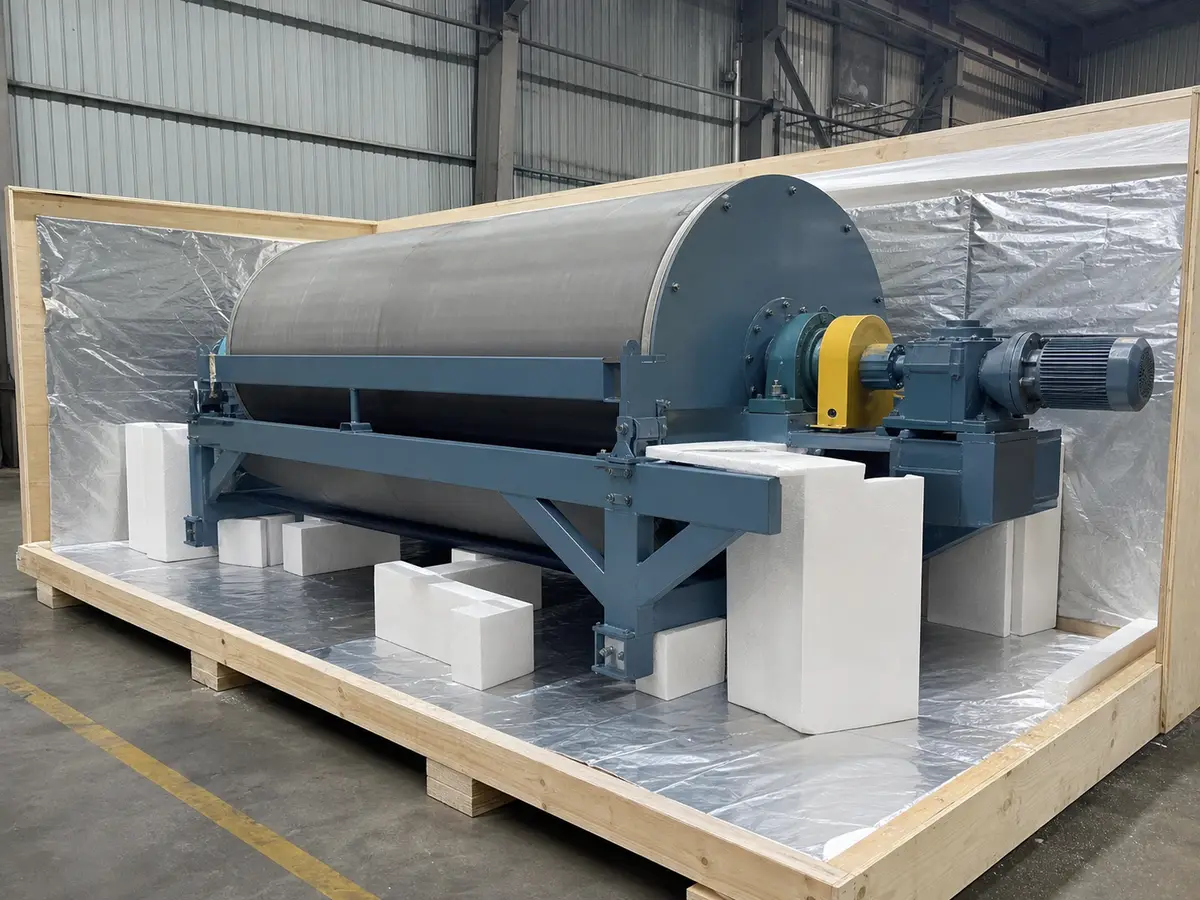
Step 2: Define the Metric
- Recovery by target count
- Recovery by target mass
- Residual concentration in the clean fraction
- Product loss into the magnetic fraction
- Maximum missed target size
- Downstream damage or contamination indicator
- Cleaning interval and retained-metal load
The metric must match the operational risk. Count may matter for bolts; concentration may matter for fine iron.
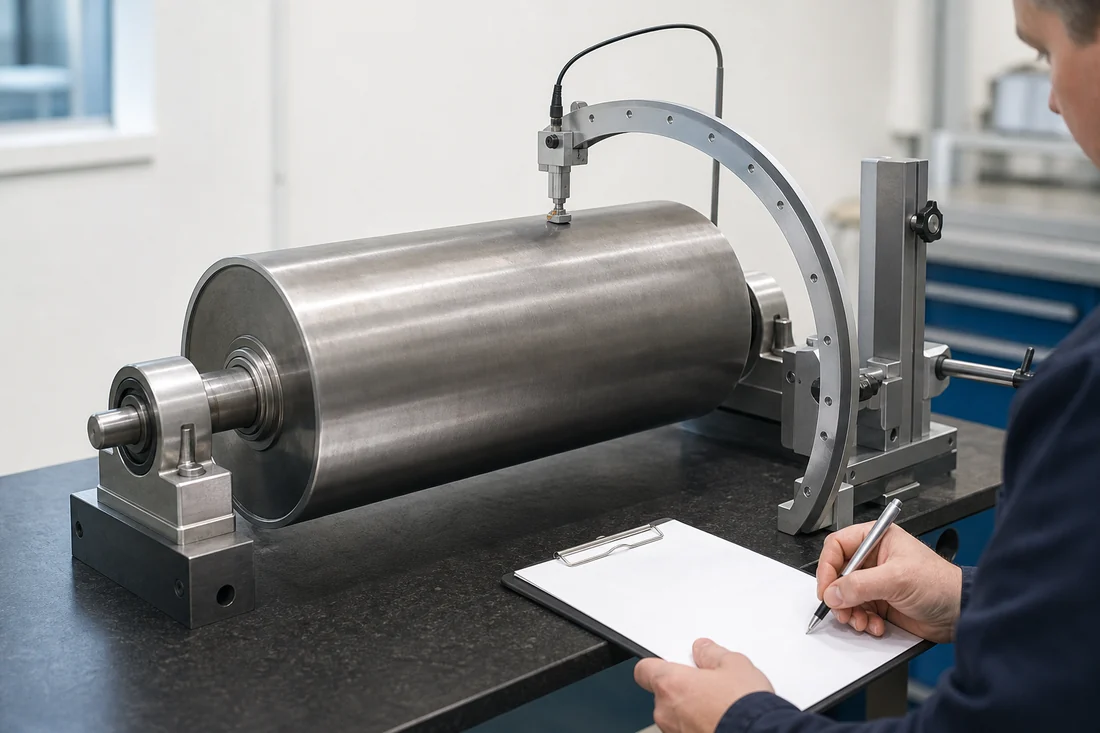
Step 3: Make the Sample Representative
Record material source, sampling time, particle size, moisture, bulk density and contamination distribution. Include normal variation, not only an easy dry sample. Artificially added targets can support a controlled challenge test, but they may not reproduce embedded or irregular process contamination.
Step 4: Control the Test Conditions
| Process | Record |
|---|---|
| Conveyor | Belt width, speed, burden profile, height, magnet position and target placement |
| Drum | Feed rate, distribution, drum speed, magnetic arc and splitter position |
| Grate/drawer | Opening, tube layout, flow rate, product depth, cleaning state and sleeve configuration |
| All tests | Product identity, settings, sample mass, run time, environment and operator |
Step 5: Account for Every Fraction
Collect feed reference, clean product, magnetic concentrate and any spill or retained material. Explain losses. If the mass balance is poor, the calculated recovery may be unreliable even when the number appears precise.
Step 6: Repeat and Challenge
Repeat trials to show variation. Test expected worst cases such as maximum flow, deepest burden, smallest target, highest moisture or a partly loaded magnetic surface. A single favorable pass is not a robust operating envelope.
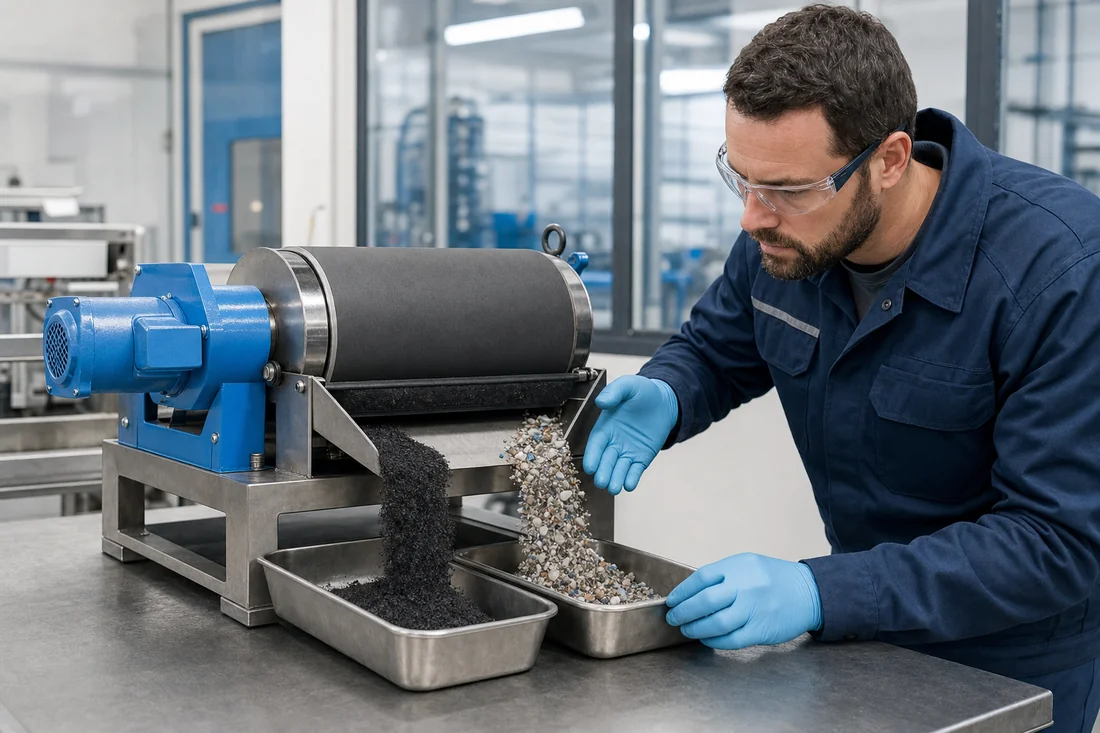
Factory Test vs Site Validation
Factory tests can confirm dimensions, field measurements, rotation, controls and performance with the available sample. Site validation confirms the installed machine, actual feed, upstream distribution, downstream splitter and operating procedure. Both may be necessary, but they answer different questions.
Plan representative material testing Define magnetic measurements
Minimum Validation Report
- Objective and acceptance criteria
- Material and target characterization
- Separator identity and configuration
- Test setup diagram and photographs
- Calibrated instruments and sampling method
- Raw results, calculations and mass balance
- Deviations, uncertainty and limitations
- Conclusion, corrective actions and approval
Review OSENC material-testing scope Review performance variables Discuss an acceptance plan
A Buyer-Oriented Validation Sequence
| Decision rule | Validate configuration, operating condition and result together: confirm the supplied machine, reproduce the intended feed, collect both fractions and compare them with the agreed target. |
|---|---|
| Inputs to confirm | Model and drawing revision, magnetic settings, speed, gap, material condition, throughput, target distribution, sampling time and analytical method. |
| Risk or limitation | No-load field measurements can identify equipment variation but cannot by themselves establish separation efficiency in a flowing material. |
| Buyer action | Use baseline, repeat and challenge runs and keep raw sample records so a later change in material or setup can be distinguished from equipment drift. |
Engineering Conditions Behind the Recommendation
- A high surface reading does not by itself predict capture in flowing product.
- Field gradient, shell or sleeve thickness, spacing, distance from each particle to a pole, particle size and magnetic response, flow speed, product depth, bridging and contamination buildup all change the result.
- Mechanical passage capacity is not the same as effective separation capacity.
- Quote or test conditions must identify material, size distribution, moisture, bulk density, normal and peak rate, feed distribution, speed, layer or flow geometry, contamination loading and cleaning interval.
How We Use This Technical Point in Selection
How to Validate Magnetic Separator Performance: seller-side application review
- Your selection risk: A device name, surface Gauss value or static pull result can lead to the wrong purchase when material motion and working distance are ignored.
- What we review: We check your material, particle size, moisture, temperature, throughput, layer or flow geometry, target contamination, installation position and cleaning method.
- What we decide: We use the principle described above to compare magnetic circuit, exposure, retention and discharge conditions before we recommend or rule out a structure.
- Buyer value: This helps you reduce leakage risk, avoid an oversized or ineffective unit and connect the specification to a testable production objective.
- Boundary: We do not treat a simplified explanation as guaranteed separation performance; representative testing is needed when magnetic response or scale-up remains uncertain.
- Next step: Send the material and target, particle range, moisture, temperature, throughput, contamination, installation drawing, available space, cleaning preference and any sample or site video. Send the material and separation target
Project Support
Need help selecting the right magnetic solution?
Send us your material, flow condition, target metal, capacity, installation space and any drawings or site photos. We will review the application and recommend the next practical step.
Frequently Asked Questions
Why is “Step 1: Define the Decision” important for this decision?
State what the test must prove. Examples include capturing specified tramp-iron pieces before a crusher, reducing ferrous contamination in a powder, comparing two separator settings or establishing a maintenance baseline.
Why is “Step 2: Define the Metric” important for this decision?
The metric must match the operational risk. Count may matter for bolts; concentration may matter for fine iron.
Why is “Step 3: Make the Sample Representative” important for this decision?
Record material source, sampling time, particle size, moisture, bulk density and contamination distribution. Include normal variation, not only an easy dry sample.