
OSENC Magnetic Separation
Magnetic Separation for Iron Removal from Glass Cullet
Use magnetic separation to remove responsive steel caps, wire, fasteners, and ferrous fragments from glass cullet, but choose the equipment by process position. A suspended magnet protects crushers from larger iron; a head pulley or drum separates exposed ferrous pieces at a discharge. Aluminum closures and non-responsive metals require another technology.
Send Cullet and Process Details Compare Drum and Overband Magnets
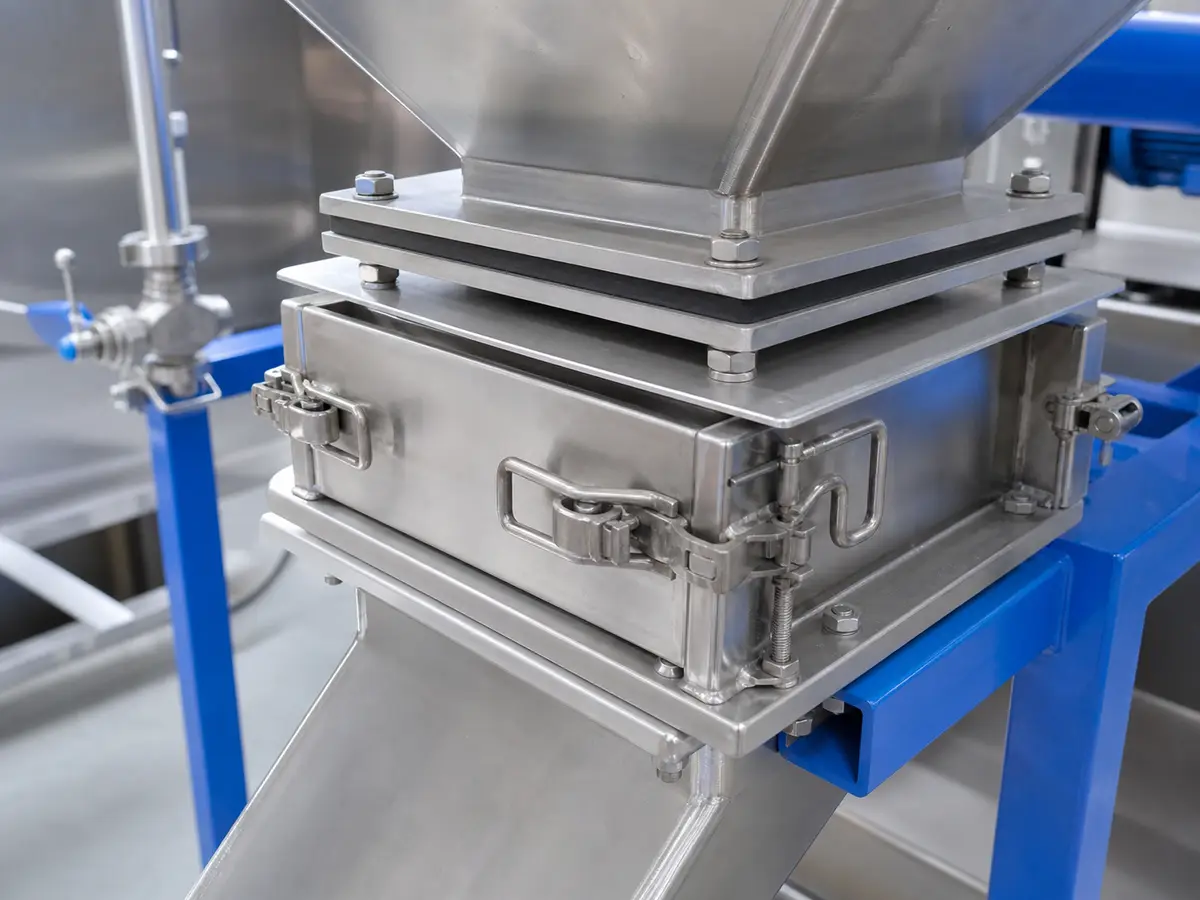
Why Glass Cullet Is a Demanding Material
- Sharp edges abrade chutes, liners, belts, and separator surfaces.
- Dense pieces can create impact at transfer points.
- Labels, fines, moisture, and mixed packaging change flow behavior.
- Steel fragments may be hidden under a deep layer or trapped inside attached material.
- Fine glass dust affects maintenance and must be considered in guarding and cleaning.
Match the Magnet to the Process Position
| Position | First product to review | Reason |
|---|---|---|
| Before crusher | Suspended permanent magnet | Removes exposed large tramp iron before mechanical damage |
| Conveyor head discharge | Magnetic head pulley | Creates continuous separation as material leaves the belt |
| Controlled chute or feeder discharge | Housed magnetic drum | Provides a magnetic arc and adjustable split in an enclosed path |
| Fine final product | Project-specific close-contact magnet | May capture fine responsive particles, but abrasion and flow must be reviewed |
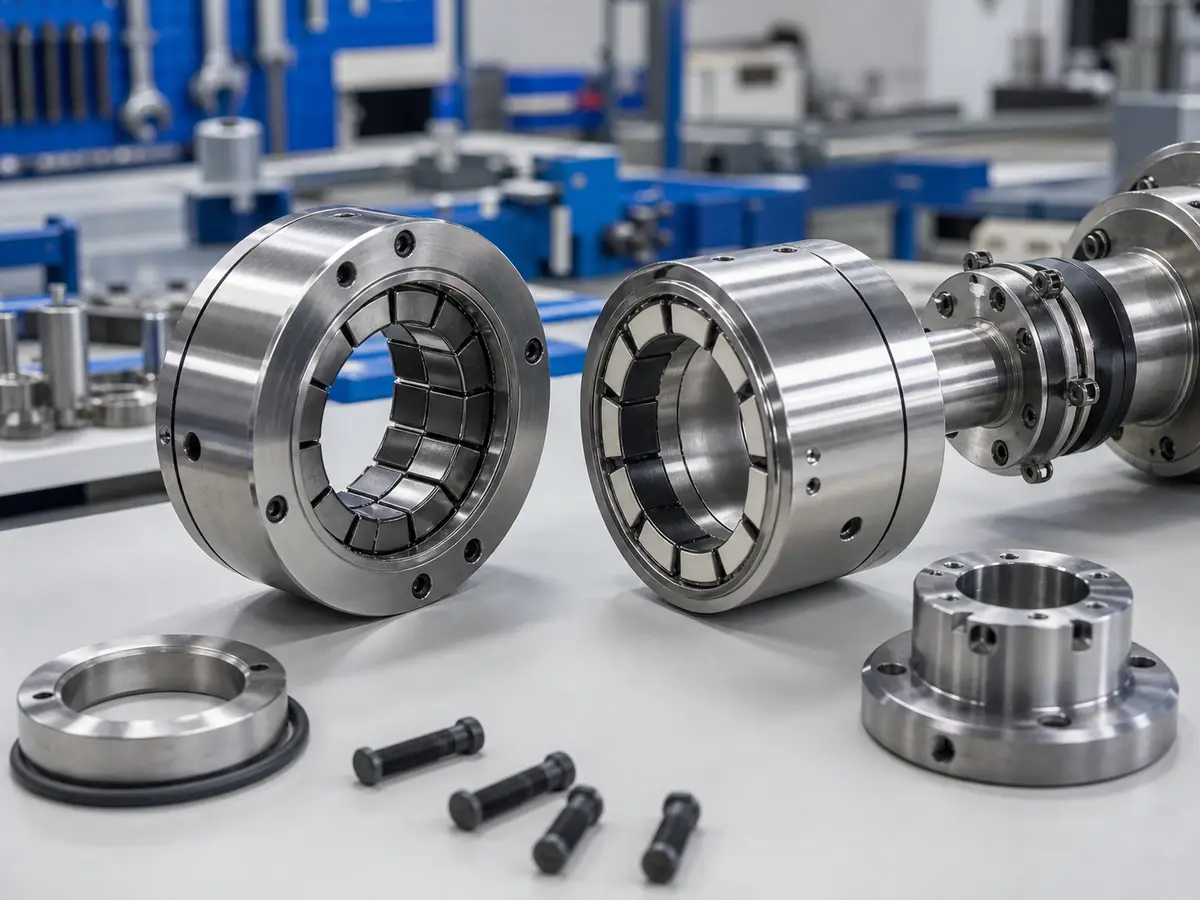
Head Pulley vs Housed Drum for Cullet
A magnetic head pulley replaces the conveyor’s normal head pulley and works with the existing belt. A housed drum receives free-falling material through an inlet and uses its own shell, magnetic arc, and splitter arrangement. Choose from the actual layout, feed distribution, required working width, available headroom, wear protection, and access—not from the word “drum” alone.
Feed Preparation Controls the Result
Screening and controlled feeding can expose ferrous pieces and reduce extreme size variation. A thin, even layer improves access to the magnetic field. If caps, wire, and glass remain in large compact bundles, magnetic attraction may be insufficient to pull the iron free. Record whether the feed is primary cullet, furnace-ready cullet, mixed container waste, or another intermediate fraction.
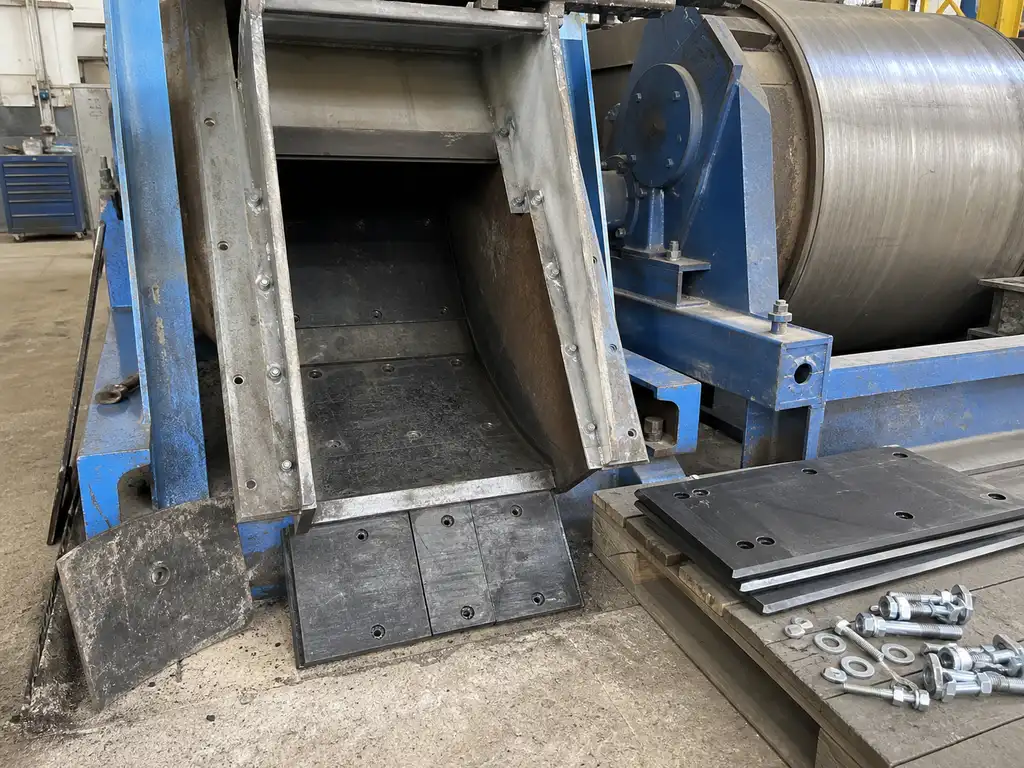
Abrasion and Impact Questions
- Where does the glass first strike the machine?
- Does the shell, belt, chute, or splitter require a replaceable wear surface?
- Can wear protection increase the magnetic working gap?
- Can operators inspect the surface without entering a hazardous area?
- Will broken glass accumulate behind guards, seals, or bearings?
Wear liners and thicker non-magnetic covers may protect equipment but can also increase distance from the magnetic circuit. The magnetic and mechanical designs must be reviewed together.
What the Magnet Will Not Remove
Ordinary permanent separators do not reliably remove aluminum closures, copper, ceramics, stones, or color contaminants. Some stainless steel may respond after deformation, but behavior varies and the real sample should be tested. Do not describe “metal removal” when the confirmed scope is ferrous removal.
Testing and Acceptance
Define the incoming cullet size distribution, moisture, feed rate, layer depth, and known contamination. Separate and weigh the collected fraction, then inspect the product using an agreed sampling method. A result is valid only for the documented configuration and material; it should not be generalized to all glass recycling lines.
Common Mistakes
- Expecting one magnet to remove both steel and aluminum caps
- Ignoring wear thickness when defining magnetic distance
- Feeding a drum unevenly across its width
- Using average capacity while transfer surges create deep layers
- Placing the splitter without observing actual trajectories
- Accepting a purity or recovery claim without a sampling method
Information OSENC Needs
Send glass source, particle-size range, capacity and peak flow, moisture, contamination types and photographs, process diagram, belt/chute dimensions, feed distribution, available space, wear concerns, desired discharge arrangement, and acceptance method.
Cullet Conditions to Confirm Before Equipment Selection
Use these inputs to decide whether the proposed separator and process position fit the real operating duty.
| Equipment direction | Select the separation point from liberation and wear: a suspended magnet can remove larger steel upstream, while a drum or head pulley can continuously separate smaller liberated ferrous pieces from a controlled cullet layer. |
|---|---|
| Material condition | Record cullet color mix, minimum and maximum particle size, fines percentage, bulk density, moisture, sharpness, abrasion and the wear-liner thickness between material and magnetic source. |
| Target iron or magnetic fraction | Define caps, wire, nails, steel closures and equipment-wear fragments by size and concentration; state whether the objective is crusher protection, product purity or both. |
| Throughput and presentation | Provide average and peak t/h, feed width, depth, belt speed and surge pattern. Uneven feed across a drum or pulley can leave an overloaded zone even when total flow is acceptable. |
| Installation and access | Confirm the feed chute, wear protection, drum or pulley access, splitter adjustment range, collection-bin position and safe replacement space for liners and bearings. |
| Test or acceptance | Run a representative abrasion-aware test and sample both discharge streams. Report ferrous recovery together with glass misplaced into the magnetic fraction. |
What We Need to Configure This Project
Input set for Magnetic Separation for Iron Removal from Glass Cullet
- How we use your data: We compare your material, contamination risk, production target and line interface before we configure a proposal or rule out an unsuitable option.
- Material: name and composition; dry or wet; powder, granule, lump, fibre or slurry; minimum, maximum and typical particle distribution; moisture, stickiness, tendency to cake or bridge, abrasiveness, corrosiveness, bulk density, normal temperature and maximum temperature.
- Production and target: normal and peak throughput, continuous or batch feed, feed uniformity, contaminant or recovery target, magnetic response if known, typical and maximum target size, initial concentration, acceptable residual and whether product loss is permitted.
- Installation: belt width and speed, normal and maximum burden depth, magnet position and rated working distance, available suspension and maintenance space, support and lifting arrangement; cleaning method, permitted shutdown, contact-material, wear and corrosion requirements; indoor, outdoor, washdown, high-humidity, dusty or hazardous-area conditions.
- Supporting project files: drive voltage, frequency and phase where a self-cleaning unit is considered; control interface and any site air requirement; destination country; current drawings, site photographs, running video and a representative material/contaminant sample when testing is needed.
- What you receive next: We use the confirmed inputs to prepare a project-specific drawing and inspection plan. We do not treat performance as confirmed until the agreed design and any required representative test or site acceptance establish the result.
How We Configure a Solution for Your Process
Magnetic Separation for Iron Removal from Glass Cullet: seller-side application review
- Your process problem: Ferrous contamination can damage downstream equipment, reduce product consistency, create rejects or force unplanned cleaning and downtime.
- What we review: We confirm your material form, particle size, moisture, temperature, bulk density, normal and peak throughput, contaminant type and size, required residual and process position.
- What we configure: We compare capture point, magnetic structure, working distance, material presentation, cleaning method and line interface before we prepare a proposal.
- Buyer value: This helps you intercept contamination before a critical machine or quality stage, reduce repeat purchases and avoid a separator that restricts normal production flow.
- Boundary: We do not recommend the application when the target is non-magnetic, the material path prevents exposure or the required result cannot be supported without testing.
- Next step: Send the material and target, particle range, moisture, temperature, throughput, contamination, installation drawing, available space, cleaning preference and any sample or site video. Send your process and contamination data
Project Support
Send your material and process conditions
We can review the process point, material shape, iron source, capacity, available space and cleaning method before recommending a magnetic separator layout.
Frequently Asked Questions
Why is “Head Pulley vs Housed Drum for Cullet” important for this decision?
A magnetic head pulley replaces the conveyor’s normal head pulley and works with the existing belt.
Why is “Feed Preparation Controls the Result” important for this decision?
Screening and controlled feeding can expose ferrous pieces and reduce extreme size variation. A thin, even layer improves access to the magnetic field.
Why is “Abrasion and Impact Questions” important for this decision?
Wear liners and thicker non-magnetic covers may protect equipment but can also increase distance from the magnetic circuit.